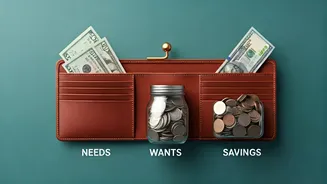









Why Now? The Appeal of a Financial Detox
In an age of one-tap payments, effortless EMIs, and targeted ads that know exactly what you want, spending has become frictionless. This convenience culture, especially in urban India, has led many young professionals to feel like their money is disappearing
without a trace. A recent viral story of a Bengaluru techie earning ₹45 lakh a year but having nothing left by month-end resonated with thousands. These challenges are a direct response to that feeling. They offer a structured way to hit pause on mindless consumption and regain a sense of control. By turning saving into a game, they make a daunting task feel achievable and even enjoyable. It’s a financial detox for the digital age, focused on building awareness and changing habits, not just accumulating cash.
The 52-Week Savings Challenge
This is perhaps the most famous challenge globally, adapted for Indian savers. The concept is simple: you save a small, escalating amount of money every week for a year. A popular Indian version involves starting with just ₹10 in the first week, increasing it to ₹20 in the second, ₹30 in the third, and so on. By week 52, you’d be setting aside ₹520. While the weekly amounts start small, they add up. Following this specific plan will leave you with ₹13,780 at the end of the year. The beauty of this challenge is its scalability; you can start with ₹50 or ₹100 to save a much larger sum. Its power lies in breaking a large goal into manageable steps and using behavioural psychology to transform saving from a chore into a consistent habit.
The No-Spend Challenge
Gaining immense popularity in metro cities like Bengaluru, the 'no-spend' challenge is exactly what it sounds like. For a set period—often a week or a month—you completely stop spending on non-essential items. Bills, rent, groceries, and transport are allowed, but impulse shopping, dining out, and that casual Zomato order are off-limits. The goal isn't to punish yourself, but to build awareness of your spending triggers. Proponents say it's highly effective at curbing the impulse buys driven by boredom or social media pressure. It forces you to confront the 'why' behind your spending, whether it's for instant gratification or to soothe a bad day. Instead of buying something new, you find creative ways to use what you already have, fostering gratitude and discovering free activities.
The 100-Envelope Challenge
This challenge is a more intense, but visually satisfying, method of saving a large sum quickly. You get 100 envelopes and label them from 1 to 100. Then, over a period of 100 days (or at your own pace), you randomly pick an envelope each day and put the corresponding amount of cash inside. For example, if you draw the envelope marked '67', you put ₹67 into it. If you complete the challenge traditionally, you will have saved ₹5,050. The randomness keeps it interesting, though the daily amounts can vary wildly. Some find keeping large amounts of cash at home risky and prefer a digital version, transferring the money to a separate savings account instead. While it requires discipline, its gamified nature makes it a powerful motivator for short-term savings goals.
Do These Challenges Actually Work?
For many, the answer is yes. These challenges are excellent tools for building momentum and developing the habit of saving. They simplify financial goals and provide a clear, structured path. The community aspect, with people sharing their progress on social media, adds a layer of accountability and motivation. However, they are not a complete financial strategy. Critics point out that cash-based challenges like the envelope system mean your money isn't earning interest. Furthermore, the rise of unverified financial influencers, or 'finfluencers', means it's crucial to be discerning about the advice you follow. These challenges are a great starting point, but they work best when paired with a solid budget, an emergency fund, and a long-term investment plan.