




Beyond the Earth-Next-Door
The search for extraterrestrial life has long been a search for a 'second Earth'. But some scientists, like geobiologist Dirk Schulze-Makuch, argue this approach might be too narrow. This Earth-centric view assumes our planet represents the ultimate model
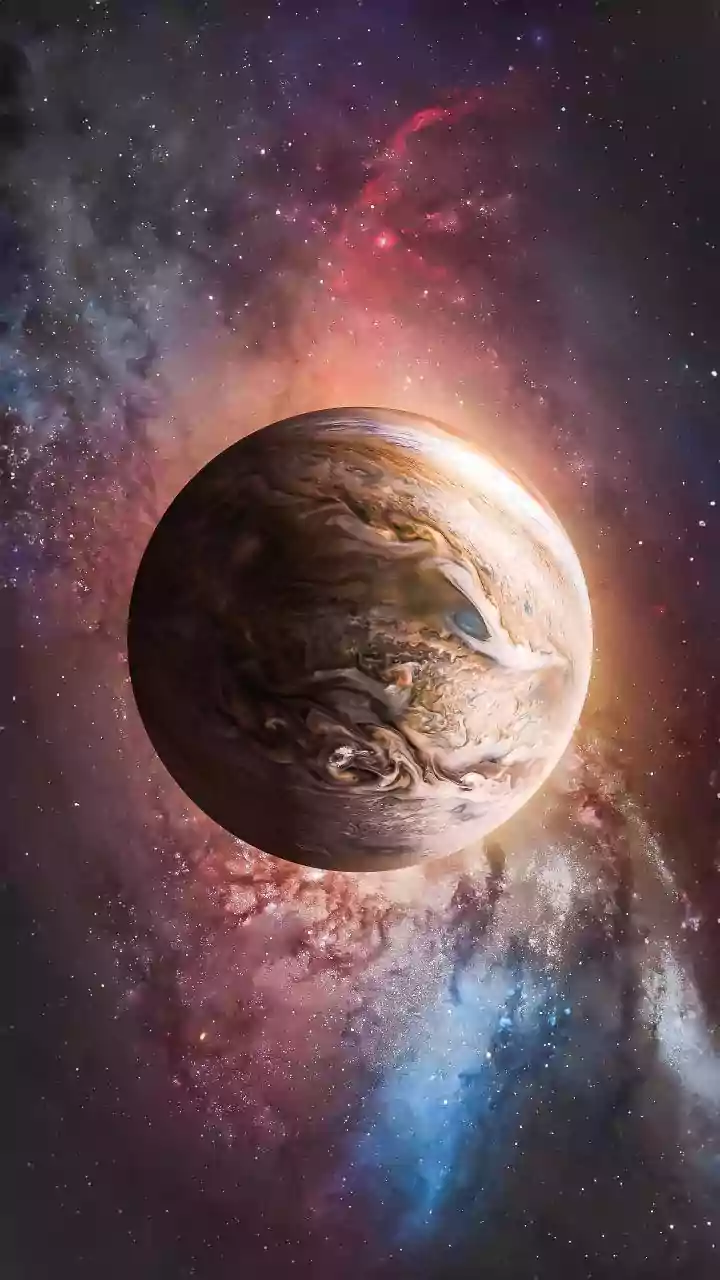
of habitability. The concept of a 'superhabitable' planet, first detailed in a 2014 paper by astronomers René Heller and John Armstrong, flips this idea on its head. It proposes that certain exoplanets could possess conditions that make them significantly better at fostering a greater amount and diversity of life than Earth. Instead of looking for an exact twin, these scientists are developing a checklist for a world that is bigger, better, and more biologically abundant.
The 'Goldilocks' Star
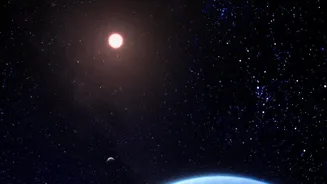
A planet is only as good as its star, and our Sun, a G-type star, might not be the best option. While stable, it has a lifespan of about 10 billion years. Considering it took nearly 4 billion years for complex life to emerge on Earth, G-type stars might not offer a long enough window for life to truly flourish elsewhere. The ideal host is thought to be a K-type star, often called an 'orange dwarf'. These stars are cooler and less luminous than our Sun but have incredibly long lifespans, ranging from 20 to 70 billion years. This provides a much longer, more stable period for life to arise and evolve. K-stars are seen as the 'sweet spot', avoiding the intense, life-sterilizing flares of smaller M-type red dwarfs while offering more longevity than Sun-like stars.
Bigger, Warmer, and Wetter
When it comes to habitability, size matters. A planet about 1.5 times Earth's mass could be superior. Its stronger gravity would help it retain a thicker atmosphere, offering better protection from cosmic radiation and helping to keep the surface warm. A world slightly larger than Earth would also likely have more vigorous plate tectonics, a crucial process for recycling minerals and stabilising the climate. The ideal superhabitable world would also be slightly warmer and wetter than Earth. A global average temperature about 5 degrees Celsius higher than our own could expand the tropical zones, which on Earth host the greatest biodiversity. More moisture and cloud cover could help regulate temperatures across the planet, creating a more stable and life-friendly global climate.
Age and Location Are Key
A planet’s age is another critical factor. Earth is about 4.5 billion years old, but peak habitability might be found on planets that are older, between 5 billion and 8 billion years. This 'sweet spot' in age allows sufficient time for life to emerge and for a stable, oxygen-rich atmosphere to develop. Furthermore, the planet’s position within its star’s habitable zone—the region where liquid water can exist on the surface—is crucial. A superhabitable planet would likely be situated squarely in the middle of this zone and remain there for billions of years, ensuring long-term climate stability. A large moon, like Earth's, is also considered a plus, as it helps to stabilise the planet's axial tilt, preventing wild climate swings.
The Search for a Better Home
While the idea of a superhabitable planet is still theoretical, scientists have identified potential candidates. In 2020, a study led by Schulze-Makuch identified 24 exoplanets from a list of over 4,500 that could fit the criteria. These worlds, all more than 100 light-years away, are prime targets for future observation. One of the most promising candidates is KOI-5715.01, a planet orbiting a K-type star that appears to have many of the right conditions. Confirming whether these planets are truly superhabitable will require powerful new instruments like the James Webb Space Telescope and the European Space Agency's PLATO mission, set to launch in 2027. These observatories will be able to analyse the atmospheres of distant worlds, searching for the chemical fingerprints of life.