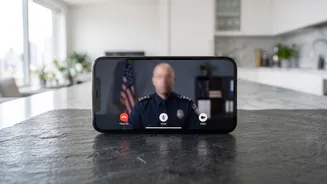






A call from an unknown number flashes on your screen. The person on the other end claims to be a police officer, accusing you of a crime and placing you under 'digital arrest'. As this scam grows, authorities are urgently reminding citizens: this is not
how the law works.
The Anatomy of a 'Digital Arrest' Scam
A 'digital arrest' is a sophisticated form of cyber fraud where criminals impersonate officials from law enforcement agencies like the local police, CBI, or Enforcement Directorate. The scam typically starts with a call over WhatsApp or Skype. Fraudsters, sometimes in uniform and against a backdrop resembling a police station, inform victims that their identity—often citing their Aadhaar card or bank accounts—has been implicated in serious crimes like money laundering or drug trafficking. They create a sense of panic with forged arrest warrants and other fake official documents. The goal is to intimidate the victim into transferring large sums of money to 'clear their name' or for 'verification purposes'. In many recent cases, these criminal networks have been found to have international links, with handlers operating from Southeast Asian countries like Cambodia.
Confined Through a Screen
A particularly insidious part of the scam is the element of psychological control. Fraudsters instruct the victim to remain on the video call, sometimes for hours or even days, under the guise that they are under constant surveillance. They are forbidden from contacting anyone, isolating them from family and friends who might recognize the fraud. This digital confinement creates immense pressure, making victims more susceptible to the scammers' demands. Recent crackdowns by police have revealed the scale of this operation, with one network alone allegedly linked to complaints involving over Rs 73 crore across India. Victims have included everyone from retired senior citizens to high-ranking former government officials, showing that anyone can be a target.
The Law: How a Real Arrest Works
Indian authorities are emphasizing a crucial point: there is no legal basis for a 'digital arrest' in India. The Code of Criminal Procedure (CrPC) and the succeeding Bharatiya Nagarik Suraksha Sanhita (BNSS) lay out specific, physical procedures for a lawful arrest. An arrest involves an officer physically touching or confining a person, unless they submit to custody verbally or by action. Crucially, the person being arrested must be informed of the grounds for their arrest and has the right to be produced before a magistrate within 24 hours. None of these fundamental legal requirements can be fulfilled over a video call. Any demand for a 'digital arrest' is, by definition, an illegal act of impersonation and extortion.
How to Identify the Red Flags
Knowing the warning signs is your best defence. Be immediately suspicious if you receive an unsolicited call from someone claiming to be a police officer who threatens you. No legitimate law enforcement agency will demand money to avoid prosecution or 'verify' your accounts. Other major red flags include pressure to stay on a video call, instructions not to speak with your family, and the use of unofficial channels like WhatsApp for official proceedings. Often, the phone numbers used have international codes, such as +92 (Pakistan), which is another clear indicator of a scam. Always remember that official communication follows a formal process, which does not involve threats and demands for money over a phone call.
What to Do If You Receive a Scam Call
If you receive a call like this, the first and most important step is not to panic. Do not share any personal information, and absolutely do not transfer any money. The Indian Cyber Crime Coordination Centre (I4C) advises citizens to immediately disconnect the call. Afterwards, you should report the incident. You can call the national cybercrime helpline at 1930 or file a complaint online at the National Cyber Crime Reporting Portal (cybercrime.gov.in). Blocking the number on your phone is also a good immediate step. By reporting the crime, you not only protect yourself but also provide authorities with valuable information to track and dismantle these fraudulent networks.