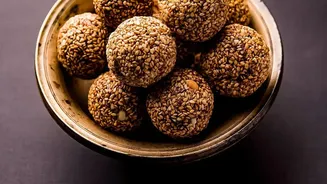


The aroma of toasted sesame and melting jaggery is a cornerstone of Indian festive cooking. Yet, achieving that perfect, snappy, firm texture can be tricky. This guide demystifies the process, ensuring your homemade sweets are delightfully crisp.
Start With the Right Ingredients
The foundation
of a great sesame and jaggery sweet, whether it's a chikki (brittle) or a ladoo (ball), lies in your choice of ingredients. For the firmest texture, seek out 'chikki jaggery'. This variety is specifically processed to set hard and is often darker in colour. Regular jaggery may result in a softer, chewier sweet. When it comes to sesame seeds, both white and black varieties work well, but ensure they are fresh. Roasting is a crucial step; it removes moisture and brings out a deep, nutty flavour. Over-roasting, however, can make the seeds taste bitter, so watch them carefully.
The Art of Roasting Sesame
Properly roasting your sesame seeds is non-negotiable for achieving a crisp final product. Any residual moisture in the seeds can compromise the texture of your sweet, making it less firm. Place the seeds in a heavy-bottomed pan over low to medium heat. Stir constantly to ensure they toast evenly without burning. You will know they are ready when they start to pop, change to a light golden colour, and release a distinct nutty aroma. This process usually takes about four to seven minutes. Once roasted, immediately transfer the seeds to a separate plate to cool down and stop the cooking process.
Mastering the Jaggery Syrup
The consistency of the jaggery syrup is the single most critical factor in this recipe. This is what determines whether your sweet will be soft and sticky or perfectly firm and brittle. After melting the grated or chopped jaggery in a pan with a little ghee and water, you must bring it to the 'hard ball' stage. To test this, have a small bowl of cold water ready. Drop a small amount of the bubbling syrup into the water. If it's ready, it will immediately solidify into a hard, brittle ball. When you break this ball, it should snap cleanly, like candy, without being stringy or chewy. If the droplet is soft or dissolves, you need to continue cooking the syrup and test again every 30 seconds. Be careful not to overcook it, as burnt jaggery has an unpleasant taste.
Combining and Shaping: Speed Is Key
Once your jaggery syrup has reached the perfect hard ball consistency, you must work quickly. The mixture begins to harden almost immediately. Turn off the heat and quickly stir in your roasted sesame seeds, ensuring they are all thoroughly coated in the syrup. Have your greased work surface—be it a steel plate, parchment paper, or the back of a tray—ready to go before you even start the syrup. Pour the mixture onto the prepared surface. If making chikki, place another sheet of greased parchment on top and use a rolling pin to flatten it to your desired thickness. For ladoos, you'll need to let the mixture cool just enough to handle, grease your palms with ghee or water, and then quickly roll it into firm balls while still warm.
Troubleshooting Common Issues
If your sweets turn out soft and sticky, it's a clear sign that the jaggery syrup was undercooked and did not reach the hard ball stage. On the other hand, if they are so hard they are difficult to bite, the syrup was likely overcooked. Another common issue is a crumbly sweet that doesn't hold together; this can also happen if the syrup is cooked for too long. Paying close attention during the syrup-making stage and performing the water test frequently is the best way to prevent these problems. If you find your ladoo mixture is hardening too fast to shape, you can gently warm it for a few seconds to make it pliable again, but avoid overheating as this can make the final product too hard.