




More Than Just Autopilot
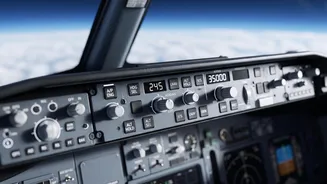
Modern aircraft automation is not a single entity but a suite of sophisticated, layered systems. While autopilot—which handles heading, altitude, and speed—is the most well-known feature, it's just the tip of the iceberg. Advanced flight management systems can
execute entire flight plans from takeoff to landing. Deeper still are the flight control laws, the fundamental software that translates a pilot's actions on the controls into the aircraft's movements. A key part of this system is 'flight envelope protection'. This feature acts as a safety net, designed to prevent the pilot from making inputs that would push the aircraft beyond its aerodynamic or structural limits, such as stalling or over-speeding. Essentially, it's a layer of software that helps keep the plane within a safe performance window at all times.
The Automated First Responder
In many emergencies, automation is a pilot's best friend. Its primary role is to reduce workload, which is crucial when a pilot is trying to diagnose a problem. For example, if an engine fails, the autopilot can be commanded to maintain a stable altitude and heading, freeing up the pilots to work through the necessary checklists and procedures. Some systems can even help plan a diversion to the nearest suitable airport. In certain scenarios, like a sudden loss of cabin pressure, the automation might even initiate an emergency descent to a safe altitude. The core benefit is stability. By keeping the aircraft's flight path predictable, automation buys the crew precious time to think, assess the situation, and make critical decisions without the added stress of manually flying the aircraft through a developing crisis.
The Pilot's Final Say
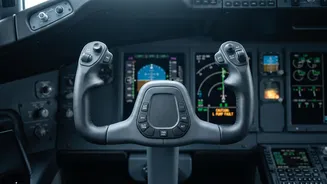
Despite the sophistication of these systems, the design philosophy of commercial aviation is clear: the human pilot is always in command. Automation can be disconnected in several ways, most of which are intentionally quick and intuitive. A prominent button on the control yoke or sidestick will instantly disengage the autopilot and autothrottle. Pilots can also physically overpower the system by applying firm force to the controls. Fundamentally, automation's assistance lasts only as long as the pilot deems it helpful. The moment a pilot decides the system is not acting as expected or desired, they can and are trained to take full manual control. The ultimate authority rests with the person in the cockpit, not the computer.
When Automation and Instinct Collide
The relationship between pilot and machine can become strained when the automation acts on bad data. The tragic accidents involving the Boeing 737 MAX's Maneuvering Characteristics Augmentation System (MCAS) are a stark example. The system, designed to prevent a stall, was activated by a single faulty angle-of-attack sensor, repeatedly pushing the aircraft's nose down. The pilots struggled against an automated system they didn't fully understand. Similarly, the crash of Air France Flight 447 in 2009 began when iced-over sensors caused the autopilot to disconnect unexpectedly. The confused pilots made control inputs that, without the normal flight envelope protections, led to a stall from which they never recovered. These cases highlight the critical challenge: automation assists until it's disconnected, but the real difficulty for a startled crew can be recognizing that it needs to be disconnected and understanding what the aircraft is trying to do.
Training for a Digital Partnership
The increasing complexity of cockpit automation has shifted the focus of pilot training. While manual flying skills remain essential, a huge emphasis is now placed on 'automation management'. Pilots are trained extensively in simulators to handle not just mechanical failures, but automation failures. They practice recognizing when the system is behaving unexpectedly, quickly disconnecting it, and reverting to manual flight. This addresses the so-called 'automation paradox': the more reliable a system is, the less practice a human gets in handling its failure. Airlines and regulators now mandate regular training on manual flying and upset recovery to ensure pilots' core skills don't degrade. The goal is to create pilots who are not just users of automation, but active monitors and managers of it, always ready to intervene.