


The Festive Bengali Khichuri
In West Bengal, khichdi sheds its 'sick-day food' reputation and becomes a celebratory feast. Known as 'khichuri', it is an essential offering, or 'bhog', during pujas, especially Durga Puja. This version is rich and flavourful, often made with fragrant,
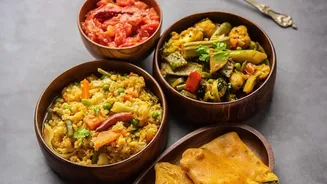
short-grained Gobindobhog rice and roasted moong dal, which imparts a nutty aroma. Unlike plainer versions, bhoger khichuri is cooked with vegetables like potatoes, cauliflower, and green peas, and spiced with ginger and a distinct blend of Bengali garam masala. Often cooked without onion or garlic for religious reasons, its flavour is enhanced with a tempering of bay leaves, dried red chillies, and a generous dollop of ghee. It's typically served with an array of fried vegetables ('bhaja') and a sweet tomato chutney.
Gujarat's Everyday Staple
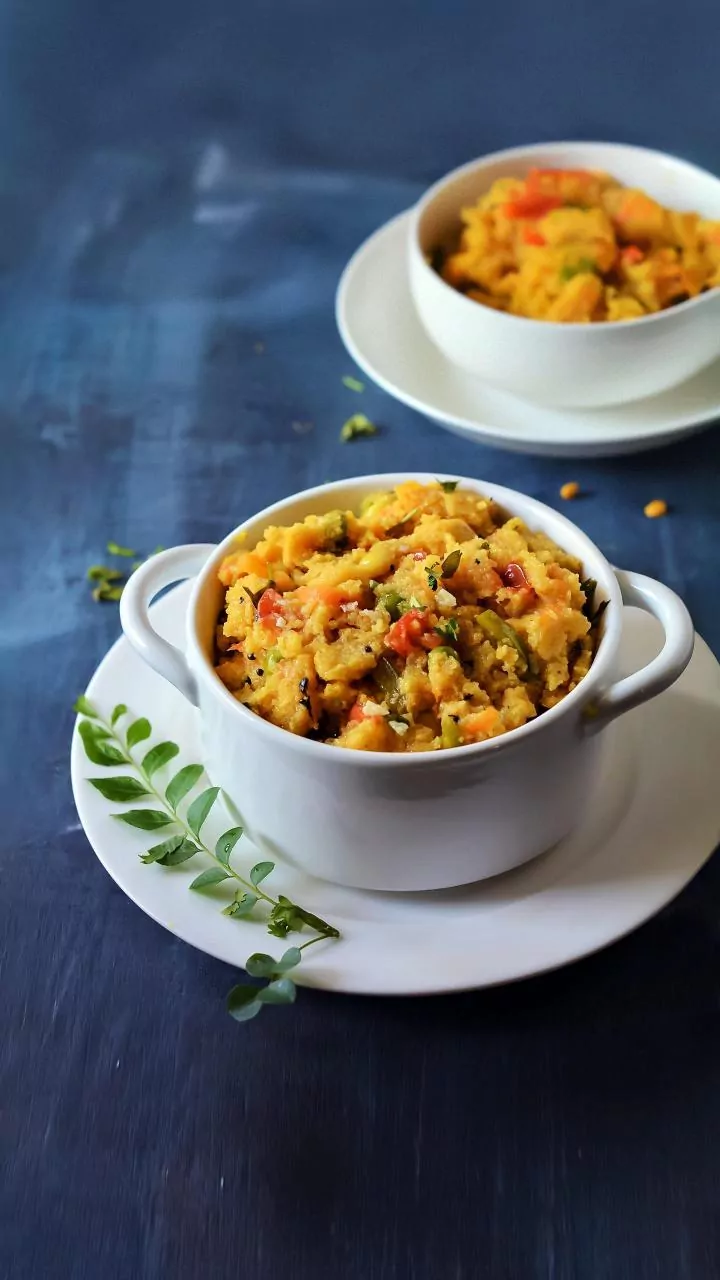
In Gujarat, khichdi is a beloved staple, often eaten several times a week. The most common version is a soft, porridge-like consistency, typically made with rice and toor dal (split pigeon peas). The magic lies in the 'vaghar' or tempering, where mustard seeds, cumin seeds, cloves, and curry leaves are sizzled in ghee and poured over the dish. This simple preparation is often served with a side of 'kadhi', a tangy yogurt-based curry, creating a perfect balance of flavours. But Gujarat’s creativity doesn't stop there. In arid regions like Kutch and Saurashtra, rice is often replaced with bajra (pearl millet) during the winter, creating a rustic and earthy Bajra ni Khichdi.
The Southern Cousin: Ven Pongal
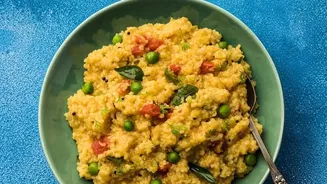
Travel south to Tamil Nadu, and you'll find khichdi's popular cousin, Ven Pongal. Primarily a breakfast dish, it shares the core combination of rice and moong dal but has a distinct identity. Pongal is known for its creamy, porridge-like texture, achieved by using a higher ratio of water and a generous amount of ghee. The flavour profile is dominated by whole black peppercorns, cumin seeds, ginger, and curry leaves, often with cashews fried in ghee for a rich crunch. While the savoury Ven Pongal is a daily staple, a sweet version called 'Chakkara Pongal', made with jaggery, is prepared during festivals, especially the harvest festival of Pongal.
Hyderabad’s Royal Keema Khichdi
In Hyderabad, khichdi gets a royal, non-vegetarian makeover inspired by Nizami culinary traditions. Hyderabadi khichdi is unique in a few ways. Firstly, it uses masoor dal (red lentils) instead of the more common moong or toor dal. Secondly, the cooked khichdi has a drier, more pilaf-like texture where the grains remain separate. The most famous version is Keema Khichdi, where the simple lentil and rice dish is served with a flavourful minced meat curry. This hearty meal is a popular breakfast in the old city and is often accompanied by a tangy tamarind and sesame sauce called 'khatta', balancing the richness of the keema.
Bihar's Makar Sankranti Tradition
In Bihar, khichdi is so integral to the culture that the festival of Makar Sankranti is often referred to simply as 'Khichdi'. On this day, it's a tradition to prepare and eat khichdi made with rice and split black gram (urad dal), which gives it a distinct earthy flavour. The festive preparation includes spices like ginger, asafoetida (hing), and a generous amount of ghee. It is almost always served with a classic Bihari quartet: 'chokha' (a mash of roasted eggplant and potatoes with pungent mustard oil), ghee, papad, and pickle. For many in Bihar, Saturdays are also informally designated as 'khichdi day'.
Karnataka's Spicy Bisi Bele Bath
While not a khichdi by name, Karnataka's Bisi Bele Bath embodies the one-pot spirit of rice, lentils, and spices. Translating to 'hot lentil rice dish', it's a flavour explosion. Made with rice and toor dal, it's packed with an assortment of vegetables like carrots, beans, and potatoes. What sets it apart is a special, aromatic masala powder and the use of tamarind, which lends a signature tangy taste. Rich, spicy, and complex, Bisi Bele Bath is served piping hot with a spoonful of ghee and a side of crispy 'boondi' or potato wafers.