





Not All Millets Are Created Equal
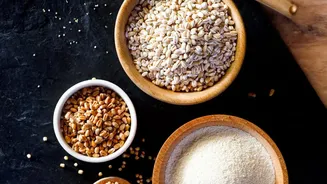
The primary reason a one-size-fits-all recipe fails is that 'millet' is a category, not a specific grain. It’s a family of at least nine different grains commonly grown in India, including jowar (sorghum), bajra (pearl), ragi (finger), and smaller varieties
like foxtail, kodo, and barnyard millet. Each has a distinct size, bran thickness, starch structure, and flavour profile. For instance, the hard outer layer of grains like kodo millet requires a longer soaking time to soften, while the tiny, quick-cooking barnyard millet needs significantly less water and time. Treating them identically is like trying to cook dal makhani and moong dal in the same pot for the same duration—the results are guaranteed to be disappointing.
The Cardinal Rule: Soaking
The single biggest cause of hard, unevenly cooked millet is skipping the soak. Soaking does two crucial things: it softens the outer bran for even cooking and reduces phytic acid, an anti-nutrient that can block the absorption of minerals like iron and zinc. However, soaking times vary dramatically. Smaller millets like foxtail and little millet need just 30 minutes to a couple of hours. Tougher grains like kodo and browntop benefit from a 6-to-8-hour soak. For flour-based preparations like ragi mudde or jowar roti, soaking isn't required for the flour itself, but the preparation has its own rules. Always discard the soaking water and use fresh water for cooking to get rid of the leached phytic acid.
Mastering Water Ratios
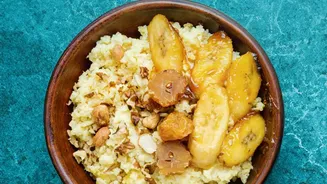
After improper soaking, using the wrong water ratio is the most common reason for failure. A general 1:2 ratio of millet to water is often cited, but this is misleadingly simple. The correct ratio depends entirely on the specific millet and desired texture. For fluffy, rice-like grains, foxtail and little millet often need a 1:2.5 ratio. In contrast, barnyard millet needs only a 1:2 ratio. For a softer, porridge-like consistency, you would increase the water to a 1:3 or 1:4 ratio and cook longer. A pressure cooker generally requires less water than an open pot. Keep in mind that these ratios are for soaked millets; unsoaked grains need more water.
Technique for Jowar and Bajra
The gluten-free nature of jowar (sorghum) and bajra (pearl millet) flour is why rotis made from them often crack and fall apart. Unlike wheat, this dough has no elasticity. The key is to use hot or boiling water, which gelatinises the starch and helps bind the dough. The dough should be kneaded while still warm and rested for about 10 minutes. These rotis, or 'bhakris', should be patted out by hand to a thicker consistency rather than rolled thin with a pin. They also harden as they cool, so they are best eaten fresh off the tawa.
Cooking Foxtail, Kodo, and Barnyard
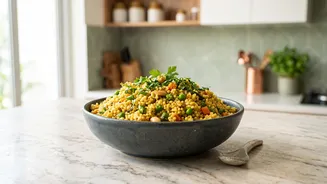
These 'small' millets are excellent rice replacements, but each has a distinct personality. Foxtail millet, with a 30-minute soak, cooks in about 15-20 minutes with a 1:2.5 water ratio for a fluffy texture perfect for upma or lemon 'rice'. Barnyard millet is the fastest, cooking in about 12-15 minutes with a 1:2 water ratio after a brief soak. Kodo millet is tougher, requiring a longer soak of at least 4-6 hours. It needs more water (a 1:2.5 to 1:3 ratio) and a longer cooking time of 20-25 minutes to become tender while still holding its shape. For all these, a final 10-minute rest off the heat is non-negotiable, as it allows residual steam to finish the cooking process.
The Ragi Exception
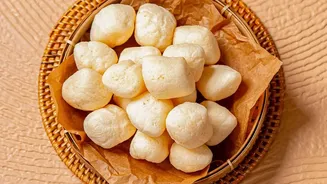
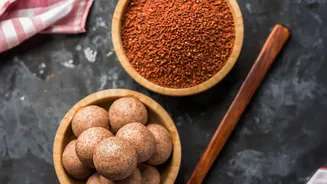
Ragi (finger millet) is most commonly consumed as a flour. For the famous ragi mudde, a stiff porridge ball, the technique is critical to avoid lumps. Ragi flour is added in a steady stream to boiling water while stirring constantly with a wooden spoon. The ratio is typically around 1 cup of flour to 2.5 cups of water. After vigorous stirring for a few minutes, it's covered and cooked on low heat to steam through. For a breakfast porridge, ragi flour is first whisked into cold water or milk to form a slurry before being heated, which also prevents lumps.