


Why Yoga Helps
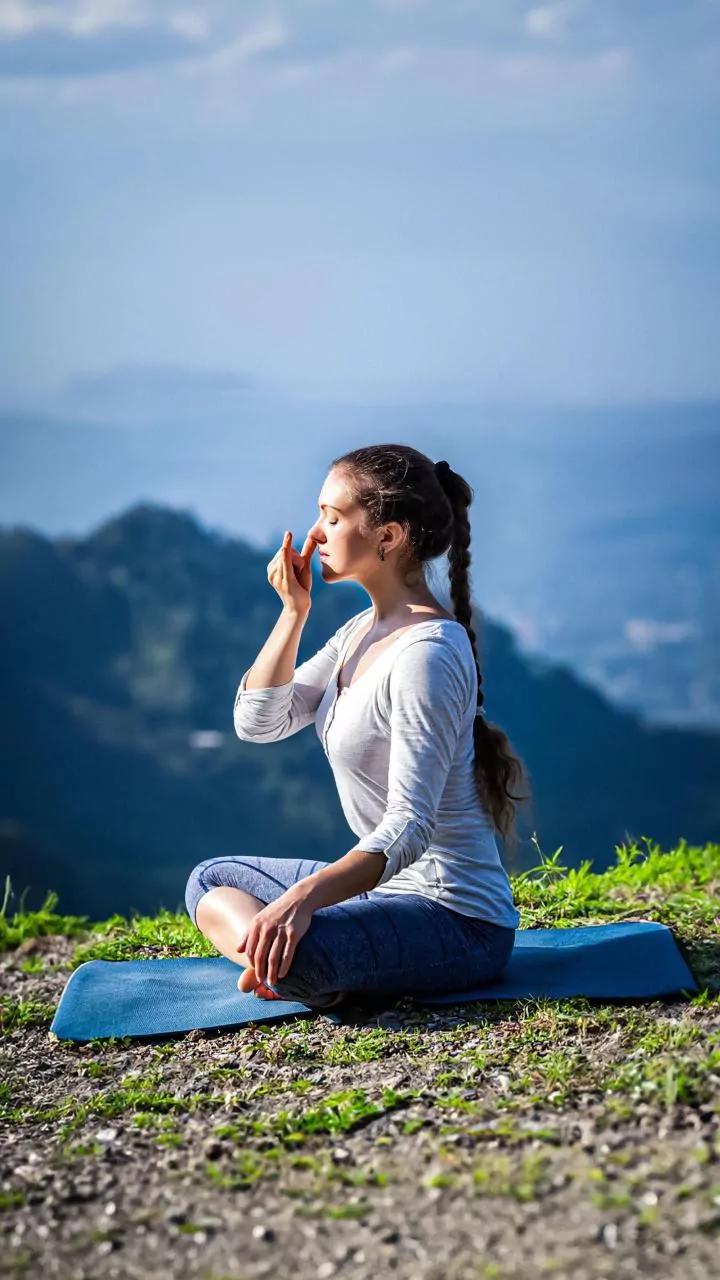
Before we get into the poses, it's helpful to understand why yoga is so effective for students. When you're stressed, your body enters a "fight-or-flight" response. Yoga, through its combination of physical postures, controlled breathing, and mindfulness,
helps shift your nervous system into a "rest-and-digest" state. This process lowers anxiety, producing a feeling of calm. Studies have shown that a regular yoga practice can significantly reduce stress and anxiety, improve sleep quality, and even boost cognitive functions like memory and concentration, which are all crucial for academic success. Think of it as a tool to calm an overstimulated mind and build resilience against academic pressure.
Cat-Cow Stretch (Marjaryasana-Bitilasana)
This gentle, flowing movement is perfect for waking up your spine after hours of being hunched over a desk. Start on your hands and knees, with your wrists directly under your shoulders and your knees under your hips. As you inhale, drop your belly towards the floor and look up, creating an arch in your back (Cow Pose). As you exhale, round your spine toward the ceiling, tucking your chin to your chest (Cat Pose). Continue flowing between these two poses for about a minute. This movement relieves tension in the back, neck, and shoulders and encourages a connection between breath and movement, which is naturally calming.
Seated Forward Bend (Paschimottanasana)
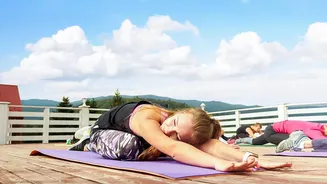
A classic pose for calming the mind, the Seated Forward Bend offers a deep stretch for the entire back of your body. Sit on the floor with your legs extended straight in front of you. You can sit on a folded blanket to help tilt your pelvis forward. As you inhale, sit up tall. As you exhale, begin to hinge forward from your hips, keeping your back straight for as long as you can. Don't worry about touching your toes; just go as far as you can without pain. This pose helps soothe the nervous system, relieves stress, and can help alleviate mild anxiety and fatigue.
Eagle Arms (Garudasana Arms)
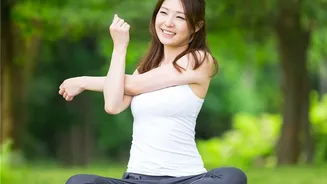
You can do this stretch right at your desk. It's incredibly effective for releasing the tension that builds up in the shoulders and upper back from writing or typing. Sit up tall and extend your arms straight forward. Cross your right arm over your left, then bend your elbows. Wrap your right hand around so your palms are facing, or touching. If this is too intense, simply press the backs of your hands together. Lift your elbows to shoulder height and gently press your hands away from your face. You should feel a great stretch across your shoulder blades. Hold for five deep breaths, then switch sides.
Tree Pose (Vrikshasana)
Building concentration is just as important as relieving stress. Tree Pose is a balancing posture that requires your full attention, making it a great mental reset. Stand tall and shift your weight onto your left foot. Place the sole of your right foot on your left ankle, calf, or inner thigh—avoiding the knee joint. Bring your hands together in front of your chest. Find a spot on the wall in front of you to focus on to help you balance. Holding a balancing pose quietens the mental chatter and improves your ability to focus. After a few breaths, switch sides.
Legs-Up-The-Wall Pose (Viparita Karani)
This is the ultimate restorative pose for tired students. It’s incredibly simple and deeply relaxing. Sit on the floor with one side of your body against a wall. Gently swing your legs up the wall as you lie back on the floor. Your hips can be right against the wall or a few inches away, whichever is more comfortable. Let your arms rest by your sides, palms facing up. Close your eyes and breathe deeply for 5 to 10 minutes. This pose helps calm the nervous system, drains fluid from tired legs, and promotes better sleep, making it a perfect way to wind down after a long day of studying.