



The Science of a Washed-Out Sky
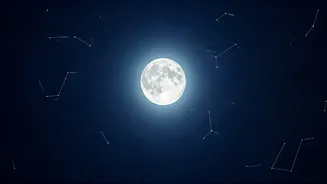
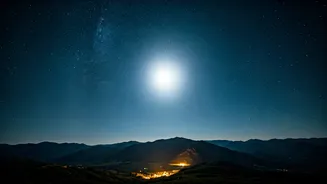
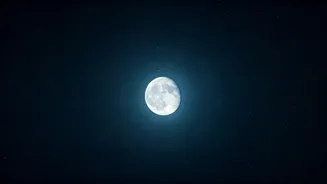
The full moon acts like a giant, natural form of light pollution. Its brightness is so intense that it scatters throughout Earth's atmosphere, creating a widespread 'sky glow'. This glow dramatically reduces the contrast between faint celestial objects
and the background sky. On a moonless night, you might see around 3,000 stars, but during a full moon, that number can plummet by as much as 90% to just 300. Furthermore, the bright light prevents our eyes from achieving full 'dark adaptation', the process that allows us to see faint details in the dark. It’s like trying to spot a firefly while someone shines a torch in your eyes.
Change Your Focus, Not Your Hobby
While the full moon certainly makes deep-sky viewing of faint nebulae and distant galaxies nearly impossible, it doesn't mean you have to pack away your telescope for the night. The key is to shift your focus from the faint and faraway to the bright and relatively close. With a change in strategy, a full moon night can still be a rewarding experience for any amateur astronomer. Instead of fighting the glare, you can work with it by choosing targets that are bold enough to punch through the moonlight.
Hunt for the Brightest Stars and Planets
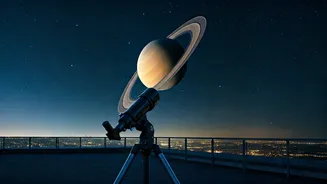
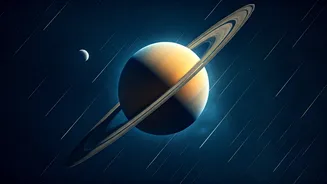
Your first targets should be the heavyweights of the night sky. Bright planets like Jupiter, Saturn, and Mars are easily visible even under the glare of a full moon. Their own brilliance allows them to stand out. In fact, some observers find that the moonlight can even enhance the view of planets by illuminating their atmospheres. Similarly, the brightest stars and most prominent constellations can still be identified. Look for stellar giants like Sirius, Vega, and Betelgeuse, or familiar patterns like the Big Dipper and Orion (depending on the season).
Embrace the Villain: Observe the Moon Itself
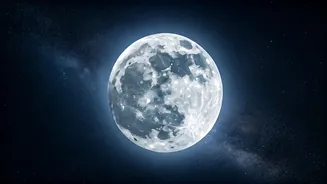
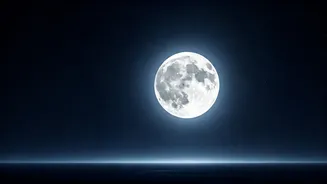
If you can't beat them, join them. The full moon provides a fantastic opportunity to study our closest celestial neighbour in great detail. While the lack of shadows removes some surface texture, it's the perfect time to observe other features like the vast, dark lava plains known as 'maria'. With a pair of binoculars or a small telescope, you can also trace the bright 'ray systems'—streaks of ejected material that radiate from prominent craters like Copernicus and Tycho. These features are most prominent during a full moon. Just be sure to use a moon filter if using a telescope, as the brightness can be uncomfortably intense.
Play with Timing and Angles
You can also mitigate the moon's impact with careful planning. Try stargazing just after sunset before the moon has risen high in the sky, or in the early morning after it has set. Even when the moon is up, its position matters. If you're hoping to view a specific constellation, wait until it is in a part of the sky opposite the moon. You can also try a simple trick: position yourself so that a building or a tree blocks the moon from your direct line of sight. This will help your eyes adapt better to the darkness and allow you to spot slightly fainter objects.