




More Than an Astronaut, A Doctor in Space
Anil Menon is not just a NASA astronaut; he's a Colonel in the U.S. Space Force, a practicing emergency medicine physician with fellowship training in wilderness and aerospace medicine, and a former flight surgeon. Born in Minneapolis, Minnesota, to an Indian
father from Kerala and a Ukrainian mother, his background is as diverse as his skill set. Before being selected as an astronaut in 2021, Menon served as NASA's crew flight surgeon for expeditions on the ISS and was the first-ever flight surgeon at SpaceX. In that role, he helped launch the company's first human spaceflight missions and built its medical program. This unique blend of medical and operational expertise is precisely what makes his presence on the station so significant. Having a highly qualified physician as a crew member, rather than just on the ground at Mission Control, is critical for understanding and mitigating the health risks of spaceflight firsthand.
The Human Body: The Final Frontier
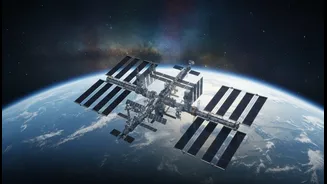
The primary reason Menon's mission is considered vital lies in its research objectives, which are centered on human health. For humanity to travel to Mars and beyond, we must first master the challenge of keeping astronauts healthy during years-long journeys in microgravity. During his eight-month stay, Menon will conduct and serve as a test subject for a series of experiments studying the physiological toll of long-duration spaceflight. A key focus is how weightlessness affects blood flow, vein structure, and blood composition. This research is crucial for protecting the health of future deep-space explorers. His work represents a direct investment in solving the complex puzzle of the human body's adaptation to an environment it was not designed for.
Pioneering Medical Tech for Deep Space
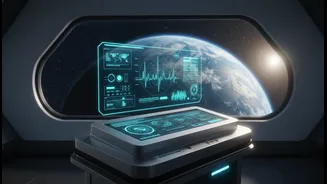
Menon's mission is also about testing new technologies that could make deep-space missions self-sufficient. He will help evaluate systems for producing intravenous (IV) fluids from the station's existing water supply, a capability that would be critical on missions where medical supplies are severely limited. Furthermore, he will perform ultrasound investigations using augmented reality and artificial intelligence. The goal is to develop methods that could reduce or even eliminate the need for real-time medical support from Earth, a necessity when communication delays to Mars can be up to 20 minutes each way. He will also be involved in testing the bioprinting of vascular tissues in microgravity, which could advance our understanding of aging and lead to new therapies on Earth.
Beyond Medicine: A Mission of Innovation
While human health is the core of his work, Menon's research portfolio is broad. He is tasked with continuing experiments to refine the in-space production of semiconductor crystals. Manufacturing these components in microgravity could lead to flawless crystals, enabling breakthroughs in high-performance computers, artificial intelligence, and advanced medical devices back on Earth. These experiments highlight the dual purpose of the ISS: to prepare for future exploration while also driving innovation that provides tangible benefits to life on our planet. Each experiment, whether in medicine or manufacturing, adds a crucial piece to the puzzle of how humanity can live and work sustainably off-planet.
An Inspiration for a New Generation
As the first NASA astronaut of Malayali heritage to travel to space, Anil Menon's journey is a source of immense pride and inspiration. His family's roots trace back to Ottapalam in Kerala's Palakkad district, and he is the great-grandson of noted lawyer and freedom fighter Sir Chettur Sankaran Nair. Menon himself has strong ties to the country, having spent a year in India as a Rotary Ambassadorial Scholar supporting polio vaccination efforts. His journey from a childhood inspired by a visit to a science museum to orbiting the Earth serves as a powerful symbol. It demonstrates how dedication and a diverse background can lead to the very frontier of human endeavor, inspiring countless individuals in India and across the world to pursue their own ambitions in science and exploration.