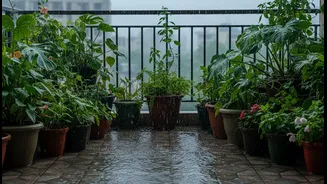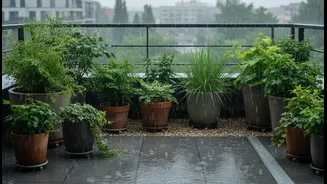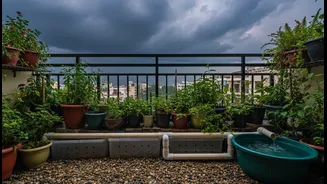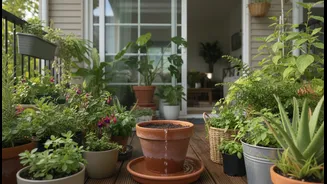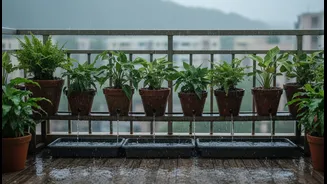







Prioritise Perfect Drainage
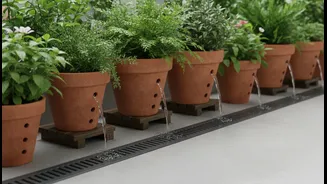
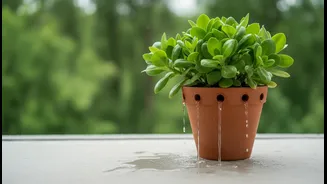
The single most common mistake that puts balcony plants at risk is leaving pots directly on the ground. When a container sits flat on a non-porous surface like tiles, water can't escape freely, even if the pot has holes. This creates waterlogged soil,
which suffocates roots and invites fungal diseases like root rot. The solution is simple: elevate your pots. Use pot feet, bricks, or even old wine corks to lift your containers slightly. This allows air to circulate and excess water to drain away completely. Before the rainy season, double-check that every pot has at least one, preferably multiple, drainage hole. If a pot doesn't, you'll need to drill some or repot the plant into a more suitable container.
Use a Well-Draining Soil Mix
The soil inside your pot is just as important as the drainage holes at the bottom. Standard potting soil can often be too dense, retaining excessive moisture, especially in a humid climate. To combat this, use a well-draining soil mix. You can create your own by combining potting soil with materials like cocopeat, compost, and perlite or horticultural grit. These amendments help loosen the soil structure, allowing water to pass through more effectively while improving aeration for healthier roots. Avoid heavy, clay-based soils, as they are prone to becoming compacted and waterlogged during frequent rains.
Choose Rain-Tolerant Plants
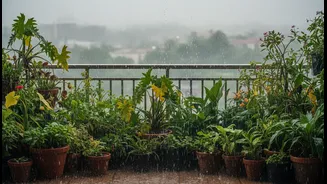
Not all plants are created equal when it comes to handling wet conditions. Some species are naturally more resilient to the challenges of wind and rain. For a hardy, year-round balcony garden, consider plants with strong stems and flexible leaves that can withstand downpours. Good choices include herbs like rosemary, lavender, and mint, as well as ornamental grasses and sturdy shrubs. Plants like succulents can also be a good option as they are adapted to handle varying moisture levels, provided their soil drains quickly. Conversely, plants with large, delicate leaves or those that are particularly sensitive to soggy soil should be moved to a more sheltered spot.
Provide Physical Shelter
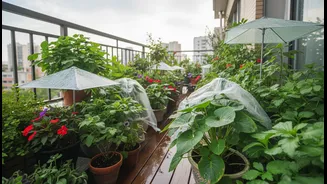
Sometimes, the best defence is a good roof. For delicate or water-sensitive plants, providing physical cover during heavy or continuous rain is essential. If you have a small number of pots, you can simply move them indoors or to a covered part of your balcony. For a more permanent solution, consider installing a waterproof shade cloth, a retractable awning, or even clear PVC curtains. A DIY approach can be effective too; some gardeners fashion simple canopies from clear tarps or even use large umbrellas designed for container gardens to shield their plants. However, avoid covering plants with impermeable plastic sheets that lie directly on the foliage, as this can trap moisture and cause more harm than good.
Adjust Your Watering Schedule
It seems obvious, but many gardeners continue their regular watering routine even during the rainy season. This is a critical error that can quickly lead to overwatered plants. During periods of consistent rain, your plants will need significantly less, if any, additional water from you. Always check the soil moisture before reaching for the watering can. Stick your finger a couple of inches into the soil; if it feels damp, hold off on watering. It's also wise to remove any self-watering trays from underneath your pots during the monsoon, as they can collect rainwater and keep the soil perpetually soggy.
Watch for Pests and Fungal Issues
The high humidity and damp conditions of the rainy season create a perfect breeding ground for fungal diseases and pests. Be vigilant and inspect your plants regularly for signs of trouble like powdery mildew, black spots on leaves, or mushy stems. Good air circulation is key to prevention, so try to give your plants adequate space instead of crowding them together. If you spot a fungal issue, act quickly. Remove affected leaves and consider using a natural antifungal spray, such as a neem oil solution, to prevent it from spreading.