

The Cosmic Veil of Dust
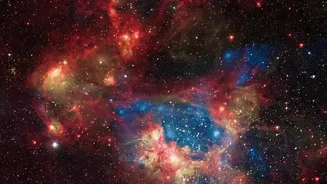
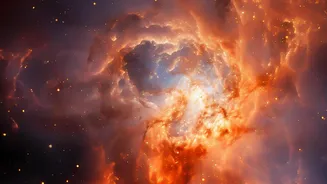
Planetary nurseries, more formally known as star-forming regions or molecular clouds, are vast, dense clouds of gas and dust where gravity slowly pulls material together. These regions are the genesis of everything: stars, planets, and the raw materials
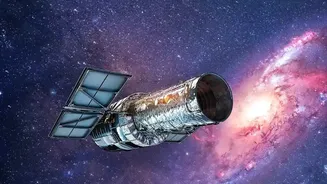
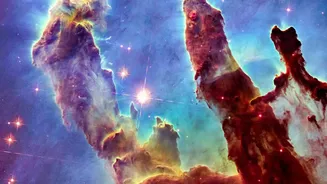
for life. However, this same dust that builds new worlds also acts as a cosmic curtain. For telescopes that see in visible light, like the Hubble Space Telescope, these nurseries appear as dark, opaque voids in space. The short wavelengths of visible light simply can't penetrate the thick clouds, scattering off the dust particles. This has left astronomers with a frustratingly incomplete picture, able to see the aftermath of star birth but not the intricate process itself.
Webb’s Infrared Superpower
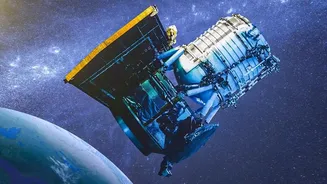
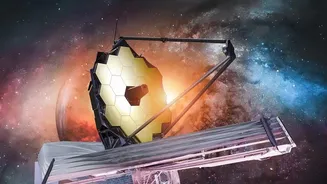
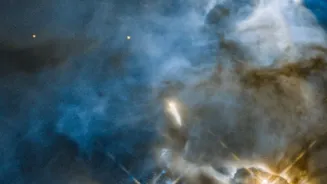
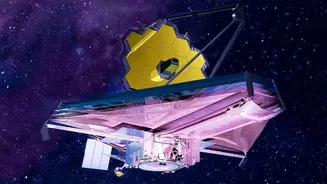
The James Webb Space Telescope was specifically engineered to solve this problem. Its primary mission is to observe the universe in infrared light. Unlike visible light, the longer wavelengths of infrared radiation can slip past the tiny dust grains, allowing the telescope to peer deep inside the previously hidden clouds. This capability transforms opaque regions into transparent windows, revealing the faint heat signatures of newborn stars and the swirling disks of material that surround them. By detecting this infrared glow, Webb essentially lifts the veil on star formation, turning what was once a dark mystery into a visible, dynamic process.
Mapping the Action Inside
So how does Webb create its maps? It’s not just about taking a single picture. The telescope uses a suite of powerful instruments, including near-infrared and mid-infrared cameras and spectrographs. These tools work together to create a multi-layered view. Near-infrared light is excellent for spotting the thousands of newly formed stars themselves, which shine brightly at these wavelengths. Mid-infrared light, on the other hand, is perfect for mapping the dust. The dust absorbs energy from young stars and re-emits it as a warm glow, which Webb’s MIRI (Mid-Infrared Instrument) can detect with stunning clarity. Famous images like those of the 'Cosmic Cliffs' in the Carina Nebula combine data from different infrared wavelengths to show both the newborn stars and the glowing gas and dust they are sculpting.
From Gas Jets to Baby Planets
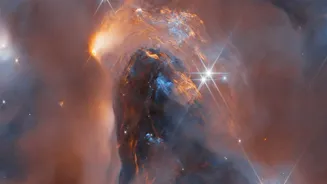
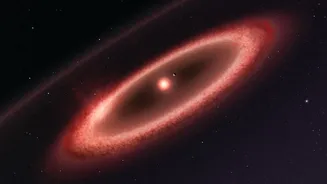
With this unprecedented access, Webb is mapping out the entire lifecycle of a young star. It has captured protostars, which are stellar infants still gathering mass from their surroundings. These baby stars are often seen with powerful jets of gas shooting out from their poles, carving out bubble-like cavities in the surrounding nebula. Surrounding the star is a swirling platter of gas and dust called a protoplanetary disk. This is where the action of planet formation happens. Webb’s spectrographs can analyze the light passing through these disks to determine their chemical makeup, detecting water, carbon dioxide, and complex organic molecules — the very building blocks of planets. In some cases, Webb has even detected Jupiter-sized worlds that have just formed within these nurseries.
Rewriting the Cosmic Story
The data streaming back from JWST is already challenging old models. By studying protoplanetary disks, astronomers are learning that planet formation is a race against time, as the star's radiation and winds can blow away the raw material before planets can fully form. The telescope has revealed surprising chemical diversity, finding one planet nursery unusually rich in carbon dioxide but lacking in water, suggesting that the local environment heavily influences the kind of planets that can arise. By observing star-forming regions in other galaxies, like the Small Magellanic Cloud, Webb is helping scientists understand if stars and planets formed differently in the early universe when heavy elements were more scarce. Each new image and dataset provides another piece of the puzzle, refining our understanding of how solar systems like our own came to be.