




Planning Your Journey from Kolkata
Reaching the historic town of Bishnupur is a straightforward affair for anyone starting from Kolkata, making it an ideal weekend destination. The most popular and convenient option is by train. Several express trains depart from Howrah and Santragachi
stations, with the journey taking approximately three to four hours. Services like the Rupashi Bangla Express and Aranyak Express are daily favourites among travellers. For those who prefer the road, a drive of about 140-150 kilometres offers a different perspective of Bengal's changing landscapes. The drive typically takes around four to five hours, passing through towns and lush green fields before you arrive in the land of red soil. Once in Bishnupur, the best way to navigate the narrow lanes and explore the temple complexes is by hiring a local e-rickshaw, or 'toto', which can be booked for several hours to cover all the major sights.
The Legacy of the Malla Kings
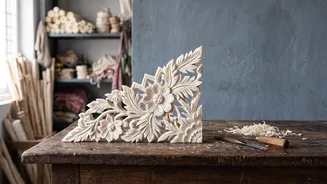
To truly appreciate Bishnupur, one must understand its creators: the Malla dynasty. Ruling for nearly a thousand years, these kings transformed their kingdom, known as Mallabhum, into a cultural and artistic powerhouse, especially during the 17th and 18th centuries. As devout followers of Vaishnavism, the Malla kings commissioned a stunning array of temples dedicated to Lord Krishna. Faced with a scarcity of stone, local artisans turned to the region's abundant laterite clay, perfecting the art of terracotta, which means 'baked earth'. This ingenious use of material resulted in temples covered in intricately carved panels depicting scenes from the Ramayana, Mahabharata, and the life of Krishna, as well as moments from contemporary society. This unique architectural style has made Bishnupur's temples a candidate for the UNESCO World Heritage Site list since 1998.
A Trail of Terracotta Marvels
Your tour of Bishnupur should begin with its most iconic structures. The Rasmancha, built in 1600 by King Bir Hambir, is a unique pyramidal structure unlike any other temple in India. It was not a temple for a single deity, but a grand stage where idols from various temples were brought for public display during the annual Ras festival. From there, explore the Shyam Rai Temple (Pancha Ratna), which features five ornate towers and some of the most detailed terracotta panels telling stories of Krishna's life. Another must-see is the Jor-Bangla Temple, ingeniously designed to resemble two traditional Bengali thatched huts joined together. Its walls are a canvas of terracotta art, showcasing everything from epic battles to scenes of daily life. Don't miss the Madan Mohan Temple, an 'Eka-Ratna' (single-towered) temple whose panels are renowned for their depictions from the Puranas and epics.
Beyond the Temples: Silk and Steel
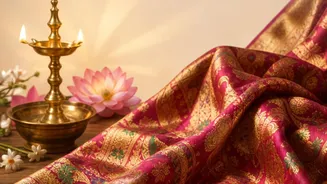
While the temples are the main draw, Bishnupur's cultural fabric is woven with other rich traditions. The town is the proud home of the Baluchari saree, a magnificent silk weave known for its elaborate pallus that narrate mythological stories. Originally from Murshidabad, the weaving tradition found refuge and flourished in Bishnupur under the patronage of the Malla kings after a devastating flood. Visiting a weaver's workshop offers a fascinating glimpse into this meticulous craft. For a touch of martial history, seek out the Dalmadal Kaman, a massive iron cannon from the 18th century that is said to have protected the Malla kingdom from Maratha attacks and remains remarkably rust-free. To delve deeper into the region's history, the Acharya Jogesh Chandra Purakriti Bhawan museum houses artifacts from the Gupta and Pal eras, as well as a gallery dedicated to the Bishnupur Gharana of classical music.