








From Proposal to Phenomenon
International Day of Yoga (IDY) began not as a grassroots movement, but as a top-down diplomatic initiative. In 2014, Prime Minister Narendra Modi proposed the day at the United Nations General Assembly, and the resolution was co-sponsored by a record
177 nations. While the UN sanctioned it, India took ownership with an enthusiasm usually reserved for hosting the Olympics. The Ministry of AYUSH became the nodal agency, tasked with turning a UN day into a national spectacle. The first IDY in 2015 saw over 35,000 people, including the Prime Minister, performing asanas on Delhi's Rajpath, setting a precedent for the scale and ambition that would define the event in the years to come.
The Ingredients of a Festival
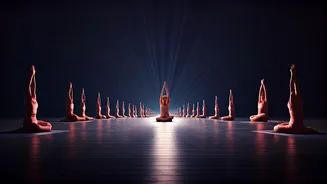
What makes a festival? It’s more than just a holiday. It’s about mass participation, shared rituals, a specific visual identity, and a palpable sense of community. Yoga Day ticks many of these boxes. The sight of thousands of people in matching T-shirts moving in unison has become the day's defining image. It has its own 'Common Yoga Protocol'—a standardised sequence of asanas that creates a shared ritual across the country and even the world. Public parks, iconic monuments, and even naval warships become venues for these mass demonstrations. This transforms a personal wellness practice into a massive, public-facing celebration, much like a religious procession or a national parade.
The Government as Event Manager
No other UN-designated day receives this level of state-sponsored promotion in India. The government machinery swings into action months in advance. Circulars are sent to schools, universities, and government offices, encouraging—and sometimes mandating—participation. The Prime Minister leads a flagship event in a different city each year, turning the national spotlight onto places like Chandigarh, Dehradun, or Mysuru. This high-level patronage gives the day an official sanction and gravitas that elevates it beyond a simple health awareness campaign. It is positioned as a matter of national pride, a projection of India’s cultural 'soft power' on the global stage.
Beyond the State's Push
While the government provides the framework, the event's festive feel is amplified by its adoption at the community level. Resident Welfare Associations (RWAs) organise sessions in neighbourhood parks. Corporations host yoga classes for employees as a wellness initiative. Influencers and yoga gurus flood social media with tutorials and motivational messages. A commercial ecosystem has also blossomed around it. Brands launch new lines of yoga mats, athleisure wear, and wellness products in the run-up to June 21st. Like Diwali or Holi, it has become a date circled on the marketing calendars of many businesses, further embedding it into the public consciousness.
A Celebration with Nuances
Of course, the comparison to a traditional festival isn't perfect. Critics point to the element of compulsion in some institutions and argue that the event is used to push a specific politico-cultural agenda. They highlight the homogenisation of a diverse practice and the occasional friction when participation is framed as a test of patriotism. Yet, even these debates contribute to its significance. A topic that polarises and generates national conversation is, by definition, a nationally important one. These controversies are part of its story, making it a living, evolving event rather than a static observance.