





Defining 'EV Assist' Beyond the Buzzword
For years, the promise of electric vehicles in India was hampered by practical hurdles: where to charge, how long it takes, and the high upfront cost. 'EV Assist' is not a single product but an entire ecosystem designed to dismantle these barriers. It
represents a network of interconnected services and technologies working in unison to make EV ownership seamless. This includes physical infrastructure like charging stations and battery-swapping depots, financial support through government schemes, and the intelligent software embedded in the vehicle itself. Together, these elements are transforming the EV from a niche interest into a practical choice for daily transport, addressing the core anxieties that have slowed mainstream adoption. [9, 14, 23]
Tackling Range Anxiety Head-On
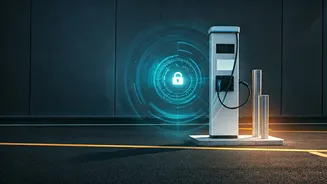
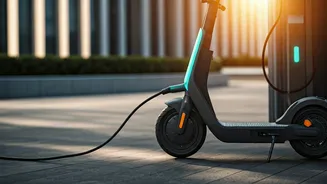
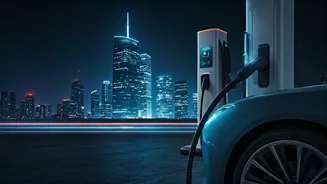
The most significant hurdle for potential EV buyers has always been 'range anxiety'—the fear of a battery dying mid-journey. The backbone of EV Assist is the rapid expansion of charging infrastructure. As of early 2026, India has over 29,000 public EV charging stations, a nearly six-fold increase since 2022. [2] While this still lags behind global benchmarks, the growth is undeniable, particularly along major highways and in metropolitan areas. [2, 8] Companies and public sector undertakings are establishing networks of both AC chargers for overnight use and DC fast chargers that can significantly top up a battery in under an hour. [6, 7] This growing density means that for many urban and inter-city drivers, planning a trip around charging stops is becoming a routine task rather than a logistical nightmare. [8, 14]
The Game-Changer: Battery Swapping and BaaS
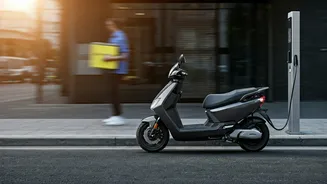
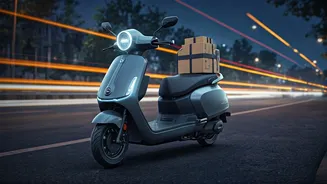
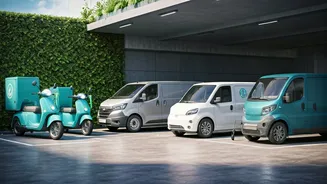
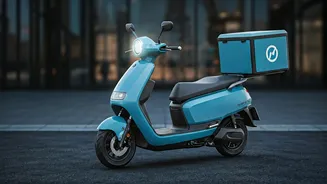
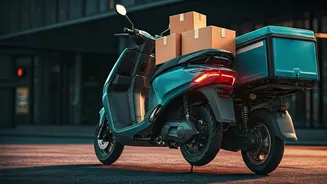
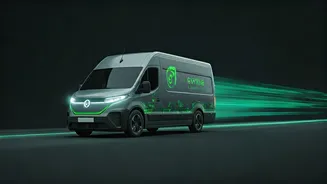
For the dominant two and three-wheeler segments, battery swapping is emerging as a revolutionary solution. Instead of waiting for a vehicle to charge, a rider can visit a swapping station and exchange a depleted battery for a fully charged one in minutes. This 'Battery as a Service' (BaaS) model also lowers the vehicle's initial purchase price, as the customer subscribes to the battery service instead of owning the battery outright. [9, 31] The government is actively shaping policy to encourage this sector, moving from a universal standard to a more flexible approach that supports commercially viable, closed-loop systems for fleet operators. [22] Though currently facing some tax disparities compared to selling EVs with batteries, swapping is a critical component of practical mobility for last-mile delivery and commercial fleets. [22, 26]
Smarter, Not Just Greener: The Software Layer
Modern EV Assist is also about intelligence. New electric vehicles are equipped with sophisticated software that enhances practicality. [4] Smart navigation systems can plan routes that automatically include necessary charging stops, displaying real-time charger availability and compatibility. [4] Features like one-pedal driving, which uses regenerative braking to slow the car in traffic while recharging the battery, reduce driver fatigue and improve efficiency. [4] Furthermore, connected car apps allow owners to remotely pre-condition the cabin's temperature—a significant comfort in India's climate—and monitor the state of charge from their smartphone, providing peace of mind and better control over their vehicle's readiness. [4, 11]
Financial Assistance: The Push from Policy
A crucial form of 'assist' comes from government policy. Schemes like FAME (Faster Adoption and Manufacturing of Electric Vehicles) and the subsequent PM E-DRIVE program have provided upfront subsidies to lower the high initial cost of EVs. [13, 15, 18] These incentives, combined with a lower GST rate of 5% on EVs compared to higher rates on conventional cars, make the overall cost of ownership more attractive. [21] State-level policies often add further benefits, such as waiving road tax and registration fees, directly reducing the on-road price for consumers. [21] This financial support has been instrumental in bridging the price gap and encouraging buyers to make the switch, particularly in the price-sensitive two and three-wheeler markets. [12, 24]