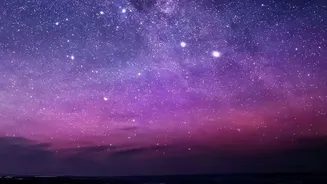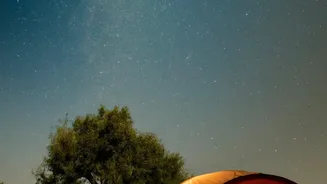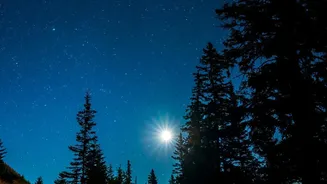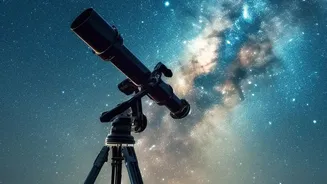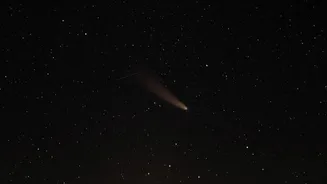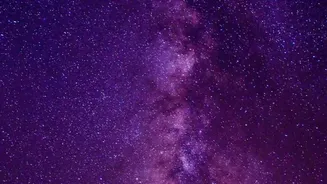



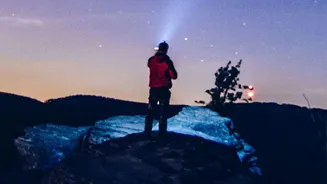
Forget the city glow. Beyond the urban sprawl, India offers some of the planet's most pristine night skies. This journey takes you to remote, breathtaking landscapes where the cosmos puts on a show you'll never forget.
Hanle, Ladakh: India's First Dark Sky Reserve
This is the crown jewel of Indian
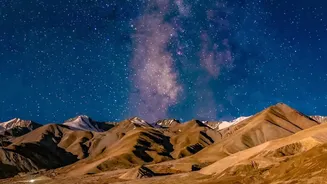
stargazing. Located in a remote corner of Ladakh, Hanle is officially designated as India's first Dark Sky Reserve, a protected area where light pollution is actively controlled to preserve the clarity of the night sky. At an altitude of 4,500 meters, the thin, dry air offers exceptionally clear views. It's home to the Indian Astronomical Observatory, and for good reason: on a moonless night, the Milky Way is so brilliant it can feel within reach. It's a journey to get here, but the celestial reward is unparalleled.
Spiti Valley, Himachal Pradesh: A High-Altitude Desert
Spiti Valley is a cold desert high in the Himalayas, a landscape of barren mountains, ancient monasteries, and villages that seem frozen in time. Its remoteness and high altitude mean the skies are almost entirely free of pollution. Villages like Kibber, Langza, and Komic are world-renowned among astrophotographers for their dark skies. In Langza, a giant Buddha statue sits under a canopy of stars, creating a truly iconic silhouette against the galactic core. The combination of raw nature and profound darkness makes Spiti a spiritual stargazing destination.
Pangong Tso, Ladakh: Stars Over a Famous Lake
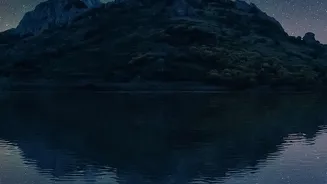
While famous for its stunning turquoise waters that change color with the sun, Pangong Tso transforms into a celestial observatory after dark. Located at a breathtaking altitude of over 13,800 feet, the lake's remote location ensures minimal light interference. The vast, still water often creates a perfect mirror, reflecting the star-dusted sky and doubling the cosmic spectacle. Camping near the lake offers an immersive experience, with the silence of the Himalayas punctuated only by the crisp mountain air and the overwhelming brilliance of the constellations above.
Rann of Kutch, Gujarat: A Salt Desert Canvas
Imagine a vast, flat expanse of white salt stretching to the horizon under a dome of infinite stars. That's the Rann of Kutch on a clear winter night. This unique salt marsh in Gujarat has virtually zero light pollution, providing an unobstructed 360ndegree view of the sky. During the annual Rann Utsav festival (typically November to February), travelers can stay in tent cities and witness the cosmos in surreal comfort. Whether it's the faint glow of the Milky Way on a new moon night or the ethereal landscape illuminated by a full moon, the experience is otherworldly.
Neil Island, Andaman and Nicobar: A Tropical Cosmic Show
For those who dream of stargazing from a beach, Neil Island (Shaheed Dweep) is paradise. Far from the mainland, these tropical islands are free from significant light pollution, offering pristine skies over the Bay of Bengal. The experience is multisensory: the gentle sound of waves, the soft sand, and a glittering celestial canopy overhead. The clear, humidndfree nights, especially between November and April, reveal constellations with startling clarity, making it a perfect blend of a relaxing beach vacation and a serious astronomical treat.
Coorg,' Karnataka:' The Southern Hills
Known as 'the 'Scotland of India'' for its lush green hills and coffee plantations,' Coorg also offers pockets of profound darkness perfect for stargazing.' Away from 'the main towns of Madikeri and Virajpet,' the southern valleys near 'the Brahmagiri foothills boast some of 'the darkest skies in southern India.' Here,' 'the Milky Way is visible during 'the dry summer months.' It's an accessible option for those in South India looking to trade city lights for cosmic sights,' often with 'the aroma of coffee blossoms in 'the air.'
Munsiyari,' Uttarakhand:' Gateway to 'the Himalayas
A quiet town in 'the Kumaon region of Uttarakhand,' Munsiyari serves as 'a base camp for trekkers and 'a haven for stargazers.' Sitting at 'an altitude of about 7,'200 feet,' it offers crystal-'clear views of 'the Panchachuli peaks and,' at night,' an equally stunning view of 'the universe.' Its remoteness is its greatest asset,' ensuring light pollution is practically non-'existent.' For those exploring 'the Indian Himalayas,' Munsiyari provides an off-'the-'beaten-'path opportunity to witness 'a truly dark sky.
Katao,' Sikkim:' The Switzerland of India
Often called 'the ''Switzerland of India',' Katao is 'a lesser-'known valley in North Sikkim.' At 'an altitude of around 15,'000 feet,' its rugged,' snow-'clad landscape is matched by its pristine,' clear skies.' Due to its remote location and 'the need for permits to visit,' it remains sparsely touristed,' preserving its tranquil atmosphere and dark nights.' It's an ideal spot for adventurers who want to combine activities like skiing and snowboarding with 'the profound experience of watching 'the cosmos unfold in 'a quiet,' high-'altitude setting.