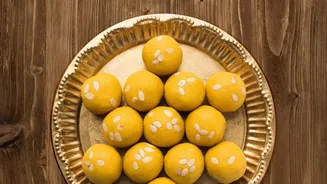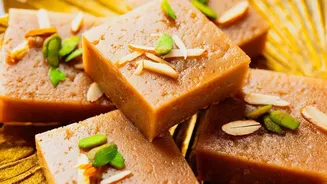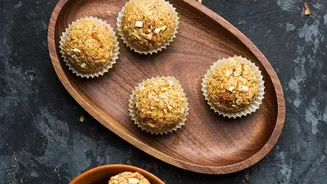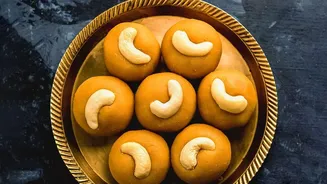

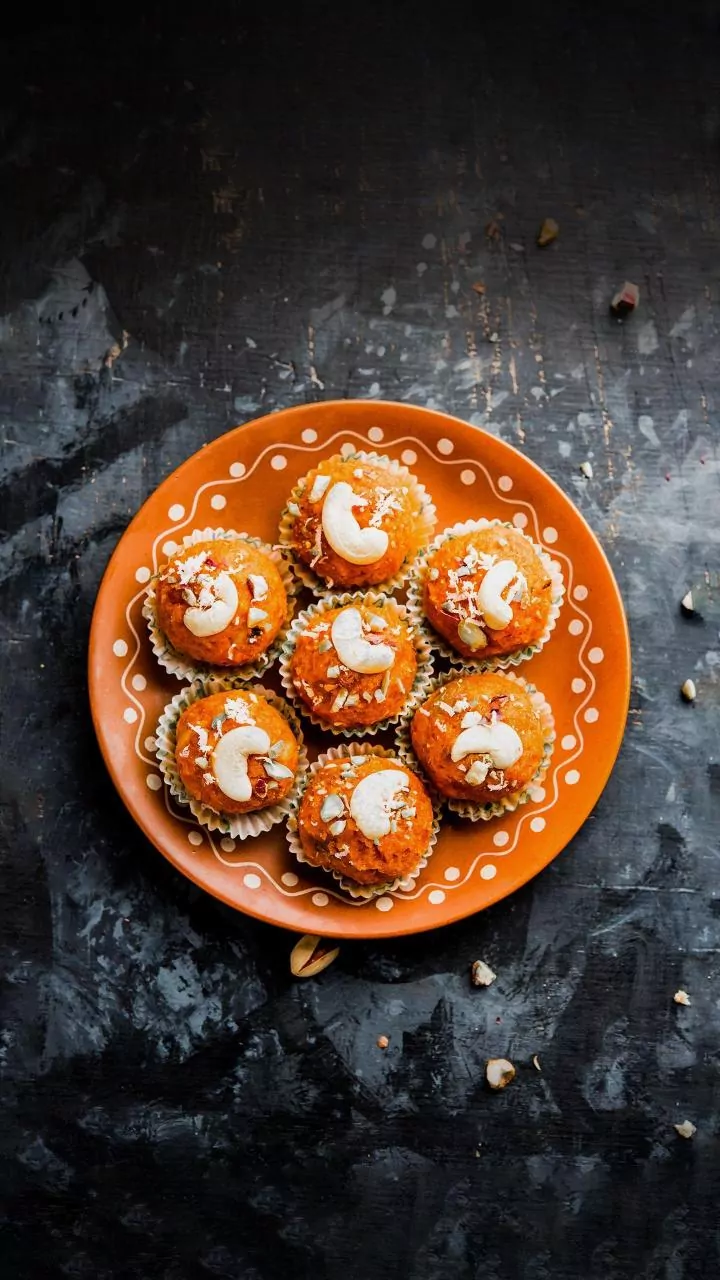

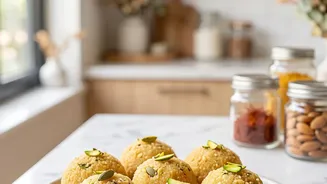
Besan Ladoo is more than a sweet; it’s a bite of nostalgia. Yet, achieving that perfect, melt-in-your-mouth texture can be tricky. Often, they turn out hard, raw, or crumbly. The good news? The secrets to perfect ladoos lie in avoiding a few key errors.
Mistake 1: Rushing the Roast
The single most critical step in making besan ladoo is roasting the gram flour, and patience is non-negotiable. Many home cooks make the mistake of using a high flame to speed things up. This is a recipe for disaster. High heat burns the outside of the besan particles while leaving the inside raw, resulting in a bitter, pasty flavour that sticks to the roof of your mouth. The only way to achieve that signature nutty, aromatic flavour is to roast the besan slowly in ghee on a low flame, stirring constantly. This process can take anywhere from 15 to 25 minutes. You’ll know it’s done when the mixture loosens, turns a beautiful golden-brown colour, and your kitchen fills with an unmistakable roasted aroma.
Mistake 2: The Wrong Ghee Ratio
Ghee is what gives a ladoo its richness and binds it together. Using too little or too much can ruin the final product. Too little ghee will result in a dry, crumbly mixture that refuses to hold its shape. Too much ghee, on the other hand, will create a greasy, slippery dough that’s impossible to roll into balls. A good rule of thumb is a besan-to-ghee ratio of roughly 2:1 by weight. For example, 200 grams of besan would require about 100-120 grams of ghee. It's also wise to add the ghee gradually. Start with about three-quarters of the total amount and add more only if the mixture feels too dry as it roasts.
Mistake 3: Using the Wrong Sugar
While you can use finely powdered granulated sugar, traditional recipes call for 'boora' or 'tagar'. This type of sugar is made by crystallising cooked sugar syrup and has a unique, slightly coarse texture that prevents the ladoos from becoming dense or sticking to your palate. Using regular icing sugar from a store can sometimes be a problem, as it often contains cornstarch, which can alter the final texture. If you don't have access to boora, your best bet is to grind regular granulated sugar at home into a fine powder, but not so fine that it’s like flour. This gives you the sweetness without the unwanted additives.
Mistake 4: Adding Sugar to a Hot Mixture
This is a frequent and fatal error. After you've patiently roasted your besan, you must let it cool down. Adding powdered sugar to a piping hot mixture will cause the sugar to melt instantly. When this melted sugar cools, it recrystallises into a hard, brittle mass, making your ladoos grainy and preventing them from binding properly. The mixture will become loose and may even turn into a solid slab that crumbles instead of rolls. The correct method is to transfer the roasted besan to a separate plate or bowl and let it cool until it is just warm to the touch. At this lukewarm temperature, the sugar will mix in evenly without dissolving, ensuring a soft, cohesive texture.
Mistake 5: Trouble with Binding and Shaping
If you've followed all the steps and your mixture is still too dry to form into balls, the fix is simple: add a tablespoon or two of warm, melted ghee. This usually provides enough fat to bring everything together. Conversely, if your mixture is too soft or greasy and won't hold its shape, it likely means you've used too much ghee or added the sugar when it was too hot. The quickest fix for a soft mixture is to place it in the refrigerator for 15–20 minutes. This allows the ghee to firm up slightly, making the dough much easier to handle and shape into those perfect, round delights.