


Introducing Shukrayaan-1: India's Next Interplanetary Leap
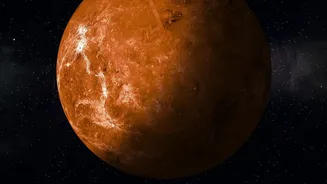
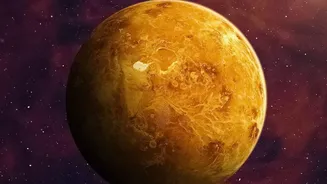
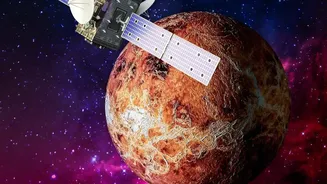
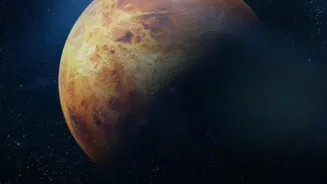
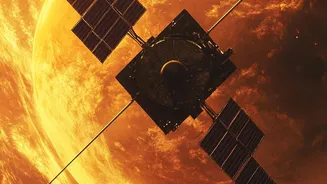
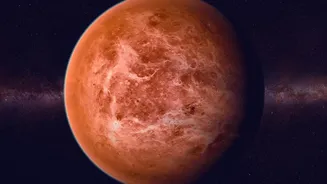
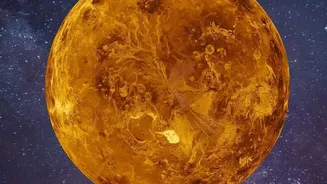
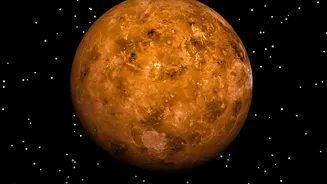
Following the resounding success of its Mars Orbiter Mission (Mangalyaan) and the Chandrayaan moon missions, the Indian Space Research Organisation (ISRO) is setting its sights on Venus. The planned Venus Orbiter Mission, unofficially named Shukrayaan-1,
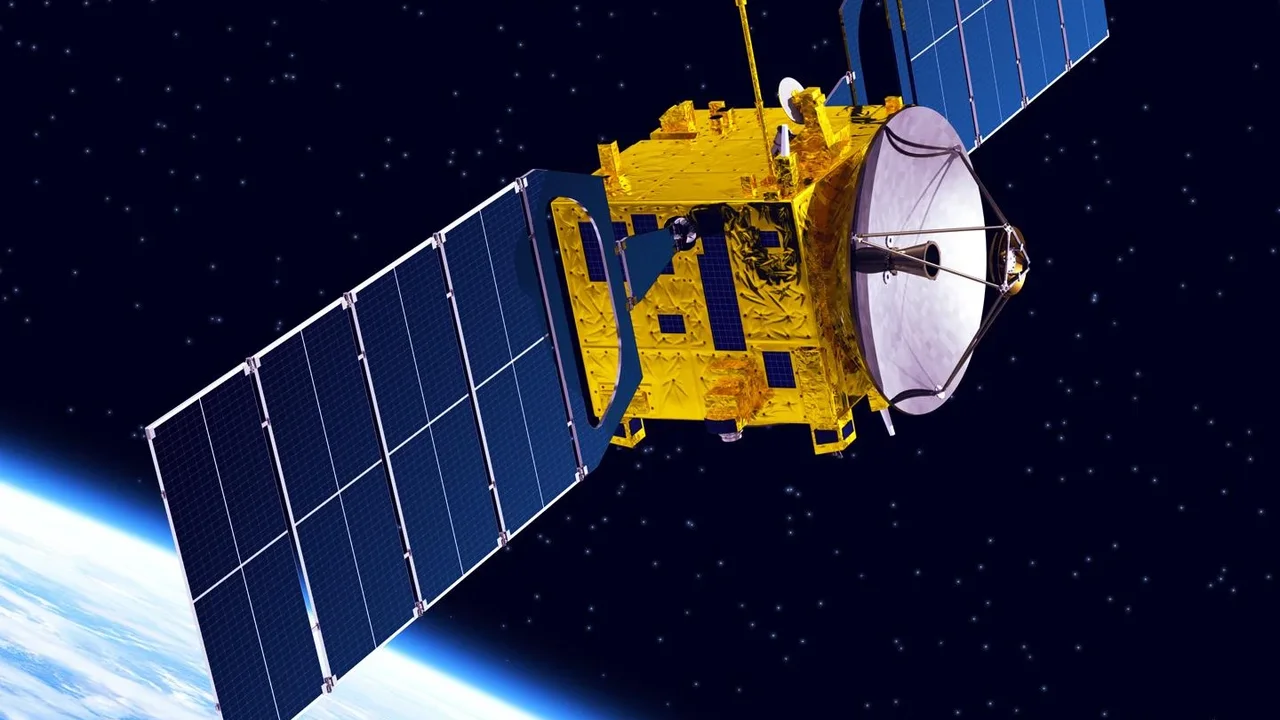
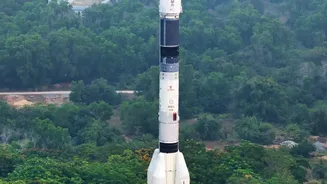
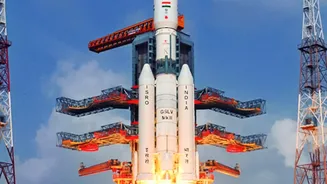
represents India's ambitious second interplanetary venture. The mission, which received formal government approval in September 2024, is slated for launch aboard the powerful LVM-3 rocket. Though initially planned for an earlier window, the launch is now anticipated for late 2028 or beyond, when the alignment between Earth and Venus is optimal for the journey. The spacecraft, weighing around 2,500 kg, will carry a suite of approximately 19 scientific instruments, or 'payloads,' designed to conduct a thorough investigation of Venus from orbit for over four years. Its primary goals are to map the planet's surface and subsurface, study its toxic atmosphere, and investigate the interaction between Venus and the solar wind.
The Mystery of the Wandering Sulfur
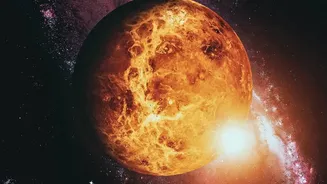
One of the most compelling mysteries Shukrayaan-1 aims to solve revolves around sulfur dioxide (SO2). Venus’s atmosphere is notoriously thick and laced with clouds of sulfuric acid. However, data from previous missions, including NASA's Pioneer Venus in the 1980s and the European Space Agency's Venus Express in the 2000s, have shown drastic fluctuations in the concentration of SO2 in the upper atmosphere. Sulfur dioxide is quickly broken down by sunlight, so its presence at high altitudes means it must have been recently replenished from below. This has led many scientists to hypothesise that active volcanoes on the planet's surface are periodically spewing massive plumes of gas into the sky. These transient spikes in SO2 could be the 'smoking gun' that confirms Venus is not a geologically dead world but a dynamic and active one.
ISRO's Volcanic Detective Tools
To hunt for this volcanic activity, ISRO has equipped Shukrayaan-1 with a formidable set of instruments. A key payload is the high-resolution Synthetic Aperture Radar (SAR), which can peer through the dense cloud cover to map the surface in unprecedented detail, potentially identifying fresh lava flows or changes in volcanic vents. Other instruments, like spectrometers, are specifically designed to analyse the chemical composition of the atmosphere. The Venus Infrared Atmospheric Gases Linker (VIRAL), a joint Indo-French instrument, will play a crucial role. These tools will measure the concentration and distribution of gases like SO2 and carbon dioxide with high precision, allowing scientists to pinpoint the sources of any atmospheric spikes. By correlating atmospheric data with surface imaging, ISRO hopes to draw a direct line between a gas plume and a specific volcano.
A Hunt Decades in the Making
The search for active volcanoes on Venus is not new. For decades, scientists have gathered tantalizing but inconclusive evidence. NASA’s Magellan mission in the 1990s mapped 98% of the planet's surface, revealing over 1,600 major volcanic features, but couldn't confirm if any were still active. More recently, a re-analysis of Magellan's old radar images provided the strongest evidence yet: a volcanic vent that appeared to change shape and grow between two passes of the spacecraft, suggesting an eruption had occurred. Similarly, the ESA's Venus Express mission detected infrared 'flashes' thought to be hot lava flows and the previously mentioned SO2 variations. Shukrayaan-1, with its next-generation instruments, is poised to build on this legacy and provide the definitive evidence that has so far remained elusive. The mission will join a new wave of Venus explorers, including NASA's VERITAS and ESA's EnVision missions planned for the next decade.
Why Finding Active Volcanoes Matters
Confirming active volcanism on Venus would be a monumental discovery. It would fundamentally change our understanding of how Earth's twin evolved into a runaway greenhouse inferno. Volcanoes play a critical role in a planet's life cycle, shaping its crust, influencing its atmosphere, and affecting its climate. Understanding the internal engine of Venus—whether it is still hot and active like Earth's or has mostly cooled—is key to understanding the divergent paths our two similar-sized planets took. This knowledge is not just academic; it helps scientists refine models of planetary climate and provides a crucial case study for understanding Earth-sized exoplanets that may one day be discovered orbiting other stars. In essence, studying the fire on Venus could help us better protect the habitability of Earth.