

Finding the time and space for a good cardio workout can be a challenge. But what if one of the most effective exercises could be done in your living room with no equipment? At-home walking is a simple, powerful tool for your fitness journey.
Why Walk at Home?
Walking is
a fantastic low-impact exercise, meaning it's gentle on your joints. When you bring that workout indoors, you remove barriers like bad weather, uneven footpaths, or safety concerns. It's a convenient and free way to boost your cardiovascular health, which strengthens your heart and lungs. Regular brisk walking can help lower your blood pressure, reduce the risk of chronic conditions like type 2 diabetes, manage weight, and even improve your mood and sleep. The best part is that you can do it anytime, making it one of the most flexible and accessible forms of exercise for a beginner.
Perfecting Your Form for a Better Workout
Even though you're not travelling forward, proper form is key to getting the most out of your workout and preventing injury. Stand up tall, keeping your back straight and your head held high, looking forward rather than down. Relax your shoulders, pulling them back and down, away from your ears. Engage your core muscles to help stabilize your spine. As you march in place, let your arms swing naturally from the shoulder in opposition to your legs. Aim to land softly on your feet to minimize impact. If you have balance concerns, you can always keep a sturdy chair nearby for support.
Your First 20-Minute Indoor Walk
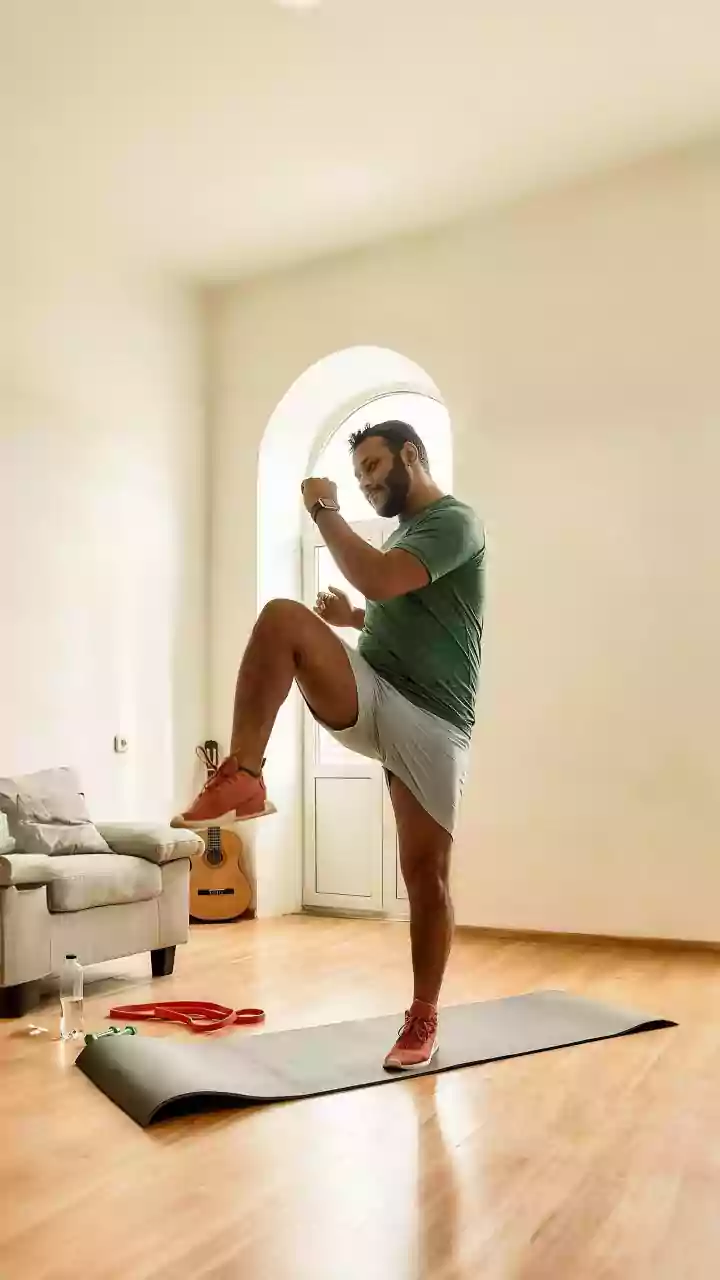
This simple routine is a great way to start. You can follow along with a timer or your favourite music. Warm-up (3 minutes): Start with a slow and gentle walk in place. Roll your shoulders and ankles to prepare your body for movement. Main Set (15 minutes): Increase your pace to a brisk march. Introduce some variations every few minutes to keep things interesting and work different muscles. - High Knees: For 30 seconds, lift your knees up towards your chest as you march. - Butt Kicks: For 30 seconds, try to kick your heels back towards your glutes. - Side Steps: For 30 seconds, take two steps to the right, then two steps to the left. - Arm Reaches: As you walk, reach your arms overhead, then bring them back down. Cool-down (2 minutes): Gradually slow your pace back to a gentle walk. End with some light stretches for your calves, hamstrings, and quadriceps.
How to Increase the Challenge
As you get fitter, your body will adapt. To keep making progress, you need to increase the challenge. One way is to increase the duration of your workouts, gradually adding five minutes at a time. Another is to increase the intensity; you can do this by quickening your pace, lifting your knees higher, or pumping your arms more vigorously. You can also introduce light hand weights or ankle weights to add resistance and build strength, but this is optional and should only be done once you are comfortable with the basic movements. Incorporating faster intervals—for example, walking as fast as you can for one minute, followed by two minutes at a normal pace—is also an excellent way to boost your fitness.
Tips to Stay Motivated
The key to any fitness routine is consistency, and the key to consistency is enjoyment. To avoid boredom, create a playlist of your favourite upbeat songs or listen to an engaging podcast or audiobook. Many people find it motivating to follow along with guided walking workouts online, which come in various lengths and intensity levels. You could also 'walk' while watching your favourite TV show, helping the time pass quickly. Using a fitness tracker to monitor your steps and progress can also provide a sense of accomplishment and encourage you to keep going. Finding what makes the workout fun for you will be your biggest asset in sticking with it longterm.