








More Than Just Dirt
For decades, the conversation around soil health in India has rightfully focused on agricultural productivity. Concerns about nutrient depletion, erosion, and the impact of fertilisers have dominated policy and farming discussions. Initiatives like the Soil
Health Card scheme, which provides farmers with nutrient status and recommendations, have been pivotal. But today, the narrative is expanding dramatically. Scientists, policymakers, and farmers are increasingly looking at soil not just for its ability to produce crops, but for its profound potential to heal the planet. The fight against climate change, once focused on smokestacks and tailpipes, is now digging deep into the earth itself.
The Science: A Carbon Sponge
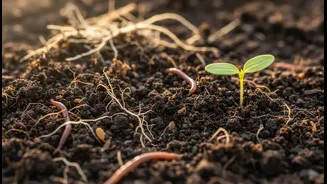
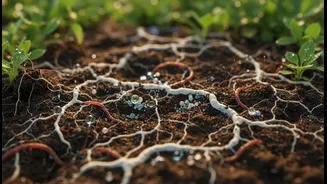
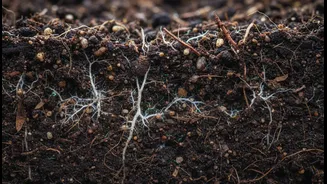
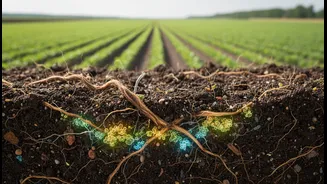
The fundamental science is both simple and powerful. Through photosynthesis, plants pull carbon dioxide (CO2) from the atmosphere. When these plants and other organic matter decompose, that carbon can be stored in the soil. Healthy, undisturbed soil acts like a massive carbon sponge, or 'sink', locking away atmospheric carbon for long periods. Globally, soil contains more carbon than the atmosphere and all plant life combined. Conversely, degraded and intensively ploughed soils release stored carbon back into the atmosphere, contributing to the greenhouse effect. This makes soil management a critical, two-way lever in the climate equation: poor practices release carbon, while good practices sequester it.
Why It's Critical for India
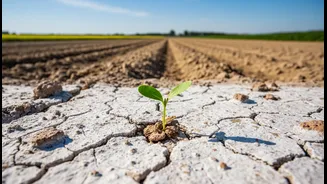
For India, a nation where agriculture employs nearly half the workforce and is acutely vulnerable to climate shocks like droughts and floods, this new understanding is a game-changer. Erratic monsoons and rising temperatures are already impacting crop yields and fuelling food inflation. Healthy soils offer a dual benefit. Firstly, by increasing soil organic matter, they improve water retention, making farms more resilient to drought. A mere 1% increase in soil organic carbon can significantly boost its water-holding capacity. Secondly, by sequestering carbon, Indian farmland can become a powerful tool in meeting the nation's climate goals, including its commitment to achieve net-zero emissions by 2070. With nearly 30% of India's land already degraded, restoring soil health is not just an environmental goal but an economic and food security imperative.
From Theory to the Farm
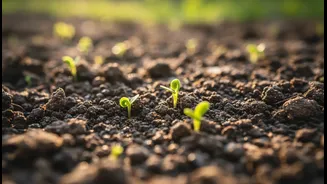
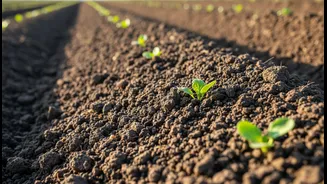
This shift is being driven by a set of practices often called regenerative agriculture. These are not necessarily new, with many echoing traditional farming wisdom. They include minimising tilling (ploughing) to keep carbon locked in, using cover crops to protect bare soil, rotating diverse crops to improve soil structure, and integrating organic inputs like compost. States like Andhra Pradesh have seen success with natural farming initiatives, reporting higher net incomes for farmers due to lower input costs. The Indian government is also promoting these principles through missions like the National Mission on Natural Farming. These methods do more than just store carbon; they rebuild the soil's natural fertility and biodiversity, reducing the need for costly chemical fertilisers and creating a more sustainable and profitable system for farmers in the long run.
The Path Forward
Transitioning millions of farmers to these new (or old) ways is not without challenges. Entrenched practices, the initial costs of transition, and the need for robust measurement and verification of carbon stored in soil are significant hurdles. However, the momentum is undeniable. Startups and agricultural organisations are developing new technologies and creating markets for carbon credits, potentially providing farmers with a new stream of income for their climate-friendly practices. Government initiatives promoting soil health awareness and sustainable practices continue to expand. The recognition is growing that investing in soil is an investment in our climate resilience, food security, and the livelihoods of millions.