


A Cosmic Collision Course
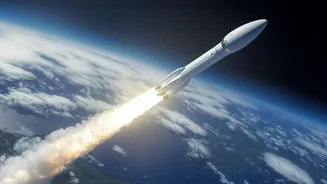
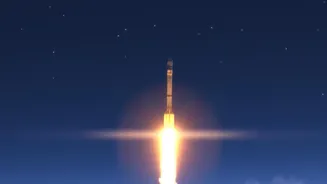
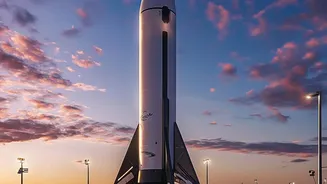
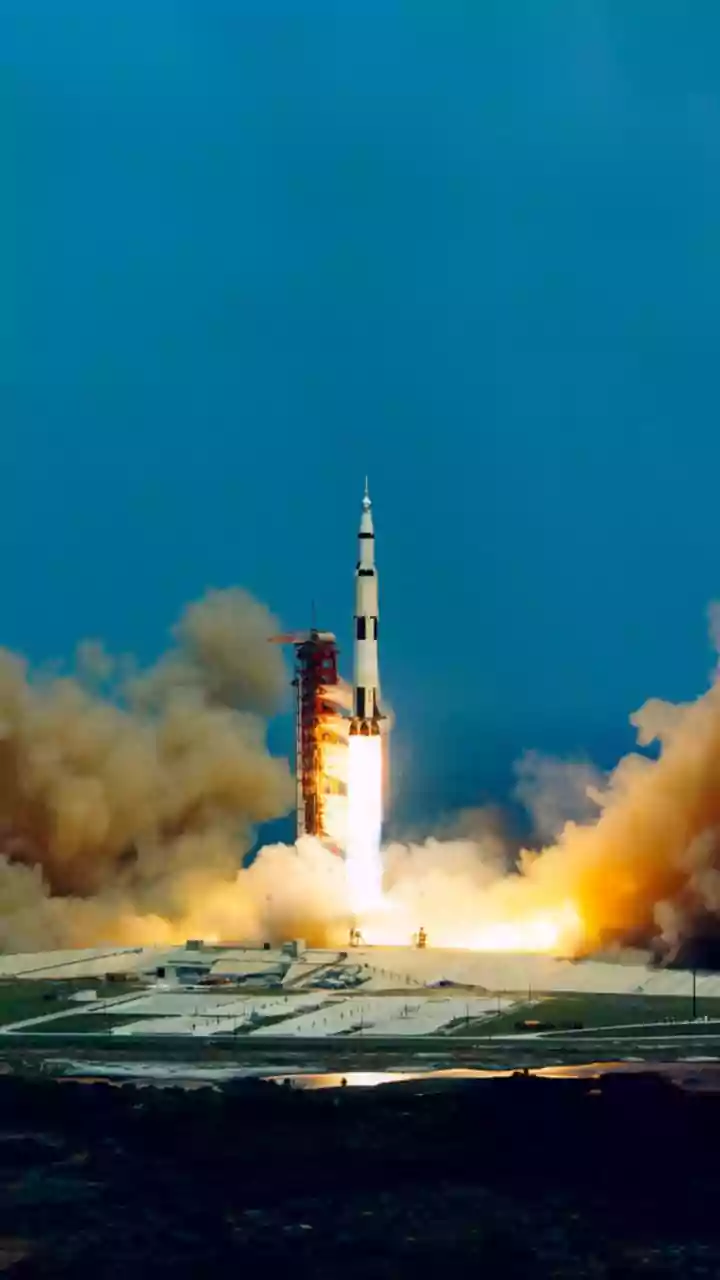
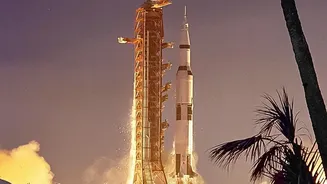
The object in question was the upper stage of a SpaceX Falcon 9 rocket. After launching a mission in January 2025, this four-ton piece of hardware was left in a high, looping orbit. Over time, the combined gravitational pull of the Earth, Moon, and Sun
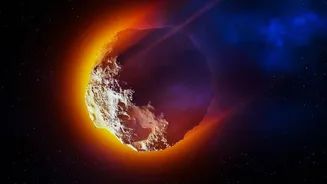
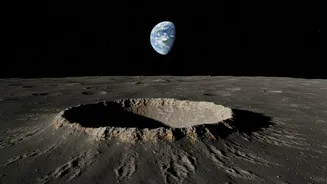
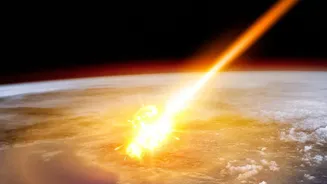
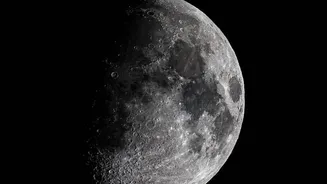
put it on a collision course. On August 5, 2026, traveling at roughly 8,700 kilometres per hour, it finally met the lunar surface near a formation known as Einstein crater. While man-made objects have hit the Moon before, including deliberately during the Apollo missions for seismic studies, this was a rare case of an accidental impact being tracked and anticipated well in advance, turning it into an unplanned experiment.
An Unexpected Signature
Scientists knew where and when the impact would happen, but the result still held a surprise. A similar accidental impact in 2022, attributed to a Chinese rocket booster, left an unusual double crater. This was puzzling because spent rocket stages are typically heavier at the engine end and lighter at the empty fuel tank end, which should result in a single, symmetrical crater. The double crater from the 2022 impact suggested the booster had a more complex, dumbbell-like mass distribution, perhaps due to an attached payload. The latest Falcon 9 impact gave scientists another chance to study the physics of such a collision. While the full analysis of the new crater will take time, as orbiters like NASA’s Lunar Reconnaissance Orbiter must pass over the site to take pictures, initial observations focused on the plume of debris kicked up by the crash.
The Science of the Plume
Because the Moon has virtually no atmosphere to slow things down or burn them up, the impact's full energy was transferred into the ground. The collision was expected to excavate a crater up to 30 metres wide and eject a massive cloud of lunar soil, or regolith, miles into space. This plume is a scientific goldmine. Telescopes on Earth, like the Very Large Telescope in Chile, were pointed at the Moon to analyze the chemical fingerprints of this dust cloud. By studying the light passing through the plume—a technique called spectroscopy—scientists detected traces of sodium and lithium. The sodium is believed to come from the lunar soil itself, while the lithium may be from the rocket's components. This gives a real-time sample of the Moon's surface composition without having to land a mission and dig.
A New Way to Study the Moon
Accidental impacts like this are providing a new, albeit controversial, method for lunar science. Every crater tells a story about both the impactor and the surface it strikes. With a natural meteorite, scientists know neither the object's mass nor its exact impact velocity. With this rocket stage, they knew its mass, speed, and composition, allowing them to precisely model the impact. This helps calibrate our understanding of crater formation, which is the primary way we determine the age and history of surfaces all over the solar system. Observing how the ejecta plume behaves helps scientists refine models that are crucial for planning future missions, both robotic and human. Understanding how material is thrown across the lunar surface is vital for assessing risks to future moon bases and astronauts from both natural and artificial impacts.