


A Natural Observatory
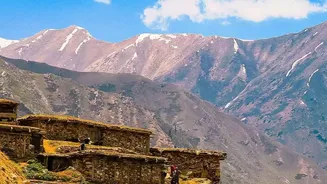
Langza's ascent into an astrotourism hotspot is fundamentally due to its geography. Perched at a staggering altitude of over 4,400 metres, the village sits above much of the atmospheric interference that plagues lower regions. The air here is thin, dry,
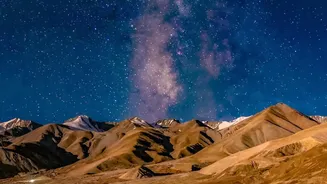
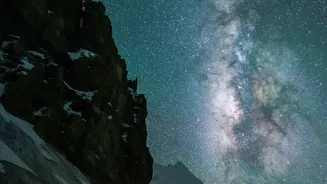
and clean, resulting in exceptionally clear nights for more than 250 days a year. Combined with its remote location far from the light pollution of cities, Langza boasts some of the darkest skies in India. This creates a natural observatory where the Milky Way isn't just a faint smudge but a brilliant, textured river of light visible to the naked eye.
From Fossils to Galaxies
For years, Langza's identity was rooted in the ground. It is famously known as the "Fossil Village" because its slopes are scattered with ammonites and other marine fossils, remnants of the ancient Tethys Sea that existed here millions of years ago. Today, that ancient past is meeting the cosmic one. The village now offers a dual attraction: visitors can hunt for fossils by day and gaze at distant galaxies by night. This unique blend of geology and astronomy creates a profound experience, connecting visitors to Earth's deep history and the vastness of the universe all in one trip. The iconic Buddha statue overlooking the valley serves as a silent guardian over this land of earthly and celestial wonders.
Community and Infrastructure Take Flight
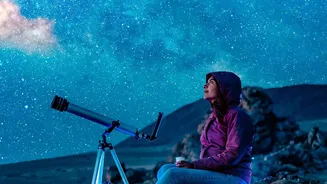
Natural advantages alone are not enough. The transformation of Langza is being driven by a conscious effort from the local community and government. Spiti's residents, known for their warmth, have opened their homes to travellers, offering authentic homestay experiences. This community-based tourism model ensures that the benefits are shared locally. More recently, a significant push from the state has accelerated this growth. In 2025, the Himachal Pradesh government launched a formal astro-tourism initiative in the region, including providing high-end computerized telescopes to local youths in Kaza and surrounding villages like Langza. These trained locals now lead guided stargazing sessions, turning their ancestral knowledge of the land into a new livelihood centered on the sky.
The Langza Stargazing Experience
So what does a night of astrotourism in Langza look like? It often begins after dinner at a homestay, stepping out into the biting cold of the high-altitude night. As your eyes adjust, the sheer number of stars becomes overwhelming. Through powerful telescopes, what appears as a single star might be revealed as a distant globular cluster or a nebula where new stars are being born. Tour operators and local guides help identify constellations, planets, and other deep-sky objects. For photographers, the landscape, often featuring the Buddha statue or traditional mud-brick homes against the cosmic backdrop, provides a surreal canvas. It’s an immersive experience that goes beyond just looking; it’s about understanding our place in the cosmos from one of the best vantage points on Earth.