



Pinpointing the Source
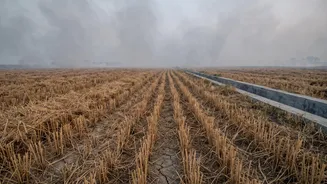
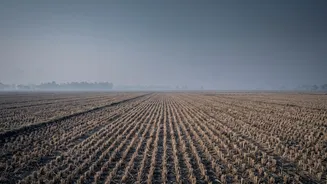
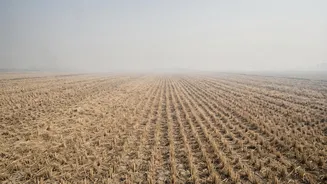
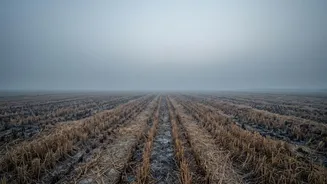
Every year, as farmers in Punjab and Haryana clear their fields for the next crop, vast plumes of smoke drift across the Indo-Gangetic Plain. While this has long been blamed for Delhi's infamous winter smog, recent scientific analyses have quantified
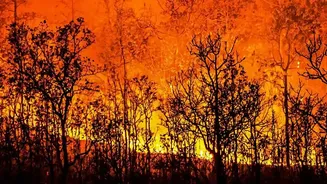
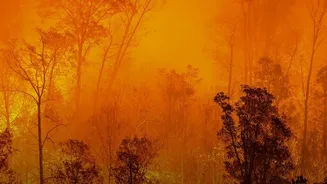
its contribution with alarming precision. A study by an international team led by the Paul Scherrer Institute (PSI) used advanced molecular measurement techniques in Delhi and Kanpur to trace the origins of organic particulate matter. Their findings confirm that agricultural fires are a primary source of fine particulate pollution, especially during the autumn rice harvest. These emissions, originating largely from Punjab, travel long distances and are responsible for a significant share of the toxic air in downwind cities.
The Deadly Toll of Farm Smoke
The impact on public health is severe. The PSI research suggests that during the peak burning season, smoke from rural fires can be linked to as much as 32% of acute PM2.5-related deaths in Delhi and a staggering 50% in Kanpur. PM2.5 are tiny, inhalable particles that can penetrate deep into the lungs and bloodstream, causing cardiovascular and respiratory diseases. Another study covering nearly two decades estimated that agricultural residue burning causes between 44,000 and 98,000 premature deaths annually across India. The findings underscore that this is not a distant, abstract environmental issue, but a direct and immediate threat to life and health for a vast population.
It's Not Just Winter Smog
The new research also complicates the narrative that farm fires are only a winter problem. Scientists are now looking at how these massive aerosol plumes affect weather patterns more broadly. The smoke contains black carbon, or soot, which absorbs solar radiation and heats the surrounding atmosphere. This can influence atmospheric stability and even weather dynamics beyond the immediate pollution episode. Furthermore, policy changes have inadvertently shifted the problem. A 2009 law in Punjab and Haryana, designed to conserve groundwater by delaying paddy sowing, also pushed the harvest and subsequent burning season later into the year. This concentrates the fires in a shorter, cooler period when meteorological conditions are more likely to trap pollutants, potentially amplifying the smog events even if the total area burned remains the same.
A Cat-and-Mouse Game
Even attempts to monitor the problem face challenges. Recent analysis shows that official counts of farm fires may be misleading. Researchers using geostationary satellites, which monitor continuously, found that the peak time for burning has shifted from early afternoon to around 5 p.m. This change appears to be an effort by some farmers to avoid detection by the polar-orbiting satellites that pass overhead at specific times and are used for official fire counts. This highlights a discrepancy: while official fire detections have fallen dramatically in some years, the actual area burned has decreased far less, and Delhi's air quality has not seen a corresponding improvement. The focus is now shifting from simply counting fires to measuring the total area burned to get a more accurate picture of the pollution source.
The Search for Lasting Solutions
Addressing stubble burning requires more than just banning it; it demands viable alternatives for farmers. The tight turnaround between harvesting rice and planting wheat makes burning the quickest and cheapest option for clearing fields. Proposed solutions range from promoting different crop varieties and subsidizing machinery that tils the residue back into the soil, to creating a market for the stubble by converting it into products like biofuel or eco-friendly packaging. Studies suggest that even small changes could have a big impact; one paper found that simply shifting the time of burning by a few hours could avert thousands of premature deaths annually. Ultimately, the research confirms that tackling this issue requires a coordinated regional strategy that extends beyond city limits and supports farmers in transitioning to more sustainable practices.