




Beyond an Empty Stomach
For decades, the global metric for hunger was focused on calories. As long as people had enough food to feel full, the battle was thought to be half-won. But a more insidious problem, 'hidden hunger', has been gaining recognition. This isn't about the quantity
of food, but its quality. Hidden hunger refers to micronutrient deficiencies—a lack of essential vitamins and minerals like iron, vitamin A, and zinc. Globally, over two billion people are affected, suffering from consequences that range from impaired brain development and weakened immune systems to blindness and anaemia. This issue is particularly severe in communities that rely heavily on a few staple crops, such as rice and wheat, which may provide energy but lack a broad spectrum of essential nutrients. The irony is that the Green Revolution, while successfully boosting calorie production and averting famine, also contributed to this problem by promoting high-yielding but often less nutritious monocultures.
The Limits of a Pill-Based Fix
The traditional response to hidden hunger has been largely medical and supplemental. This includes food fortification, which involves adding micronutrients to processed staple foods like flour and salt, and providing direct supplements like vitamin A drops or iron tablets to vulnerable populations. While these strategies have saved millions of lives and remain crucial in emergencies, they are not a complete, long-term solution. They often depend on complex supply chains, consistent funding, and people’s access to and use of fortified products or supplements. In essence, they treat the symptoms of poor nutrition rather than addressing the root cause: a lack of dietary diversity. A growing number of experts now argue that a more sustainable approach lies in fixing the food system itself, starting with what is grown on the farm.
The Farm as the First Pharmacy
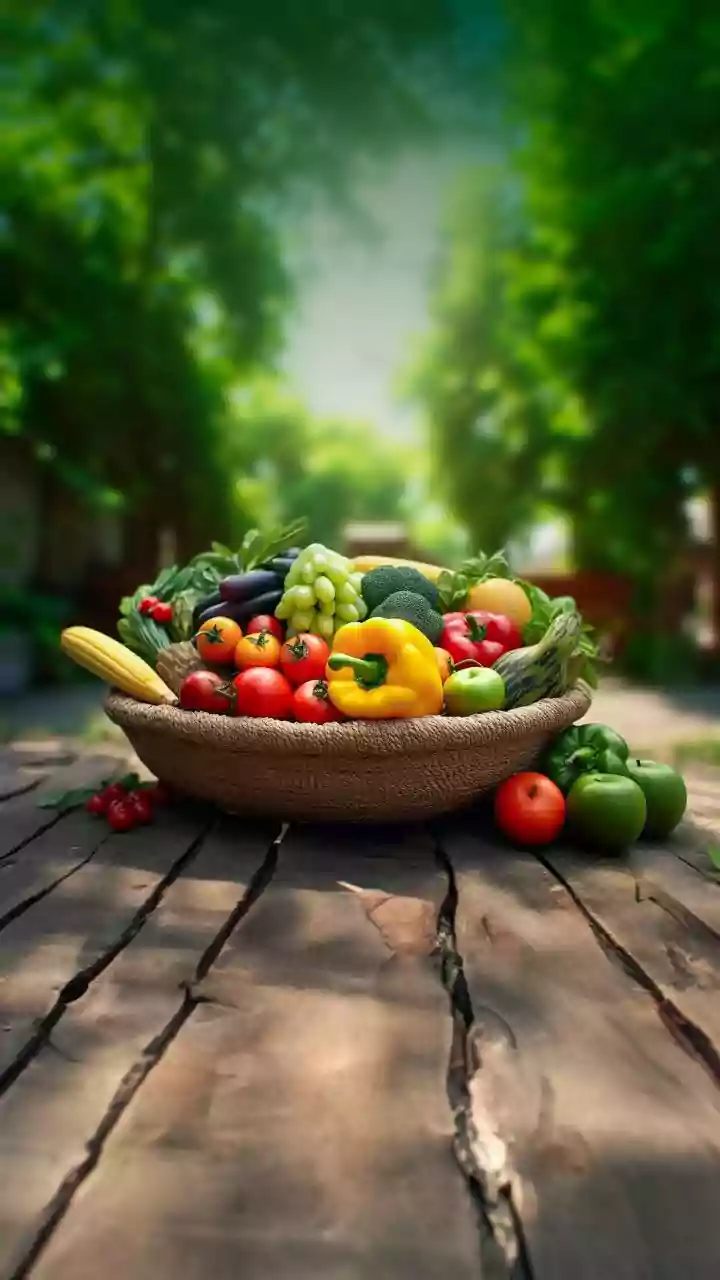
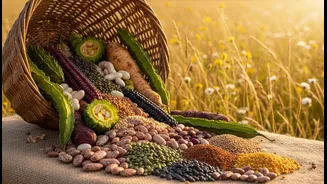
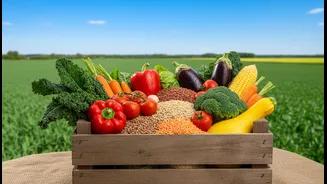
This is where crop diversity enters the picture. The new approach reframes agriculture as a primary tool for public health. Instead of relying solely on post-harvest fixes, the focus is shifting to what is grown in the first place. Promoting a wider variety of crops—including traditional millets, diverse pulses, colourful fruits, and local vegetables—can naturally introduce a richer array of nutrients into a community's diet. This farm-system approach is built on a simple premise: a more diverse farm leads to more diverse food on the plate, which in turn leads to better nutrition. It's a strategy that aims to make nutritious food more available, accessible, and affordable for everyone, especially for farming families who are ironically often among the most affected by hidden hunger.
Biofortification and Embracing Diversity
A key pillar of this farm-centric strategy is biofortification. This scientific process involves breeding crops to be richer in specific micronutrients. Unlike industrial fortification, biofortification enhances the nutrient content of the crop itself. In India, the Indian Council of Agricultural Research (ICAR) has been at the forefront, developing and releasing dozens of biofortified varieties, including zinc-rich wheat and rice, and iron-rich pearl millet. Since 2014, 87 biofortified varieties across 16 different crops have been developed. This approach is seen as sustainable and cost-effective because once a nutrient-rich variety is developed, it can be distributed and grown for years, delivering better nutrition with every harvest. This is coupled with a renewed push to revive cultivation of traditional, naturally nutrient-dense crops like millets, which are also more resilient to climate change.
Reaping the Rewards for India
Adopting a farm-system angle for nutrition policy holds immense potential for India. It aligns with national goals like the POSHAN Abhiyaan, which aims to reduce malnutrition. By encouraging farmers to diversify away from just wheat and rice, it can improve both their income resilience and the health of the soil. For consumers, it means greater access to a wider variety of foods, helping to build a food culture that values nutritional quality as much as quantity. Linking agriculture with nutrition at the policy level helps create a virtuous cycle: farmers are incentivized to grow more nutritious foods, which become more available and affordable in local markets, leading to better dietary diversity and improved health outcomes for the entire population. It represents a fundamental shift from simply feeding people to truly nourishing them.