



More Than Just Smoke and Noise
For years, the main environmental concern around fireworks has been air pollution, with clouds of smoke blanketing cities after major festivals like Diwali or New Year's Eve. We see the haze and breathe the particulate matter. However, a growing body
of research is revealing another, more hidden, environmental cost. What goes up must come down, and the chemical residues from these aerial displays eventually settle on land and, crucially, in our water systems—lakes, rivers, and even groundwater. This has prompted a new wave of studies focused on understanding the aquatic fallout of our celebrations.
A Chemical Cocktail for Waterways
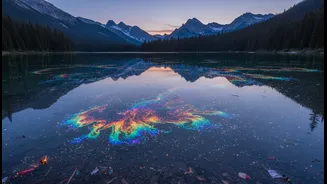
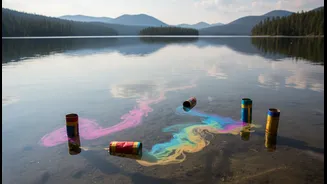
To create their spectacular colours and effects, fireworks rely on a potent mix of chemicals. Heavy metals are used as colourants: strontium for red, copper for blue, and barium for green. Propellants, which send the rockets skyward, are often rich in a compound called perchlorate. When a firework explodes, these substances are dispersed. The debris, including partially burned fuel, metal salts, and charred packaging, can be washed into water bodies by rain or deposited directly when displays are held over or near lakes and rivers. This isn't just litter; it’s a direct infusion of pollutants.
The Perchlorate Problem
Among the chemicals involved, perchlorate is a primary focus for water quality experts. It is highly soluble in water and can persist in the environment. Studies have repeatedly shown sharp spikes in perchlorate levels in lakes and rivers immediately following firework displays. One study on a small lake recorded perchlorate concentrations spiking to over 1,000 times the baseline level within 14 hours of a fireworks show. The main concern with perchlorate is its effect on the thyroid gland. It can interfere with the thyroid's ability to take up iodine, which is essential for producing hormones that regulate metabolism. This can impact humans who rely on these water sources for drinking and is also a significant threat to aquatic wildlife, potentially affecting the development and reproduction of fish and amphibians.
Unseen Changes to Water Chemistry
Recent laboratory studies have shown that the impact goes beyond just adding pollutants. When firecracker residue enters water, it leaches metal ions like potassium and manganese, as well as organic compounds. At the same time, the solid debris can act like a sponge, absorbing other organic materials already present in the water. This dual action—releasing some chemicals while removing others—fundamentally alters the water's chemistry. Researchers suggest these changes could disrupt the microbial communities that form the base of aquatic ecosystems, with consequences that ripple up the food chain.
The Indian Context
In India, where fireworks are a massive part of festivals like Diwali, the focus has largely been on the severe air pollution that follows. However, research is beginning to highlight the water quality issues as well. A study in Kerala found perchlorate in soil and water samples after fireworks events. Another study in Ahmedabad noted that while perchlorate levels in a lake increased after Diwali, the nearby Sabarmati River showed surprisingly high concentrations before the event, suggesting that runoff from fireworks manufacturing facilities could be a major, year-round source of contamination, separate from the celebratory burning. Studies in Sivakasi, a major hub of fireworks manufacturing, have found significant perchlorate contamination in groundwater, with some samples exceeding drinking water guidelines.