



From Cane to Crystal: The Processing Divide
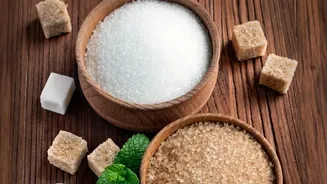
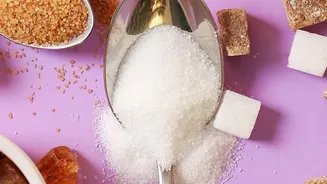
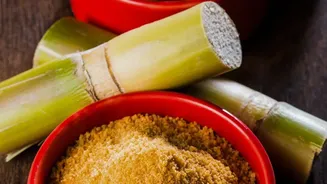
The most significant difference between jaggery and white sugar lies in their production. Both start as sugarcane juice, but their paths diverge dramatically. White sugar undergoes intensive industrial refining. The juice is clarified, filtered, and boiled
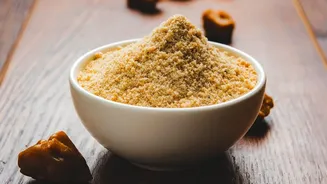
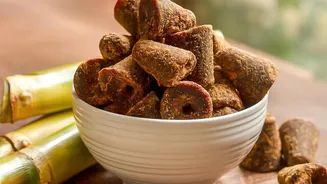
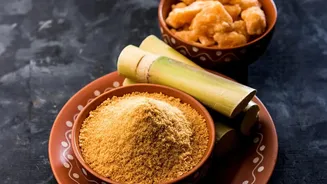
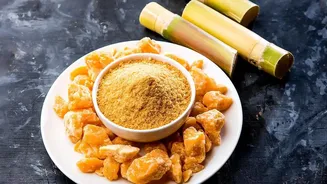
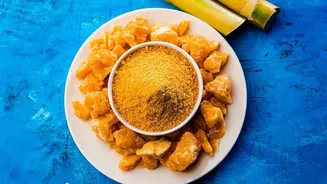
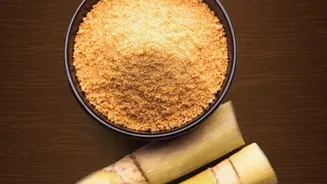
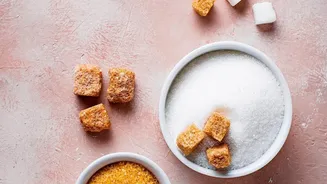
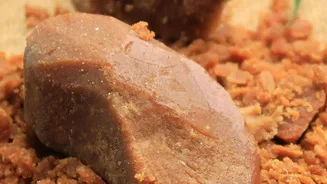
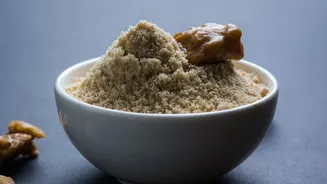
to create crystals. Crucially, this process involves separating and removing the molasses, which results in the familiar pure white sucrose. Jaggery, on the other hand, is an unrefined or non-centrifugal sugar. The sugarcane juice is simply boiled in large, open pans until it thickens and solidifies. Because the molasses is not stripped away, jaggery retains its characteristic golden-to-dark-brown colour and a more complex, caramel-like flavour. This single difference in processing is the source of all the nutritional and flavour distinctions that follow.
A Look at the Nutritional Scorecard
Since white sugar is stripped of molasses, it is often described as providing 'empty calories'—it is almost 99.9% sucrose with virtually no other nutrients. Jaggery, by retaining the molasses, holds onto trace amounts of minerals and vitamins. It contains small quantities of iron, magnesium, potassium, and calcium. However, the 'miracle food' claims often ignore portion sizes. While 100 grams of jaggery can contain a significant amount of iron (up to 11 mg in some cases), a typical serving is closer to 10 grams. At this realistic serving size, the mineral contribution is quite small and not enough to meet daily requirements on its own. Calorie-wise, both are nearly identical, with jaggery having around 383 calories per 100 grams and sugar around 387. So, while jaggery is nutritionally superior on paper, the practical benefit in small daily doses is marginal.
The Glycemic Index and Blood Sugar Impact
A common myth is that jaggery is safer for people with diabetes because it is 'natural'. This is a dangerous misconception. The glycemic index (GI) measures how quickly a food raises blood sugar levels. Surprisingly to many, sugarcane jaggery has a high GI, often reported to be around 84, which is actually higher than that of white sugar (around 65). This means jaggery can cause a faster and sharper spike in blood glucose. For individuals managing diabetes or insulin resistance, neither sweetener is a safe choice to be consumed freely. Medical experts are clear that people with diabetes should treat jaggery with the same caution as sugar, limiting intake of both.
The Winter 'Warming' Effect and Traditional Use
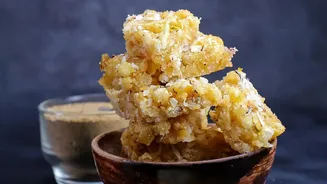
In Ayurveda and traditional Indian culture, jaggery is considered a 'warming' food, making it a winter staple. This is why you see it featured in seasonal preparations like chikki, ladoos, and panjiri, often combined with other 'warming' ingredients like sesame seeds, ginger, and ghee. This warming effect is partly due to the body expending energy to digest food. Jaggery is also a source of quick energy, which can feel comforting in colder weather. Furthermore, it has been traditionally used to aid digestion and as a remedy for coughs and colds, partly due to its soothing texture and its role in cleansing the respiratory tract. While these traditional uses are deeply ingrained, it's important to view them in the context of moderation and as part of a balanced diet, not as a medical treatment.
The Verdict: A Slightly Better Choice, Not a Health Food
So, should you throw out your sugar and replace it all with jaggery? The answer is nuanced. Jaggery is undoubtedly a less processed option that offers a richer flavour profile and a tiny mineral boost compared to nutritionally-void white sugar. If you are choosing a sweetener for your tea or a traditional sweet, jaggery is the marginally better choice. However, it is not a health food. It has the same number of calories as sugar and can spike your blood sugar even more quickly. The real key to a healthier diet is not swapping one type of sugar for another but reducing your overall intake of all added sweeteners. Enjoy your winter gur treats, but do so in moderation, understanding that it is still, fundamentally, a form of sugar.