





The Insatiable Appetite of AI
The generative AI tools that have captured the world's imagination, from large language models to image creators, are fundamentally different from traditional software. They don't just run simple instructions; they perform immense and complex calculations
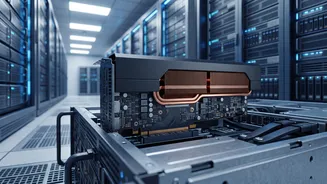
for both training and generating responses, a process known as inference. This requires a type of computational muscle that is orders of magnitude greater than what's needed for web hosting or standard enterprise applications. The specialized chips at the heart of AI, known as Graphics Processing Units (GPUs), are designed for this kind of parallel processing, but they are incredibly power-hungry. A single high-end Nvidia H100 GPU can consume up to 700 watts of power, similar to a microwave oven, and these chips are deployed by the thousands in massive server racks.
Not Your Average Warehouse
To accommodate this new reality, a new breed of data centre is emerging. Unlike traditional facilities built around Central Processing Units (CPUs), AI data centres are specifically designed for the extreme demands of GPUs. This means much higher power density; where a traditional server rack might draw 5-15 kilowatts (kW), an AI rack can routinely demand 40-80 kW, with future systems projected to exceed 150 kW. All this power generates an enormous amount of heat, making conventional air conditioning obsolete. Instead, these advanced facilities often require sophisticated liquid cooling systems, where fluids are piped directly to the chips to prevent them from overheating. This shift in hardware and cooling requires a fundamental change in building design, networking, and physical footprint.
A Voracious Thirst for Power and Water
The collective energy demand of this AI infrastructure boom is staggering. Global data centre electricity consumption is projected to surge in the coming years, with some estimates suggesting it could double between 2025 and 2030, driven almost entirely by AI workloads. Gartner forecasts that data centre electricity use will grow 26% in 2026 alone, with AI-optimized servers accounting for nearly a third of that consumption. This immense thirst for power is putting an unprecedented strain on local and national energy grids, with some analysts warning that power availability, not technology or capital, is becoming the primary constraint on AI expansion. The environmental impact extends to water, too. Large data centres can consume millions of gallons of water per day for their cooling systems, with consumption equivalent to that of a small city.
The Concrete and Steel of Code
This digital revolution is fueling one of the largest infrastructure investment cycles in modern history. Trillions of dollars are being poured into building new AI-ready data centres, with some projections showing global capacity could nearly triple by 2030. In the US alone, spending on data center construction has already tripled in the last three years. These aren't just buildings; they are sprawling campuses that require massive tracts of land, dedicated high-voltage power substations, and a robust supply chain for everything from specialized chips to advanced cooling plumbing. The demand has been so strong that despite record levels of construction, vacancy rates in key markets have plummeted to near zero. This boom is reshaping the commercial real estate market and driving economic activity in regions with available land and power.
Real-World Ripple Effects
The link between AI and physical infrastructure has consequences that ripple out far beyond the tech industry. The immense demand for electricity is forcing utility companies to rethink their long-term plans and, in some cases, build new power plants just to service data centres. Communities where these facilities are built face a double-edged sword: the promise of jobs and investment on one hand, and concerns over strained power grids, rising water consumption, and environmental impacts like waste heat and noise pollution on the other. As AI becomes more integrated into our economy, the location, efficiency, and sustainability of the data centres that power it will become increasingly critical strategic issues for both corporations and governments.