






The Great Monsoon Misconception
Every year, as the monsoon rolls in, a common habit returns: sunscreen gets pushed to the back of the cabinet. The logic seems simple enough—no bright sun, no need for protection. However, this is one of the most persistent and damaging myths in skincare.
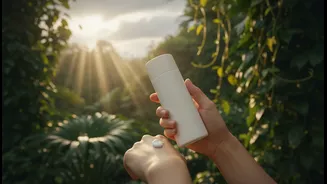
Dermatologists consistently warn that skipping sun protection during the rainy season is a significant mistake. The cool, pleasant weather makes it easy to forget that the threat of sun damage doesn't disappear with the visible sun. In reality, what feels like a break for your skin could be a period of silent, cumulative damage.
Understanding the Enemy: UVA and UVB Rays
To understand why cloudy days are still a risk, we need to know what we're fighting. Solar radiation includes two main types of harmful rays: UVA and UVB. UVB rays are shorter, affecting the skin's surface and causing sunburns. UVA rays have a longer wavelength, allowing them to penetrate deeper into the skin. This deep penetration is what leads to the breakdown of collagen, causing premature ageing, wrinkles, and dark spots. While heavy cloud cover can block a good portion of UVB rays (the ones that make you feel hot), they are far less effective against UVA rays. These are the silent agers, present year-round, that pass through clouds and even glass windows, affecting your skin whether you're outdoors or sitting by a window on a rainy day.
The Deception of Cloud Cover
It’s a myth that clouds block all UV rays. In fact, up to 80% of the sun's UV radiation can pass through clouds and reach your skin. Sometimes, a phenomenon known as the 'broken cloud effect' can even increase UV levels. On partly cloudy days, UV rays can reflect off the sides of clouds, scattering and intensifying the radiation reaching the ground. This means that some cloudy days can have a higher UV index than a completely clear day, making them unexpectedly more dangerous for unprotected skin. Because the temperature is cooler and you don't feel the intense heat of the sun, you're less likely to seek shade or reapply protection, leading to longer, unaware exposure.
Monsoon-Specific Challenges
The monsoon season in India brings its own unique challenge: high humidity. This sticky, moist environment does two things. First, it can make heavy, cream-based sunscreens feel suffocating, greasy, and uncomfortable, making you more likely to skip this crucial step. Second, humidity, sweat, and getting caught in a drizzle can cause sunscreen to wear off more quickly. This makes consistent reapplication even more important than usual. Dermatologists generally advise reapplying sunscreen every two to three hours, and even more frequently if you get wet or are sweating a lot. A water-resistant formula is an excellent choice for this season.
Choosing Your Monsoon Armour
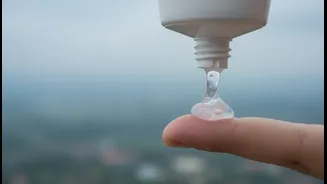
The key to consistent sunscreen use during the monsoon is choosing a product that feels comfortable on your skin. Thankfully, modern formulations have come a long way. For the Indian monsoon, dermatologists overwhelmingly recommend lightweight, gel-based sunscreens. These formulas are typically non-comedogenic (meaning they won't clog pores), absorb quickly, and leave a matte or natural finish without feeling sticky. Look for a broad-spectrum sunscreen with an SPF of 30 or, ideally, 50, and a high PA rating (PA+++ or PA++++) to ensure you're protected from both UVB and UVA rays. Making this a non-negotiable part of your morning routine is one of the most effective long-term investments you can make for your skin's health.