





Brakes: Your Downhill Guardian
On a long, steep descent, your brakes work much harder than they do in city traffic. Continuous use generates immense heat, which can lead to a dangerous phenomenon called 'brake fade'. This is when overheated brake components lose their ability to slow
the vehicle, resulting in a soft or spongy pedal and significantly longer stopping distances. Before you go, have your brake pads, rotors, and fluid inspected. Worn pads or old brake fluid, which can absorb moisture and lower its boiling point, drastically increase the risk of failure when you need your brakes the most. Remember to use lower gears to let the engine assist with braking on declines, applying the brakes in short, firm bursts rather than riding them continuously.
Tyres: The Grip That Matters
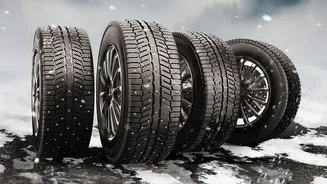
Your tyres are your only connection to the road, and their condition is critical on challenging mountain routes. Temperature and altitude changes can affect tyre pressure; for every 10-degree drop in temperature, pressure can decrease by about one PSI. Check your tyre pressure when the tyres are cold and ensure it matches the manufacturer's recommendation, usually found on a sticker inside the driver's door. Also, inspect your tread depth. Worn tyres with insufficient tread can't grip the road properly on sharp curves or channel water away on wet surfaces, increasing the risk of an accident. A tyre with good tread and proper inflation provides the traction needed to navigate steep inclines and declines safely.
Engine & Cooling System: Beating the Heat
Climbing steep grades puts an enormous strain on your engine, forcing it to work much harder and generate more heat. Your car's cooling system must be in top condition to handle this extra load. An engine that overheats on a climb can leave you stranded in a remote and potentially unsafe location. Before your trip, check your coolant level and condition. Make sure the radiator is free of debris like bugs or leaves that could block airflow. If you notice the temperature gauge climbing, one immediate fix is to turn off the air conditioning, which adds to the engine's heat load, and turn on your cabin heater to its highest setting to help draw heat away from the engine.
Essential Fluids: The Lifeblood of Your Vehicle
Beyond coolant, other fluids are vital for your vehicle's health under stress. Engine oil lubricates moving parts, and its level and condition should be checked before tackling mountain roads. Similarly, transmission fluid keeps the gearbox operating smoothly, which is especially important when you're frequently shifting to lower gears for engine braking. Power steering fluid and even windshield washer fluid are also important checks. Mountain weather can change in an instant, and having a full reservoir of washer fluid can be a lifesaver when faced with sudden rain, dust, or road grime that obscures your vision.
Visibility: See and Be Seen
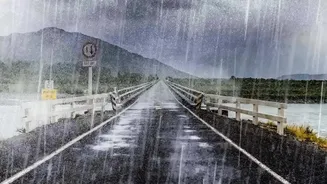
Winding roads and unpredictable weather, from fog to sudden downpours, make visibility a top priority. Ensure all your lights are working correctly—headlights (both high and low beams), tail lights, and brake lights. Clean your windscreen, windows, and mirrors inside and out. Check your wiper blades for any signs of wear and tear; if they leave streaks or don't clear the glass effectively, replace them. A clear view of the road ahead, and the ability for other drivers to see you, is non-negotiable in complex driving environments.
Emergency Kit: Your Roadside Lifeline
In the mountains, mobile phone service can be spotty and help can be hours away. A well-stocked emergency kit is not a luxury, it's a necessity. Your kit should include basics like a first-aid kit, jumper cables, a flashlight with extra batteries, and reflective triangles or flares to warn other drivers. Also pack essentials for survival in case you are stranded, such as blankets, extra layers of warm clothing, non-perishable food like energy bars, and plenty of water. Depending on the season, an ice scraper and a small shovel can also be critical additions.