
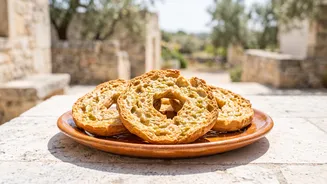
What Exactly is Friselle?
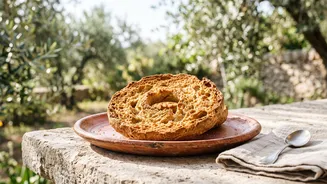
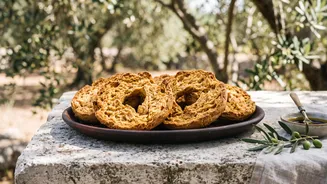
At first glance, a frisella might look like a hard, rustic, doughnut-shaped bagel. Hailing from the sun-drenched regions of Southern Italy, particularly Puglia, Campania, and Calabria, friselle are a cornerstone of the local cuisine. Made from simple
ingredients like durum wheat or barley flour, water, yeast, and salt, their magic lies not in what they contain, but in how they are made. Unlike regular bread, friselle are baked twice. This process, known as 'biscottatura', removes nearly all moisture, rendering them incredibly hard and giving them their remarkably long shelf life. If stored correctly in an airtight container, they can last for many months, making them a marvel of culinary preservation.
A History Forged by Necessity
The origins of friselle are practical rather than poetic, dating back centuries. Some scholars trace twice-baked breads to Phoenician navigators in the 10th century BC. They were the ideal provision for those who spent long periods away from home, like fishermen at sea, farmers in remote fields, and travelling merchants. In a time before refrigeration, having a food source that wouldn't spoil was essential. The bread’s ring shape was also functional, allowing sailors and soldiers to thread them onto a rope for easy transport and storage. Historically, there was a distinction: friselle made from refined durum wheat were for the wealthy, while the less affluent consumed a heartier version made from barley flour. Today, both varieties are cherished for their unique textures and flavours.
The Secret in the Second Bake
The process of making friselle is an art of patience. The dough is first formed into rings and baked until cooked through but still slightly soft inside. While still warm, each ring is sliced horizontally, creating two halves, each with a smooth bottom and a rough, porous top. These halves are then returned to a low-temperature oven for a long, slow second bake. This 'biscotto' step is what removes all the residual moisture, transforming the bread into a hard, dry rusk. The result is a bread that is intentionally stale, ready to be stored and revived whenever needed.
Bringing Friselle Back to Life
Eating a frisella without preparing it first is a challenge for even the strongest teeth. The key is rehydration. The traditional method, still practiced today, involves a quick dip in cold water—never warm—for just a few seconds. In ancient times, fishermen would simply dip them in seawater. The goal is not to make the bread soggy, but to soften it just enough so that it yields to a bite while retaining some of its signature crunch. The rough, porous side is perfect for absorbing liquid, while the smooth, hard-baked bottom provides a sturdy base that prevents it from falling apart.
The Classic Puglian Meal
Once softened, the frisella becomes a perfect canvas for fresh toppings. The most iconic preparation is 'frisella al pomodoro'. After its quick dip, the bread is rubbed with a clove of garlic, then topped with chopped ripe cherry tomatoes, a generous drizzle of high-quality extra virgin olive oil, a sprinkle of salt, and a pinch of dried oregano. The juices from the tomato and the oil soak into the bread's surface, creating a perfect blend of soft, juicy, and crunchy textures. While this classic version is a summer staple, the variations are endless. Other popular toppings include tuna, capers, olives, or creamy local cheeses like burrata. It’s a simple, rustic dish that embodies the fresh, vibrant spirit of Southern Italian cooking.