
The Orionids: A Gift from Halley's Comet
Each October, Earth passes through a stream of debris left behind by Halley's Comet on its ancient journey around the sun. These tiny particles, often no bigger than grains of sand, burn up upon entering our atmosphere at incredible speeds—about 66 kilometres
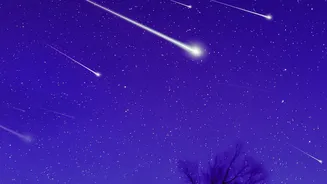
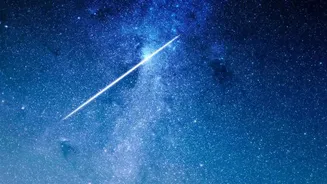
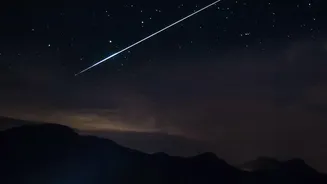
per second. The result is the Orionid meteor shower, known for its fast, bright meteors that can leave glowing trails lingering for seconds. In 2026, the shower is active from early October to early November, with peak activity expected in the pre-dawn hours of October 21-22. On a clear, dark night, you might see up to 20 meteors per hour.
Why Less Equipment Is More
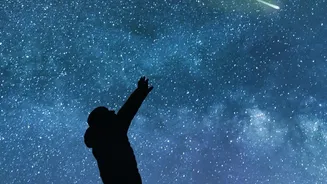
It feels counterintuitive, but for meteor showers, expensive telescopes and binoculars are a hindrance, not a help. Those tools are designed to magnify a very small, specific area of the sky, like a planet or distant nebula. Meteors, however, are unpredictable and can streak across vast portions of the night sky in an instant. By limiting yourself to a narrow field of view, you are more likely to miss the show. Your naked eyes are the perfect instrument, offering the widest possible field of vision to catch those fleeting flashes of light wherever they may appear. The goal is to take in as much of the sky as possible, and for that, you have everything you need.
Setting the Stage for a Great Show
Your viewing success depends heavily on your environment. The single most important factor is darkness. City and even suburban light pollution can wash out all but the brightest meteors. Try to find a spot away from streetlights with an open view of the sky. A park, a rural field, or any place with minimal artificial light is ideal. Next, think about comfort. You'll be outside for a while, so dress in warm layers, as even autumn nights can get chilly. A reclining lawn chair or a thick blanket on the ground will save you from a sore neck and allow you to lie back and look straight up comfortably.
Let Your Eyes Do the Work
Once you're settled in your dark spot, your most important job is to be patient and let your eyes adjust. It takes about 30 minutes for your pupils to fully dilate and for you to achieve true 'night vision'. During this time, it is crucial to avoid looking at bright lights, especially your phone screen. That single, quick glance at a notification can reset the entire process. If you need a light, use a torch with a red filter, as red light has a minimal impact on night vision. This adjustment period will dramatically increase the number of fainter meteors you can perceive, turning a quiet night into a rewarding one.
When and Where to Look
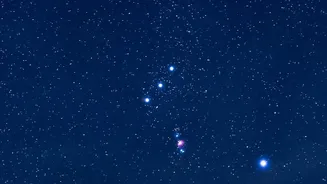
The best viewing hours for the Orionids are after midnight and into the early morning, before dawn. This is when the part of Earth you are on is rotating into the meteor stream, increasing the number of visible meteors. The shower's 'radiant'—the point from which the meteors appear to originate—is in the constellation Orion. However, you don’t need to stare directly at Orion. In fact, meteors seen further away from the radiant will appear longer and more dramatic. So just lie back, look up, and enjoy the entire celestial canvas. While the 2026 peak has a bright waxing gibbous Moon, it sets around 3 a.m., leaving a window of dark sky just before dawn for optimal viewing.