








A Hidden 'Gatekeeper' Revealed
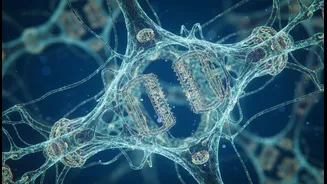
Scientists at Penn State have uncovered a previously overlooked structure inside our brain cells that plays a much more critical role than ever imagined. Called the membrane-associated periodic skeleton (MPS), this tiny, lattice-like framework sits just
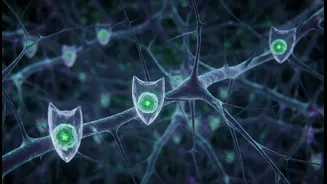
beneath the surface of a neuron. For years, it was thought to be a passive support structure, simply helping the cell maintain its shape. However, using advanced super-resolution microscopy, researchers found that the MPS is highly active, acting as a gatekeeper that regulates how neurons absorb materials from their surroundings. This process, known as endocytosis, is vital for everything from nutrient uptake to memory formation. The MPS essentially acts as a bouncer at the club door of the neuron, controlling what gets in and when.
The Connection to Toxic Proteins
The discovery of this gatekeeper function is a potential game-changer for Alzheimer's research. One of the hallmarks of the disease is the buildup of toxic proteins, particularly aggregated tau, inside neurons. The Penn State study revealed that the MPS forms a physical barrier that slows down and controls the rate at which neurons absorb substances, including the proteins that can turn toxic. When the researchers deliberately disrupted this skeletal structure, they observed that the neurons began to absorb materials much more rapidly. This suggests that a weakened or damaged MPS could allow harmful proteins to flood into the cell, accelerating the formation of the tangles that are characteristic of Alzheimer's and other neurodegenerative diseases.
A Vicious Cycle and a Genetic Link
Even more striking was the finding that this process can become a vicious cycle. The research showed that an increased rate of absorption could, in turn, further weaken the MPS. This creates a positive feedback loop: as more material enters the cell, it signals for the skeletal structure to be broken down, opening the gates even wider and accelerating the toxic buildup. This mechanism could also help explain some of the genetic links to Alzheimer's. For instance, certain gene variants like APOE4 are known to increase Alzheimer's risk. While this specific study didn't draw a direct line, other recent research from Columbia University has shown that APOE4 can reduce the number of cellular disposal units that clear out potentially toxic proteins like tau, increasing the chances of tangle formation. Understanding the MPS provides a new mechanical framework for exploring how genetic predispositions might translate into physical cell damage.
A New Target for Future Treatments
This breakthrough shifts the focus from just trying to clear out existing protein clumps to potentially preventing them from getting out of control in the first place. The research suggests that finding ways to protect and stabilize the MPS could be a powerful new therapeutic strategy. If a drug or therapy could reinforce this cellular skeleton, it might slow down the excessive uptake of tau and other proteins, thereby delaying the onset or progression of neurodegeneration. While current disease-modifying treatments like Leqembi focus on clearing amyloid plaques, and other drugs in development target tau directly, this discovery opens up an entirely new front in the war against Alzheimer's. It offers a novel target that could complement existing approaches, aiming to preserve the fundamental health and integrity of the neuron itself before the damage becomes irreversible.