
Setting the Stage for Starlight
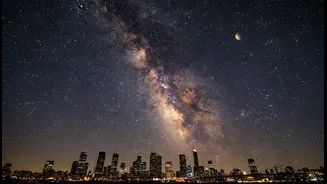
Your journey begins before you even look up. The first step is to escape light pollution. While city dwellers can still spot bright planets and the Moon, finding a darker location will dramatically increase what you can see. Even a park or a short drive
away from city centers can make a huge difference. Check the weather for a clear night and be mindful of the Moon's phase; a bright full moon can wash out fainter stars and the Milky Way. Once you're at your spot, give your eyes at least 20-30 minutes to fully adapt to the darkness. Avoid looking at your phone—its white light will reset your night vision. If you need a light, use a red one, as it has the least impact on your dark-adapted eyes. Finally, get comfortable. A reclining chair or a blanket on the ground will save you from a sore neck.
Your Stargazing Starter Pack
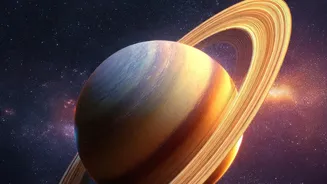
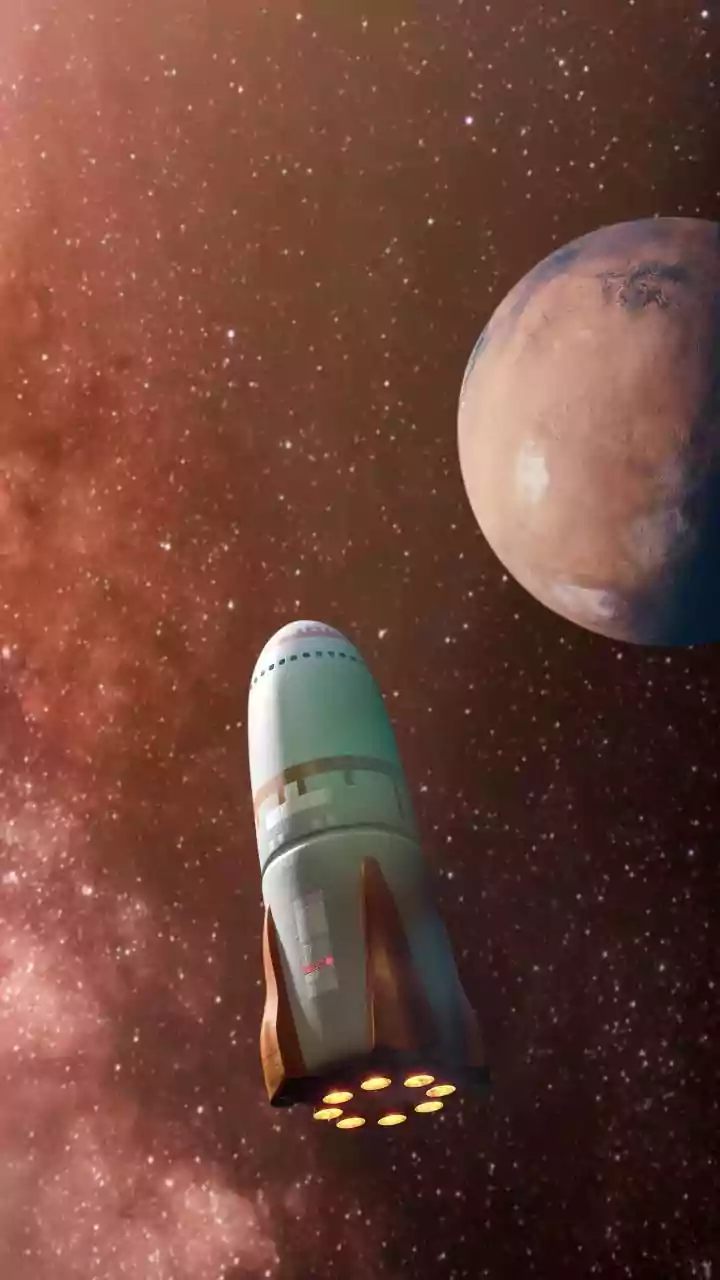
Once your eyes are ready, start with the most prominent objects. The five planets visible to the naked eye—Mercury, Venus, Mars, Jupiter, and Saturn—have been watched since antiquity. They are often brighter than stars and, crucially, they don’t twinkle as much. Venus is the easiest, often appearing as a brilliant beacon after sunset or before sunrise. Jupiter is also unmistakably bright, while Mars has a distinct reddish hue. Saturn appears as a steady, yellowish point of light. Of course, the Moon is our brightest and most detailed celestial neighbour, offering a different view every night as its phases change. You can watch its terminator—the line between light and shadow—move across craters and mountains from one night to the next.
Connecting the Cosmic Dots
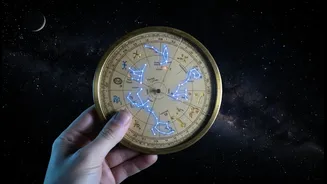
Constellations are the classic way to map the sky. Start with a few easy-to-find patterns, or asterisms. In the Northern Hemisphere, the Big Dipper is your go-to guide. It’s part of the larger Ursa Major constellation and is visible year-round. Its stars can be used to locate Polaris, the North Star. Another unmistakable winter and spring constellation is Orion, the Hunter, famous for the three bright stars that form his belt. In summer, look for the Summer Triangle, an asterism made of three bright stars from three different constellations: Deneb (in Cygnus), Vega (in Lyra), and Altair (in Aquila). These signposts make the vast sky feel more familiar and help you navigate to other, fainter sights.
Going Deeper: Galaxies and Satellites
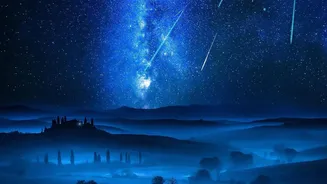
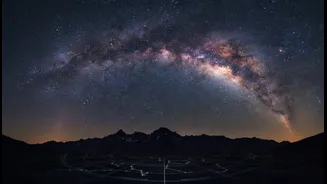
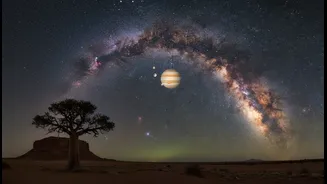
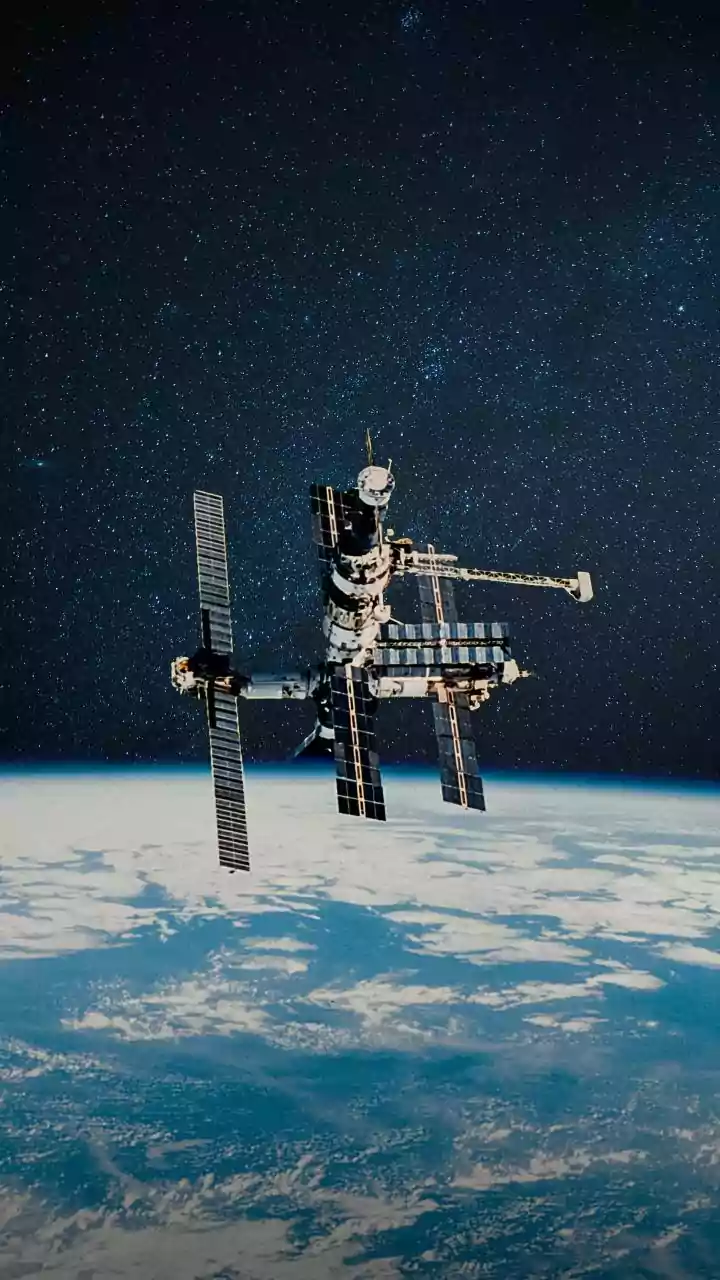
With dark skies and patience, you can glimpse objects far beyond our solar system. The most spectacular of these is our own Milky Way galaxy. From a truly dark location, it appears as a faint, hazy band of light arching across the sky. What you're seeing is the combined light of billions of stars too far away to be seen individually. Summer is the best time for viewers in the Northern Hemisphere to see the bright galactic core. Even more mind-boggling, you can see another galaxy entirely. The Andromeda Galaxy (M31), 2.5 million light-years away, is the most distant object visible to the human eye. Under good conditions, it looks like a small, faint, fuzzy smudge. Also, keep an eye out for man-made stars. The International Space Station (ISS) is often the third-brightest object in the sky, appearing as a bright, steady light moving silently and quickly across the sky, typically around dawn or dusk. Unlike an airplane, it doesn't have flashing lights.
Catch a Falling Star
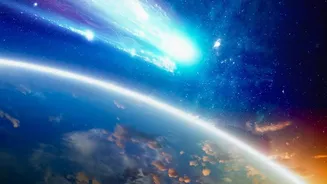
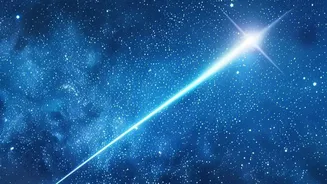
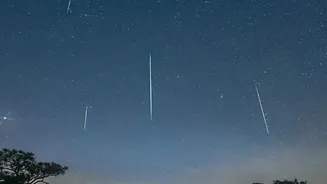
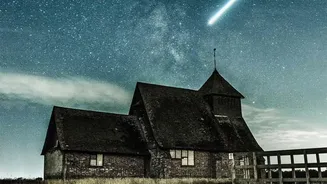
Meteor showers, often called "shooting stars," offer one of the most dynamic naked-eye shows. These events happen when Earth passes through the trail of debris left by a comet or asteroid. The particles burn up in our atmosphere, creating bright streaks of light. While sporadic meteors can be seen on any given night, showers like the Perseids in August and the Geminids in December offer a chance to see dozens of meteors per hour. The best way to watch is to lie back, look up at a wide patch of sky, and simply wait. No special equipment is needed, just a bit of patience to witness these fleeting moments of celestial fireworks.