







A Symphony for the Senses
The connection between rain and chai is more than just a habit; it’s a full-bodied sensory experience. It begins with the sound—the rhythmic drumming of rain on a tin roof, a counterpoint to the gentle simmer of milk and water on the stove. It’s the visual
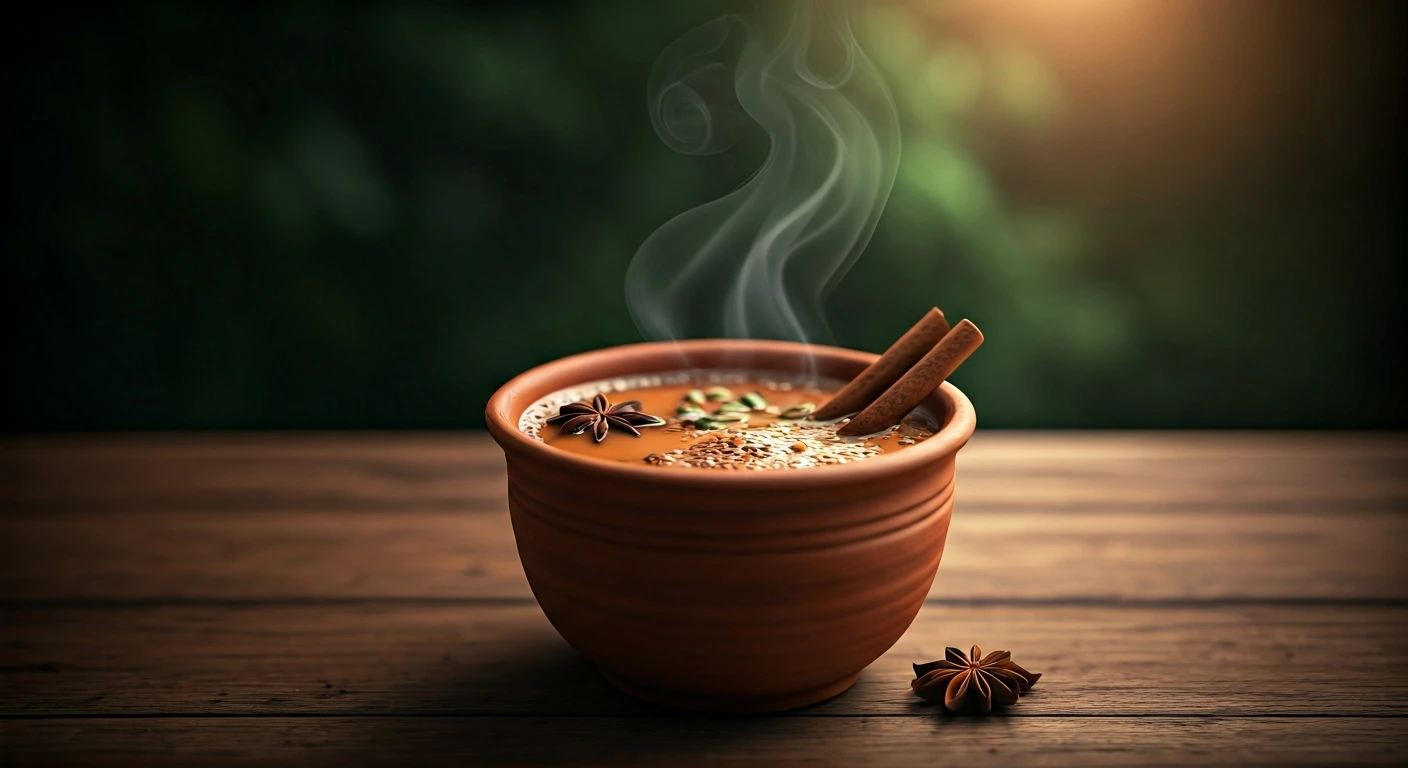
of steam curling from a cup, a warm wisp against the cool, grey light filtering through the window. Then comes the aroma. The sharp, invigorating scent of crushed ginger, the warm, sweet perfume of cardamom, the woody notes of cinnamon and cloves—all blooming in the heat, creating a fragrance that is both a comfort and a promise. Holding the warm cup, feeling its heat seep into your palms, is the first step in a ritual that culminates with the first sip: a sweet, spicy, milky brew that feels like a liquid hug, chasing away the damp chill of the monsoon.
The Ritual of the Pause
In our perpetually rushed lives, the monsoon offers a forced and welcome pause. Traffic slows, plans are cancelled, and the world outside seems to retreat. In this enforced stillness, making chai becomes an act of mindfulness. It’s a deliberate, unhurried process. Measuring the water, crushing the spices, waiting for the perfect boil—it’s a small ceremony that grounds us in the present moment. The rain outside provides the perfect excuse to stop, to gather with family, or to simply sit by a window and watch the world get washed clean. In this context, chai isn’t just a beverage. It is the anchor of the moment, the focal point of the pause, transforming a weather event into an opportunity for connection and reflection.
A Recipe for Comfort and Immunity
There is a practical, almost scientific, wisdom behind this pairing. As the temperature drops and humidity rises, the body craves warmth. A hot cup of chai provides instant thermoregulation, warming you from the inside out. But it goes deeper. The spices traditionally used in masala chai are staples of Ayurvedic and home remedies. Ginger is known for its anti-inflammatory properties and its ability to combat colds and sore throats. Cardamom and cloves are said to aid digestion, while cinnamon is packed with antioxidants. In a season notorious for bringing a spike in coughs and sniffles, a daily cup of spiced chai feels like a delicious and preventative dose of self-care. It’s a folk remedy passed down through generations, a comforting brew that feels both indulgent and medicinal.
Brewed with Nostalgia
For millions of Indians, the taste of chai is inextricably linked to memory. It’s the flavour of childhood, of sitting on a veranda with grandparents, listening to their stories as the rain poured down. It’s the memory of huddling under the awning of a roadside tapri with friends, sharing a single glass of ‘cutting chai’ while waiting for a downpour to subside. This pairing taps into a deep well of collective nostalgia. Every sip carries echoes of past monsoons, of shared laughter and quiet moments. This emotional resonance is what elevates the rain-chai connection from a mere preference to a cherished cultural tradition. It’s a taste that brings us home, no matter where we are.
The Perfect Accompaniment
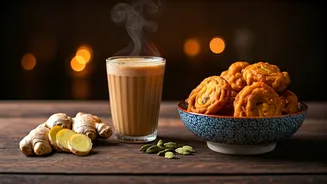
Of course, no discussion of monsoon chai is complete without mentioning its loyal companions. The craving for chai is often accompanied by an equally strong desire for something hot, crisp, and savoury. The sizzle of pakora batter hitting hot oil is the monsoon’s other signature sound. Whether it’s onion bhajis, aloo pakoras, or crunchy samosas, these fried delights are the perfect textural and flavour contrast to a cup of sweet, milky chai. The combination is a national obsession, a pairing so perfect it feels preordained. The saltiness of the snack cuts through the sweetness of the tea, creating a cycle of craving where each bite demands a sip, and each sip demands another bite. It’s a simple, accessible feast that brings immense joy.