





A Vessel of War and Pride
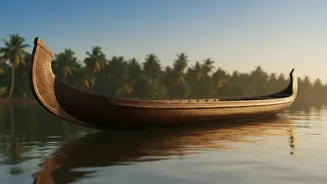
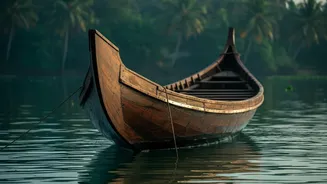
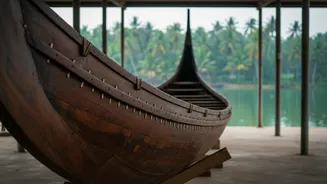
The Chundan Vallam, or snake boat, is more than just a watercraft; it is the soul of a village. Stretching over 100 feet, these majestic wooden vessels were originally designed as swift warships in the 13th century, built to navigate the narrow canals
of the Kuttanad region. Today, their purpose has shifted from conflict to competition, but their importance has only deepened. Each boat is a symbol of a community’s identity and honour. The construction itself is a marvel of ancient naval architecture, with master carpenters, known as moothashari, following specifications laid down in Vedic texts. Built from water-resistant Anjili wood, the long hull is designed to flex, cutting through the water with minimal resistance, transforming a massive crew's power into breathtaking speed.
The Art of Waking the Boat
Before the racing season begins, each snake boat, which may have been in storage for months, undergoes a sacred and meticulous preparation ceremony known as ‘Vallam Orukkal’. This is where the time-tested techniques mentioned in the headline come into play. Master artisans inspect every inch of the long hull. The wooden planks, which can be over 80 feet long, are carefully checked. To ensure the vessel is perfectly watertight and rigid, craftsmen employ traditional methods, including the strategic use of wooden wedges and iron bolts to tighten the joints between the planks. This isn't just repair; it's a process of reawakening, ensuring that the boat is structurally perfect and ready to withstand the immense, synchronized force of over a hundred oarsmen.
More Than Wood and Nails
The physical preparation is deeply intertwined with spiritual reverence. The snake boat is treated as a deity by the village, and the artisans work with a sense of devotion. Only men, and only those who are barefoot, are traditionally allowed to touch the boat during this sacred period. Once the structural work is complete, the hull is coated with a special, viscous mixture. This legendary concoction consists of fish oil, carbon from burned coconut shells, and eggs. This organic varnish does more than just give the boat its distinctive sheen; it waterproofs the wood, prevents absorption, and makes the hull incredibly slippery, allowing it to glide through the water with maximum efficiency. This ritual is as crucial to the boat’s performance as the strength of its rowers.
The Keepers of an Ancient Craft
The skills required to build and prepare a Chundan Vallam are not learned from books. They are a protected heritage, passed down orally from one generation of moothashari to the next. In many cases, the knowledge of how to shape the planks, how to achieve the perfect balance, and how to perform the annual repairs remains within a single family. These artisans are the silent heroes of the boat races. Their deep understanding of timber, hydrodynamics, and traditional joinery is what allows these spectacular races to happen. In a world of modern machinery, their continued reliance on hand tools and ancestral knowledge is a powerful testament to the enduring value of traditional Indian craftsmanship.
From Ceremony to Spectacle
All this intense preparation culminates in the thundering energy of race day at events like the prestigious Nehru Trophy Boat Race. A perfectly prepared boat is the foundation for victory. When a hundred oarsmen paddle in flawless unison, striking the water up to 120 times a minute, the hull must perform without flaw. The rhythm for this incredible feat of teamwork is set by the Vanchipattu, the traditional boat songs performed by singers on board. The song acts as a living metronome, uniting a hundred individuals into a single, powerful engine. The roar of the crowd, the flash of oars, and the sight of these magnificent wooden serpents surging through the water is a spectacle made possible by the quiet, reverent work that happens weeks before.