





The Altitude Advantage
One of the most significant factors contributing to Spiti's pristine night skies is its staggering average altitude, which often exceeds 12,500 feet. At such heights, you are physically above a large portion of the Earth's atmosphere. The air here is less
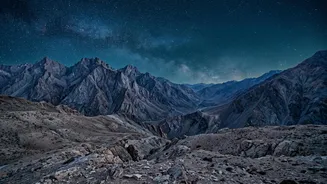
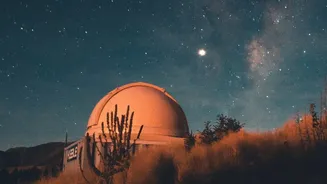
dense, meaning there are fewer particles—like dust, pollutants, and even air molecules themselves—to scatter and distort the faint light travelling from distant stars and galaxies. Starlight has a more direct path to your eyes, resulting in a sharper, brighter, and more stable image. This effect, known to astronomers as 'good seeing', is why major observatories are built on high mountains. In Spiti, the entire valley acts as a natural observatory.
A Cold, Dry Desert Sky
Atmospheric interference isn't just about particles; it's also about moisture. Water vapour is one of the biggest culprits for blurring our view of the night sky, as it refracts starlight and creates a hazy effect. Spiti is a cold desert, and its defining characteristic is a profound lack of humidity. The air is exceptionally dry and crisp, which dramatically increases its transparency. This arid environment means fewer clouds and less atmospheric water to interfere with incoming light. The result is a sky so clear that faint objects like distant nebulae and the Andromeda Galaxy can become visible to the naked eye under the right conditions.
A Natural Shield from Weather
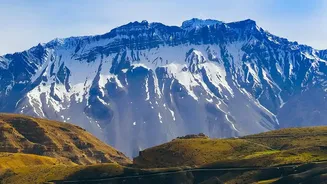
Spiti's location provides another crucial advantage: it lies in a rain shadow. The towering Himalayan ranges that enclose the valley act as a massive barrier, blocking most of the monsoon clouds that bring heavy rain and overcast skies to other parts of India during the summer. While other regions are clouded over, Spiti often enjoys clear, stable weather, especially during the peak stargazing months from May to September. This meteorological shelter ensures a higher number of cloudless nights, making it a reliable destination for astronomers and astrophotographers who need consistent conditions for observation and long-exposure photography.
Freedom from Light Pollution
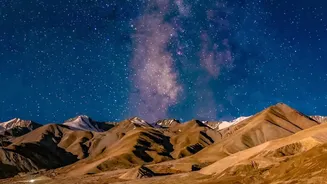
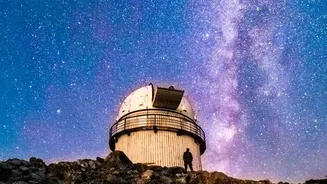
Even with perfect atmospheric conditions, stargazing can be ruined by a single, pervasive problem: artificial light. Skyglow from cities can brighten the night sky for hundreds of kilometres, washing out all but the brightest stars. Spiti, with its remote location and sparsely populated villages, has almost no light pollution. Many parts of the valley are rated as Bortle Class 1, the darkest possible classification, signifying a night sky untouched by artificial light. This profound darkness allows the human eye to fully adapt, revealing the Milky Way in such brilliant detail that it can appear as a luminous band stretching across the heavens, a sight lost to over 80% of the world's population.
The Ultimate Viewing Experience
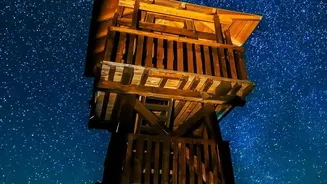
When these four elements—high altitude, dry air, clear weather, and darkness—come together, they create an unparalleled stargazing experience. The minimal atmospheric turbulence means stars twinkle less and appear as sharp points of light. The lack of humidity and pollution allows you to see fainter objects and more profound detail. In places like Langza, Komic, and near Chandratal Lake, the Milky Way isn't just visible; it's a textured, glowing river of light. For anyone who has only ever looked up from a town or city, a night in Spiti is a powerful reminder of the universe's true scale and beauty, revealing a cosmos that is typically hidden behind a veil of air and light.