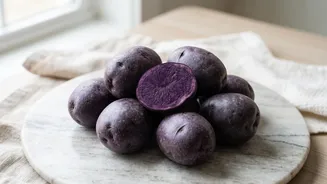







Imagine a potato that’s not just yellow or white, but a vibrant purple. This isn't a novelty item; it's a scientific breakthrough from India that could change how we think about our staple foods and fight malnutrition from the ground up.
Meet Kufri Jamunia: The New Purple Powerhouse
Indian scientists
have developed a new potato variety that is turning heads and for good reason. Named Kufri Jamunia, this potato boasts a deep purple skin and flesh. Developed by the Indian Council of Agricultural Research-Central Potato Research Institute (ICAR-CPRI), it was officially released in 2024. This isn't the first coloured potato from the institute, which previously released Kufri Neelkanth (purple skin, cream flesh) in 2018 and Kufri Manik (red skin) in 2021. However, Kufri Jamunia stands out for its fully purple flesh, indicating a rich concentration of beneficial compounds. With a pleasant flavour, mealy texture, and high yields of 32-35 tonnes per hectare, it is well-suited for commercial farming across the North Indian plains.
The Science Behind the Colour
The striking purple colour comes from natural pigments called anthocyanins. These are the same powerful antioxidants found in other famously healthy foods like blueberries, blackberries, and jamun. Antioxidants are compounds that help protect our bodies from damage caused by unstable molecules called free radicals. Research has linked diets rich in anthocyanins to a wide range of health benefits, including improved cardiovascular health, anti-inflammatory effects, and a lower risk of certain chronic diseases. Compared to regular potatoes, Kufri Jamunia contains significantly higher levels of Vitamin C, iron, and zinc, making it a nutritional powerhouse packed into a familiar and beloved vegetable.
A Strategy Called Biofortification
The development of the purple potato is a prime example of a global agricultural strategy called biofortification. In simple terms, biofortification is the process of increasing the nutritional value of crops through conventional plant breeding or modern biotechnology. The goal is to make staple foods—the crops that people eat every day, like rice, wheat, and potatoes—more nutritious. This approach is seen as a sustainable and cost-effective way to combat 'hidden hunger', a widespread problem where people get enough calories but lack essential vitamins and minerals in their diet. Rather than adding nutrients during processing (fortification), biofortification builds them directly into the plant. In India, the ICAR has been actively developing biofortified varieties of several crops to tackle nutritional deficiencies that affect millions.
Why This Matters for India
India faces a significant challenge with malnutrition, where a large portion of the population, especially women and children, suffer from micronutrient deficiencies, leading to issues like anaemia and stunted growth. While economic progress has been made, it hasn't automatically solved the nutrition crisis. Biofortification offers a direct way to get more nutrients onto the plates of the rural poor, who often grow and consume their own staple crops. By enhancing a widely consumed vegetable like the potato, innovations like Kufri Jamunia can improve dietary quality without requiring drastic changes in eating habits. It represents a shift from focusing purely on crop yield to a more holistic approach that values both quantity and nutritional quality, aligning with national health goals like POSHAN Abhiyaan and Anemia Mukt Bharat.
The Road from Lab to Plate
While the scientific achievement is significant, the success of biofortified crops like the purple potato depends on several realworld factors. Farmer adoption is key; the new varieties must be highyielding, resistant to disease, and profitable to grow. Kufri Jamunia has shown good agronomic performance in trials, but wider acceptance is the next hurdle. Consumer perception also plays a massive role. The unusual colour might be a selling point for some, but a barrier for others accustomed to traditional potatoes. Public awareness campaigns, ensuring seed availability, and strong market linkages are crucial steps to ensure that these nutrientdense crops move from research institutes to farms and, ultimately, to dinner tables across the country. The journey will require coordinated effort, but the potential rewards for public health are immense.