


The Journey From City to Clay
A road trip from Kolkata to Bishnupur, located in the Bankura district, typically takes around four to five hours, covering a distance of approximately 140 kilometres. This manageable drive makes it an ideal weekend getaway. As the cityscape gives way to the verdant
landscapes of rural Bengal, you'll feel the pace of life slow down, preparing you for the historical immersion that awaits. The route itself, often passing through towns like Arambagh, is a prelude to the rustic charm of your destination. For those preferring rail, regular trains from Howrah connect to Bishnupur in about three to four hours, making the town easily accessible for a day trip or a longer stay.
A Legacy Forged by Malla Kings
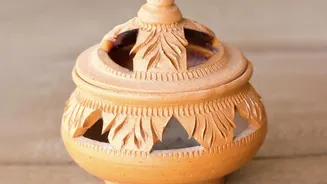
To understand Bishnupur is to understand the Malla dynasty, who ruled the region, known as Mallabhum, for nearly a thousand years. It was under their patronage, particularly during the 17th and 18th centuries, that Bishnupur flourished as a great centre of art, architecture, and music. The Malla kings were devout Vaishnavas, and their devotion to Lord Krishna is the central theme of the temples they built. Due to a scarcity of stone in the region, they turned to the humble, locally available laterite clay, firing it to create terracotta bricks and plaques. This necessity birthed an extraordinary artistic tradition, turning simple clay into a medium for storytelling and devotion.
Temples That Tell Epic Tales
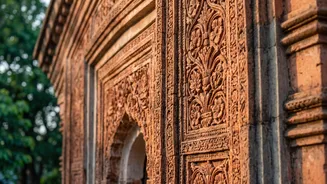
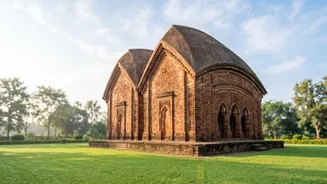
The terracotta temples of Bishnupur are architectural marvels, famous for the intricate carvings that adorn their walls. These panels are not mere decorations; they are narrative canvases depicting scenes from the great Hindu epics like the Ramayana and Mahabharata, as well as the life of Lord Krishna. The architectural styles are unique to Bengal, with a prominent style being the 'chala' or hut-shaped roof, and temples classified by the number of pinnacles or 'ratnas' they possess. You'll find 'ek-ratna' (single pinnacle) temples like the Madan Mohan Temple and 'pancha-ratna' (five pinnacle) temples like the Shyam Rai Temple. Each structure is a testament to the incredible skill of the artisans who crafted them, and their collective beauty has earned the temple group a spot on UNESCO's tentative list of World Heritage Sites.
Your Essential Temple Itinerary
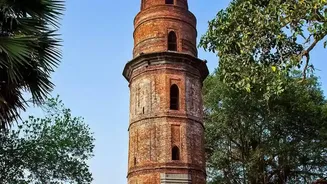
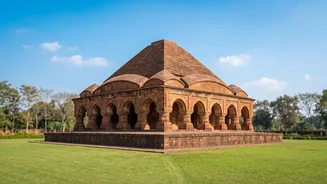
While Bishnupur is dotted with temples, a few stand out as must-visits. The Rasmancha, built in 1600 by King Bir Hambir, is perhaps the most iconic structure. Its unique pyramidal shape is unlike any other temple in India and was once used to display idols during the annual Ras festival. The Jor-Bangla Temple (or Kesto Rai Temple), built in 1655, features two joined hut-like structures and is renowned for its detailed terracotta panels. Another highlight is the Shyam Rai Temple (1643), a 'pancha-ratna' style temple with breathtakingly detailed carvings covering its interior and exterior walls. Finally, the Madan Mohan Temple (1694), an 'ek-ratna' temple, is still an active place of worship and celebrated for some of the finest and best-preserved terracotta art in town.
Beyond the Temple Walls
Bishnupur's cultural richness extends beyond its temples. The town is the home of the Bishnupur Gharana, the only classical dhrupad music tradition from Bengal. It is also world-famous for its Baluchari sarees. Originally from Murshidabad, the craft of weaving these silk sarees, which often depict mythological scenes on their 'pallu' (the decorative end piece), was revived and nurtured in Bishnupur under the Malla kings. Visitors can see artisans at work and purchase these wearable pieces of art. The town is also known for its Dokra metal craft and the legendary Dalmadal cannon, a massive iron cannon said to have protected the kingdom from Maratha invaders in the 18th century.
Planning Your Perfect Trip
The best time to visit Bishnupur is during the cooler winter months, from October to March, when the weather is pleasant for sightseeing. Summers can be extremely hot. Getting around the town is easy, with cycle-rickshaws and e-rickshaws readily available to take you between temple sites. While it's possible to see the main sights on a day trip, staying overnight allows for a more relaxed pace to soak in the atmosphere and explore the town's living traditions of music and crafts.