
A New Southern Mystery
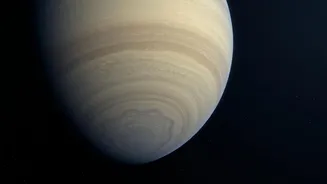
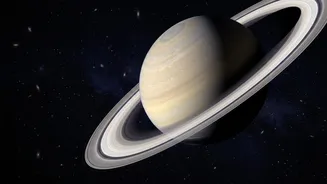
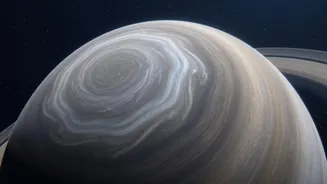
The most stunning new discovery is a massive, 10-sided atmospheric wave that has appeared around Saturn's south pole. Scientists have long been fascinated by a persistent, six-sided jet stream at the planet's north pole, known as the hexagon. For decades,
the south pole showed no such regular pattern, making this new 'decagon' a complete surprise. Data from Hubble's Outer Planet Atmospheres Legacy (OPAL) program, which conducts yearly check-ups on the outer planets, suggests the feature only began forming in the last few years and is still evolving. This provides a rare opportunity to watch a large-scale planetary feature develop in near real-time.
More Than Just Cloud-Top Deep
This newly spotted decagon is not just a superficial pattern on the cloud tops. By observing Saturn in different wavelengths of light, astronomers can peer into various depths of its atmosphere. These observations show that the 10-sided wave is a deep, vertically extended structure, meaning it persists through multiple atmospheric layers. This three-dimensional aspect is crucial, as it suggests the wave is part of a powerful jet stream and is driven by forces deep within the planet's churning interior. Understanding its structure helps scientists model the complex fluid dynamics that govern gas giant atmospheres.
A Planet for All Seasons
Like Earth, Saturn has an axial tilt, which means it experiences seasons. However, with an orbit around the sun that takes 29 Earth years, each Saturnian season lasts for more than seven of our years. The emergence of the southern decagon coincides with the southern hemisphere's gradual tilt back towards the sun, moving out of its long winter. Scientists believe the change in solar heating is a key driver of atmospheric changes. The annual snapshots from Hubble's OPAL program are essential for tracking these slow, seasonal shifts, from changing colours in the atmospheric bands to the formation and dissipation of storms.
Building a Weather Report
Hubble's consistent, long-term monitoring is building an invaluable weather record for Saturn. While past missions like Cassini gave us an incredibly detailed, close-up view for 13 years, Hubble provides the long-range context. Its observations have tracked changes in wind speeds, which have been seen to fluctuate by hundreds of kilometres per hour. It has also documented shifts in the colour and brightness of the equatorial bands, likely tied to changes in haze and cloud height as the seasons progress. Each new image adds another data point, helping scientists distinguish between short-lived weather events and long-term seasonal climate patterns.
Complementing a New Generation
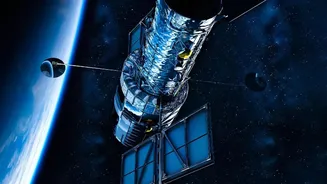
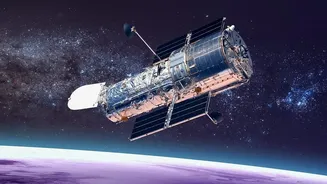
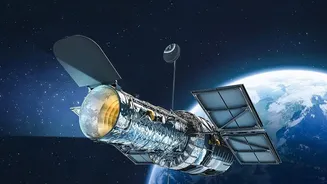
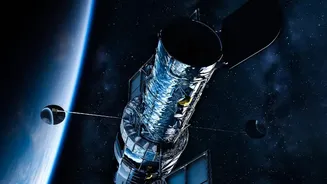
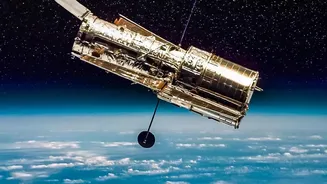
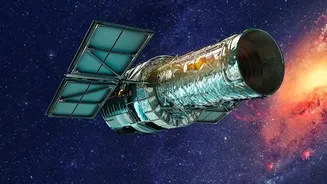
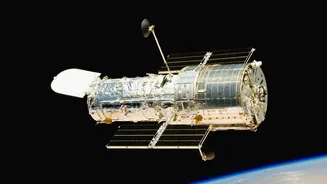
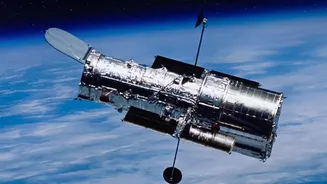
While Hubble continues its legacy, it is now joined by the James Webb Space Telescope (JWST). The two observatories have different strengths: Hubble captures stunning detail in visible and ultraviolet light, showing subtle colour variations, while Webb's infrared vision can sense clouds and chemicals at different depths. By combining their data, scientists can get a more comprehensive, three-dimensional view of Saturn's atmosphere than ever before. The discovery of the southern decagon and the ongoing seasonal changes offer a perfect test case for using both telescopes to unravel the secrets of our solar system's most majestic planet.