


An Invisible Storm in Deep Space
Beyond the protective bubble of Earth’s magnetic field, space is not empty; it is flooded with a continuous storm of radiation. This environment is dominated by two main threats: Galactic Cosmic Rays (GCRs) and Solar Energetic Particles (SEPs). GCRs are
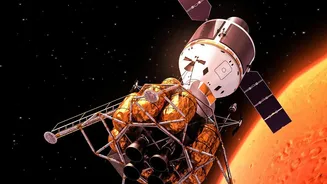
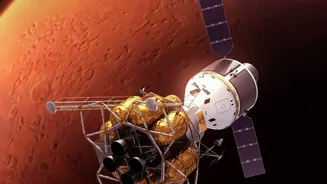
the nuclei of atoms, remnants of distant supernovae, accelerated to nearly the speed of light. They are a constant, low-level threat. SEPs, on the other hand, are violent, unpredictable bursts of particles, mainly protons, ejected from the sun during solar flares and coronal mass ejections. A trip to Mars, which could last up to three years, would expose astronauts to this relentless environment, with a radiation dose hundreds of times higher than on Earth.
The Biological Cost for Humans
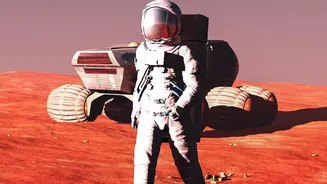
For the human body, this level of exposure is a profound danger. The high-energy particles of GCRs and SEPs can tear through DNA, damaging cells and increasing the lifetime risk of cancer, cataracts, and degenerative diseases affecting the heart and central nervous system. NASA estimates that a round-trip mission to Mars could expose an astronaut to at least 60% of their entire career radiation limit. This dose is equivalent to receiving a full-body CT scan every five to six days. The long-term effects on the brain are also a major concern, with studies suggesting potential cognitive decline and neurological issues. It's a stark reality: without a breakthrough in protection, the health risks are a significant barrier to long-duration missions.
Robots: Resilient but Not Invincible
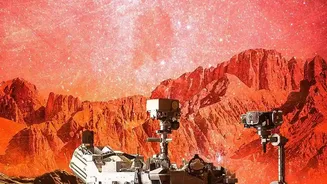
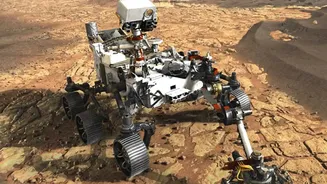
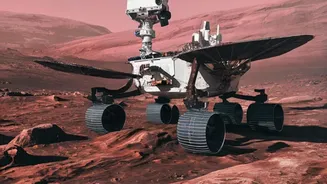
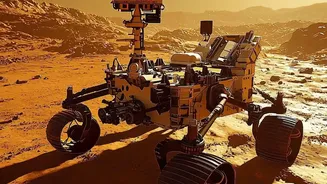
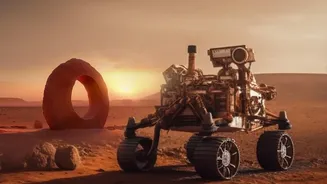
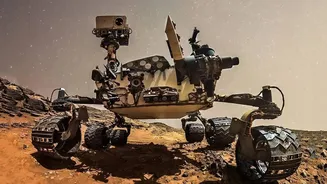
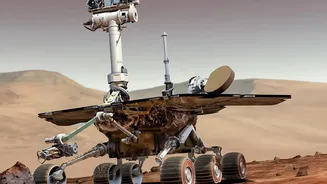
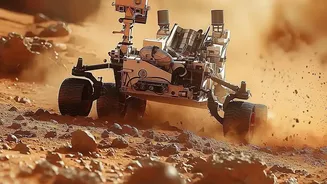
Robotic explorers, like the famed Mars rovers, do not get cancer. They are, by design, far more resilient to the dangers of space. However, they are not immune to radiation's effects. High-energy particles can disrupt and degrade sensitive electronics through two primary mechanisms: cumulative effects like Total Ionizing Dose (TID), which slowly wears down components, and sudden Single-Event Effects (SEEs), which can cause instantaneous malfunctions, data corruption, or even permanent failure. To combat this, engineers build 'radiation-hardened' components. This process of shielding and selecting robust electronics is a core part of mission design, adding complexity and cost but ensuring that machines can operate for years in environments where humans could not survive.
The Great Shielding Dilemma
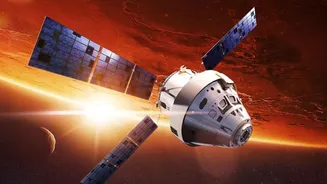
So, why not just build better shields? The problem is a trade-off between mass and effectiveness. The most effective materials for blocking GCRs are hydrogen-rich compounds like water and polyethylene, not dense metals like lead. Ironically, thin layers of materials like aluminum can actually be worse, creating a shower of secondary radiation when struck by high-energy particles. Building a shield thick enough to be truly protective adds immense weight to a spacecraft, and every extra kilogram is incredibly expensive to launch out of Earth's gravity well. Innovative solutions are being explored, from active magnetic shields that deflect particles to lightweight composite materials and wearable radiation vests, but a perfect, lightweight solution remains elusive.
The Enduring Case for Human Exploration
Given the risks, the argument for robotic-only exploration is strong. Robots are cheaper, can tolerate extreme risks, and have provided a treasure trove of scientific data, far outlasting their planned mission timelines. Yet, they are limited. A human geologist on Mars could accomplish in minutes what it takes a rover weeks to do, like digging a trench or selecting a compelling rock sample. Humans offer unparalleled adaptability, intuition, and problem-solving skills that cannot be programmed. A single human mission, while exponentially more expensive, could yield a scientific return that surpasses all robotic missions combined. More than that, the presence of humans serves a unique purpose: to inspire and push the boundaries of what is possible.