






A bold new idea is taking shape: moving the immense, power-hungry data centers that fuel artificial intelligence into orbit. The suggestion, championed by SpaceX's founder, envisions a future where computing happens off-planet. But is this sci-fi or a serious
solution?
The Terrestrial AI Problem
The artificial intelligence revolution runs on electricity. A lot of it. Training and operating large-scale AI models require massive data centers packed with powerful computer chips that consume staggering amounts of energy. By some estimates, data centers could account for a significant portion of US electrical demand by 2028, driven almost entirely by AI. This creates a three-pronged problem on Earth: an immense strain on power grids, a voracious appetite for land, and an environmental footprint that includes heavy water usage for cooling. Building new power plants and grid infrastructure to keep up takes years and faces significant regulatory hurdles. As the AI arms race accelerates, tech giants are hitting a physical wall, where the primary bottleneck is no longer the availability of chips, but the power and real estate to run them.
The Orbital Solution
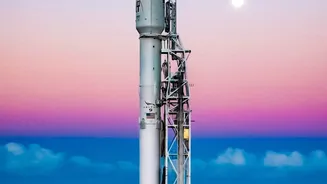
The proposal to move AI hardware into space is a direct response to these terrestrial constraints. The core idea is to place data processing and storage systems into satellites orbiting Earth. The headline's distinction between 'computing equipment' and an 'operating service' is crucial. It suggests using space for the heavy lifting—like training enormous AI models—which is less sensitive to communication delays. The results, not the real-time interaction, would then be beamed back to Earth. This contrasts with trying to run a latency-sensitive service, like a real-time chatbot, from orbit, which would be impractical. SpaceX has reportedly made concrete plans for a space computing system, with filings for a service named 'Starmind' and a new 'Gigasat Factory' in Texas to build the AI satellites.
Why Space Makes Sense
The primary advantages of an orbital data center are power and cooling. In a sun-synchronous orbit, a satellite can be in near-continuous sunlight, allowing its solar panels to generate uninterrupted power. This avoids the day-night cycle and weather that affect terrestrial solar farms. A solar panel in space can generate significantly more energy over a year than the same panel on Earth. The second major benefit is cooling. On Earth, data centers use massive, energy-intensive air conditioning and water-cooling systems. In the vacuum of space, heat can be radiated away directly into the near-absolute zero background temperature using large radiator panels, a process that is, in essence, free and requires no water. SpaceX's Elon Musk has argued that cooling equipment in space could be 'much easier than on Earth' using this method.
Cosmic Complications and Hurdles
Despite the compelling advantages, the challenges are monumental. The most significant is latency—the delay in communication between Earth and orbit. While a trip to low Earth orbit is just a few milliseconds, it's still too slow for real_time applications. This is why initial proposals focus on latency_insensitive tasks like AI model training. Another major issue is maintenance. You can't just send a technician to swap out a faulty server in orbit; systems must be incredibly robust and redundant. The hardware also needs to be shielded from cosmic radiation, which can corrupt data and damage sensitive electronics. Finally, there's the cost. While launch costs are falling dramatically thanks to reusable rockets like SpaceX's Starship, deploying and maintaining thousands of heavy satellites remains an expensive proposition.
A Hybrid Future for AI
The most realistic nearterm vision isn't a wholesale replacement of terrestrial data centers but a hybrid model. Latencysensitive tasks that require instant responses will remain on the ground, close to users. The massive, energyguzzling workloads, like training the next generation of foundation models, could be offloaded to these orbital powerhouses. This approach is already being explored by several companies. Google has a project called 'Suncatcher,' and a startup named Starcloud has already tested an NVIDIA GPU in orbit. SpaceX itself is targeting a launch for its first demonstration payload as early as the fourth quarter of 2027. This suggests a future where AI computation is split between Earth and space, each handling the tasks best suited to its environment.