



A Celestial Parade in Your Sky
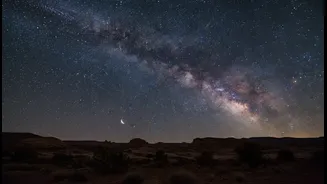
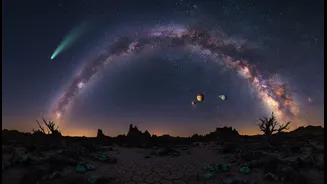
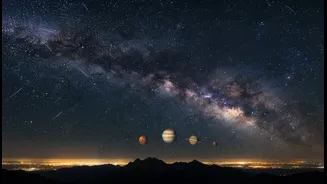
July 2026 offers several opportunities to see planets gather in the sky. While not a perfect straight line, these "alignments" or "conjunctions" are events where multiple planets appear close together from our viewpoint on Earth. This month, you can catch
different groupings in both the evening and early morning sky, offering a beautiful celestial show. In the evening, the brilliant planet Venus will be a dominant sight. In the early morning hours, before sunrise, Mars and Saturn will be visible. These events are perfect for casual stargazing because many of the planets involved are bright enough to be seen with the naked eye.
Meet the Evening and Morning Stars
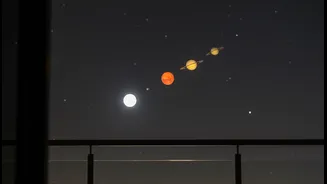
The main players this month are Venus, Mars, and Saturn. Venus, the brightest object in the evening sky after the Moon, will be visible in the west shortly after sunset. On July 9, it will appear very close to the bright star Regulus in the constellation Leo. Later in the month, on July 17, the crescent Moon will join Venus, creating another lovely pairing. For early risers, the pre-dawn sky offers its own rewards. Look to the east before sunrise to spot Mars and Saturn. On July 11 and 12, the waning crescent Moon will pass near Mars and Saturn, making them even easier to identify. Mars will appear as a steady, reddish dot, while Saturn will be a brighter, yellowish point of light.
Your Simple Stargazing Kit
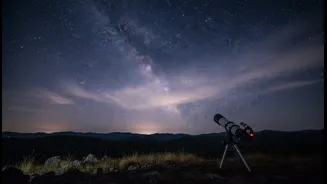
The best part about this celestial show is that you don’t need any expensive equipment. Your own eyes are the most important tool. To enhance the experience, a simple pair of binoculars can be a great addition. They will make the planets appear brighter and might even reveal some details, like the reddish hue of Mars. Beyond that, comfort is key. Grab a reclining chair or a blanket so you can look up without straining your neck. Consider downloading a free stargazing app on your phone, like SkyView or Stellarium. These apps use your phone's location to show you exactly what's in the sky above you, helping you distinguish planets from stars.
The When and Where of Planet Spotting
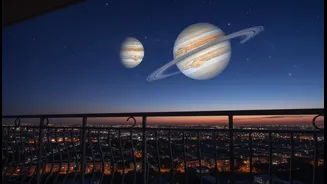
For the evening show featuring Venus, look to the western sky about 30 to 45 minutes after sunset. The planet is so bright it will be hard to miss. For the morning planets, you’ll need to be up before the sun. The best viewing window is about an hour before sunrise, looking towards the eastern or southeastern horizon. The specific alignment of the Moon with Mars and Saturn is best on the mornings of July 11 and 12. Remember that planets don't twinkle the way stars do; they shine with a steady light, which is a great way to identify them. Even if you're in a city, finding a spot with a clear view of the horizon, like a balcony or a nearby park, will work wonders.
Tips for the Best Balcony View
To get the most out of your stargazing session, give your eyes time to adjust to the darkness. It takes about 15 to 20 minutes for your vision to adapt fully, so avoid looking at bright phone screens or other lights. If you are in an area with significant light pollution, try to shield your eyes from direct glare from streetlights or neighbouring windows. Using binoculars will help cut through some of the skyglow and make the planets pop. When looking for the morning planets, use the crescent Moon on July 11 and 12 as your guide. Its presence will draw your eye to the right patch of sky where Mars and Saturn are waiting.