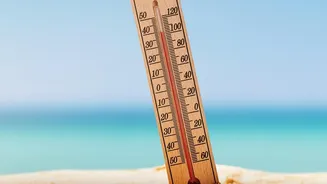








A stark new United Nations report has delivered a sobering verdict: the world can no longer limit global warming to 1.5°C without first overshooting the target. Decades of insufficient action have pushed this critical goal out of reach.
A Goal Officially Missed
The United Nations
Environment Programme (UNEP) has confirmed what many feared: the window to keep global temperature rise strictly below 1.5°C has closed. The agency's 2026 Emissions Gap Report, titled 'The Point of Return', states that it is now unavoidable that the world will temporarily exceed this critical threshold. This marks the first time a UN agency has formally declared the no-overshoot goal unattainable. The report's grim arithmetic shows that with global emissions still hovering near record highs, the carbon budget to stay under 1.5°C will be exhausted within just a few years.
Why Has Progress Ground to a Halt?
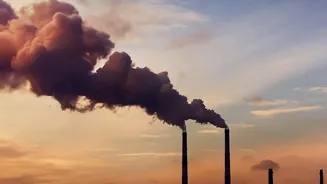
Despite initial progress after the 2015 Paris Agreement, collective climate action has effectively stalled for the last five years. According to the Climate Action Tracker group, positive steps like the rapid growth of renewable energy have been cancelled out by continued investment in fossil fuels and rising energy demand. The UNEP report points to a massive gap between what countries have promised in their Nationally Determined Contributions (NDCs) and the drastic cuts required. Even if all current pledges are fully implemented, the world is on track for a devastating 2.6°C to 2.8°C of warming by 2100. This implementation gap shows that even weak promises are not being met, let alone strengthened.
What 'Overshoot' Actually Means
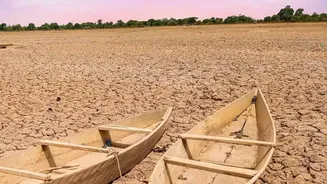
Exceeding the 1.5°C target, even temporarily, is not just a statistical event; it is a dangerous gamble. An 'overshoot' means entering a period of more intense and frequent climate impacts, such as deadly heatwaves, floods, and wildfires. Every fraction of a degree of warming increases the risk of triggering irreversible tipping points, like the collapse of major ice sheets or ocean circulation systems. The new, far more challenging goal is to limit how high and for how long temperatures remain above 1.5°C before, theoretically, bringing them back down by the end of the century using large-scale carbon removal technologies that are yet to be proven at scale.
A Narrowing Path Forward
To limit the overshoot and have a chance of returning to 1.5°C, the UNEP report outlines a monumental task. Global greenhouse gas emissions must fall dramatically: by 18% by 2030, 45% by 2035, and 69% by 2040, compared to 2025 levels. In contrast, current national commitments are projected to deliver only an 11–15% reduction by 2035. Achieving the necessary cuts requires an immediate and radical acceleration of the clean energy transition, including tripling renewable energy capacity by 2035 and phasing down coal, oil, and gas use significantly.
What This Means for India
For India, the failure to contain warming to 1.5°C is particularly perilous. The country is already one of the most vulnerable to climate change, experiencing more extreme weather events. A world that is 2°C warmer, or more, would be catastrophic for India's agricultural economy, water security, and coastal communities, potentially pushing millions more into poverty. While India is rapidly expanding its renewable energy capacity, its reliance on coal to meet growing energy demand means its emissions are still rising. The Climate Action Tracker rates India's current climate targets as 'Highly Insufficient' and inconsistent with a 1.5°C pathway. The UN report's findings underscore the urgent need for India to balance its development goals with a much faster, more ambitious transition away from fossil fuels, a move that will require significant international support.