


The Ultimate Throwback
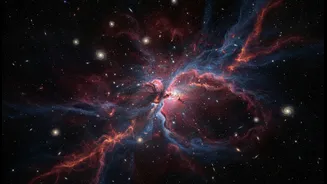
Before we dive into the new messages, let’s set the scene. The ‘Cosmic Dawn’ isn’t a sci-fi movie title; it’s a very real and mysterious chapter in our universe’s history. It’s the period from about 50 million to one billion years after the Big Bang.
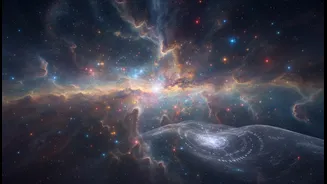
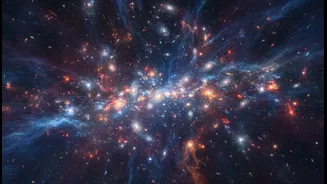
After an era known as the Cosmic Dark Ages—a time of no stars or light—gravity began pulling together clouds of neutral hydrogen gas. Eventually, these clouds collapsed and ignited, forming the very first stars and galaxies. This was the moment the universe’s lights turned on, flooding the cosmos with starlight for the first time and ending the dark ages. This new light began the process of reionization, transforming the foggy, neutral universe into the transparent one we know today.
The Messenger Has Arrived
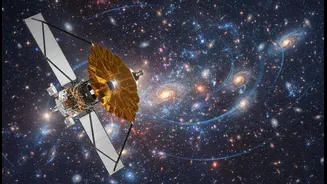
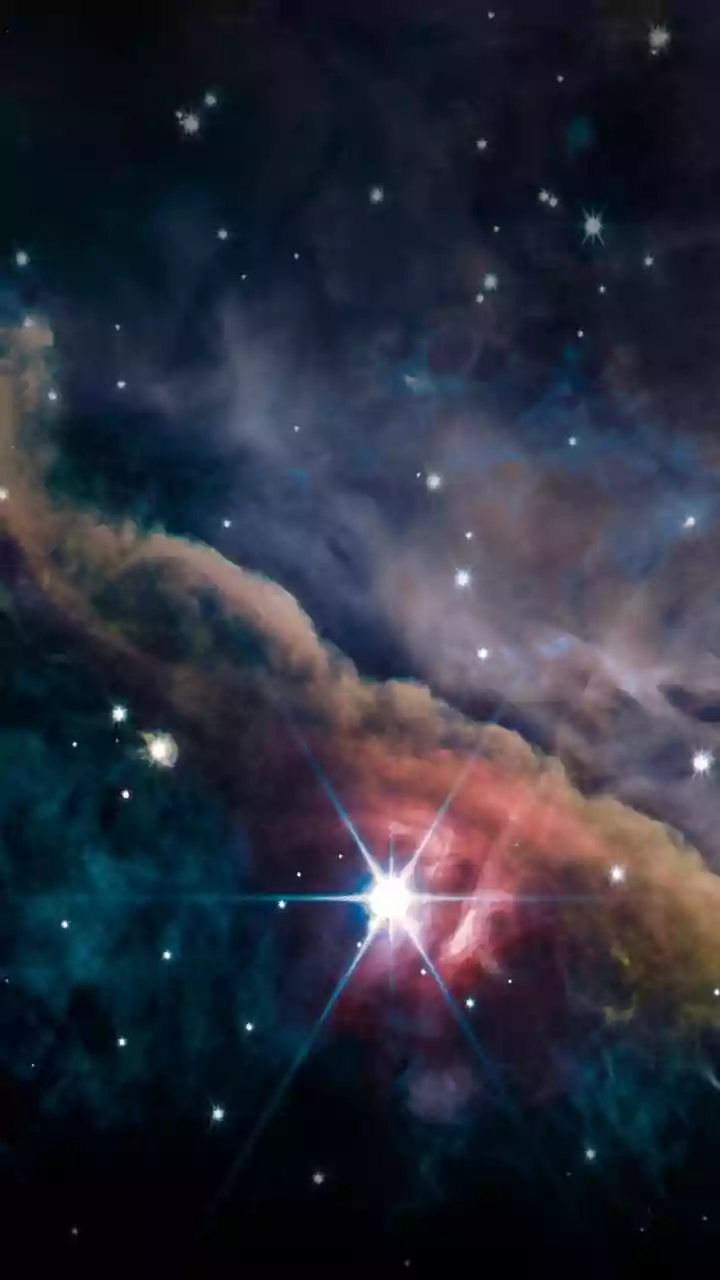
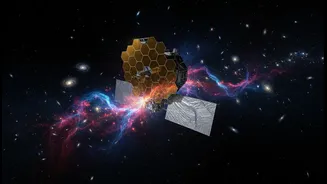
For decades, this crucial era was mostly theoretical. It was too far away and too faint to observe clearly. Enter the James Webb Space Telescope (JWST). As a massive business and technological undertaking, representing decades of international investment and engineering, the JWST is the high-tech messenger we've been waiting for. Unlike the Hubble Telescope, JWST is specifically designed to see the universe in infrared light. This is critical because, as the universe expands, the visible and ultraviolet light from the first stars gets stretched over its 13-billion-year journey to us, arriving as infrared light. JWST’s incredible sensitivity allows it to pick up these faint, ancient signals, effectively letting us look back in time and read the first pages of cosmic history.
The First Messages Are In, and They’re Wild
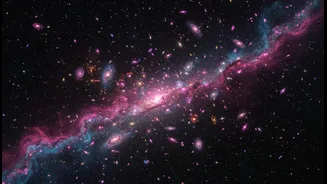
So, what are these first messages saying? In short: 'We were here, we were huge, and we got started way earlier than you thought.' Scientists expected to find tiny, baby galaxies in this early epoch. Instead, JWST has found galaxies as mature and massive as our own Milky Way, existing just 500-700 million years after the Big Bang. Some of these objects have been informally nicknamed 'universe breakers' because their existence is in tension with 99% of our current cosmological models. The data suggests that the amount of mass tied up in stars during this period could be up to 100 times greater than previously believed. These early galaxies also appear to be surprisingly diverse and chaotic, often shaped like surfboards and pool noodles rather than neat spirals.
Reading Between the Lines
These unexpected discoveries have thrown the scientific community into a flurry of excitement and debate. It’s like getting a text message that makes no sense without more context. The existence of such massive galaxies and black holes so early on challenges our 'settled science' of how cosmic structures are supposed to form. The standard model assumes galaxies grow gradually over billions of years as dark matter halos pull in gas. But these new findings suggest that early galaxies may have been incredibly efficient at converting gas into stars, or that they experienced frequent, violent bursts of star formation. Astrophysicists are now racing to create new theories and simulations to explain how the universe could have built such large structures so quickly. It's a shift from having too few early galaxies to observe, to having too many theories to explain them.
Why You Should Stay in This Chat
This isn't just an academic puzzle for astronomers. The conversation happening right now about the Cosmic Dawn is fundamental to understanding our own origins. Studying these early galaxies is like watching our own Milky Way’s baby pictures, revealing how galaxies like ours grew from chaotic beginnings into the structures we see today. The chemical elements that make up our planet and ourselves were first forged inside these primordial stars. By understanding how the first stars and galaxies formed, we get closer to answering some of the biggest questions: Where did we come from? How did the universe become the way it is? The JWST has opened a direct line of communication to the beginning of time. The notifications are just starting to roll in, and you won’t want to miss what they say next.