




Understanding the El Niño Phenomenon
At its core, the El Niño-Southern Oscillation (ENSO) is a natural climate cycle marked by changes in sea surface temperatures across the central and eastern tropical Pacific Ocean. In an El Niño phase, these waters become significantly warmer than average.
This warming doesn't just stay in the ocean; it alters atmospheric patterns, shifting rainfall and influencing weather globally. Normal east-to-west trade winds can weaken or even reverse, disrupting the delicate balance that drives our planet's climate systems. These events occur periodically, typically every two to seven years, and can vary widely in strength.
The Historical Link to India's Monsoon
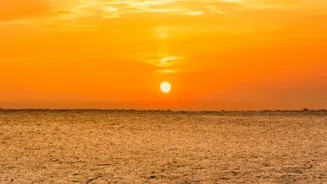
For India, El Niño is far more than a distant weather event. It has a strong, historically documented connection to the southwest monsoon. A warmer Pacific can disrupt the atmospheric circulation that typically pulls moisture-laden winds towards the Indian subcontinent, often resulting in weaker monsoon rains. Historically, many of India's drought years have coincided with El Niño events, making it a key variable in long-range forecasting. However, the relationship is not a simple one-to-one correlation. Not every El Niño year results in a drought, as other climate factors can either amplify or dampen its effects.
The Forecast for the 2026 Monsoon
Forecasters are closely watching a strengthening El Niño in 2026. The U.S. National Oceanic and Atmospheric Administration (NOAA) has issued an El Niño Advisory, noting a high probability of a 'very strong' event peaking in late 2026. There is even a 69% chance it could become a historically strong event, potentially exceeding any recorded since 1950. In India, the IMD has forecast below-normal rainfall for August and the rest of the season. So far, the 2026 monsoon has already seen a rainfall deficit. However, the full impact of this powerful El Niño may be delayed. Its effects on Indian weather typically have a lag of several weeks, meaning the most significant influence might be felt toward the end of the monsoon season.
Potential Impacts on Agriculture and Economy
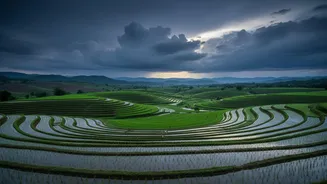
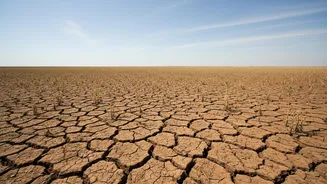
A deficient monsoon has wide-ranging consequences. The agricultural sector, which is heavily dependent on rain-fed irrigation, faces the most immediate risk. Weaker rains can lead to lower crop yields, impacting food supply and putting financial stress on millions of farmers. This, in turn, can fuel food price inflation, affecting household budgets across the country. Beyond the farm, water levels in reservoirs, which are crucial for drinking water and hydroelectric power generation, could be affected. The ripple effects can be felt across the broader economy, potentially moderating GDP growth if the rainfall deficit is severe.
Beyond El Niño: Other Factors at Play
While El Niño is a major player, it's not the only factor influencing the monsoon. Another important phenomenon is the Indian Ocean Dipole (IOD), which is the Indian Ocean's own version of the ENSO cycle. A 'positive' IOD, where the western Indian Ocean becomes warmer than the east, can help counteract El Niño's negative effects by steering more moisture towards India. Forecasters indicate a positive IOD is expected to develop from August, which could offer a crucial buffer. This complex interplay is why predicting the monsoon's performance is so challenging and why agencies like the IMD monitor multiple variables, including snow cover over Eurasia and other atmospheric patterns, to build a complete picture.