






The End of the Free Lunch Era
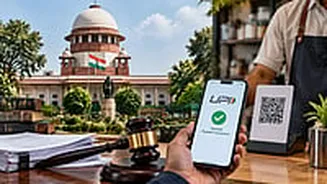
For years, the core promise of UPI to both consumers and merchants was its zero-cost model. This approach, legally mandated since 2020 to boost digital adoption, made UPI the backbone of India's digital economy. However, this 'free' service came at a significant
cost to the ecosystem players—banks, payment service providers, and fintech applications like PhonePe and Google Pay—who bore the financial burden of processing billions of transactions. Government subsidies were introduced to offset these costs, but they proved insufficient as transaction volumes soared, creating what a parliamentary committee called a "financially unsustainable" situation. To solve this, the National Payments Corporation of India (NPCI) has announced a new framework effective October 15, 2026.
What's Actually Changing with Merchant Fees?
The new policy introduces a Merchant Discount Rate (MDR)—a fee paid by merchants for payment processing—on select UPI transactions. Specifically, a 0.4% charge will apply to person-to-merchant (P2M) payments exceeding ₹2,000. This fee is capped at ₹300 for transactions of ₹75,000 and above. Crucially, this change is not universal. All person-to-person (P2P) transfers remain free, as do all merchant transactions below the ₹2,000 threshold. This means an estimated 96-97% of UPI transactions by volume will remain free for merchants, preserving the status quo for most small businesses and everyday purchases. Furthermore, small merchants receiving up to ₹1 lakh per month via UPI QR codes are exempt, and essential services like fuel, railways, and insurance will have a lower, flat fee.
A Lifeline for a Strained Ecosystem
The introduction of MDR is a direct response to years of lobbying from the payments industry for a sustainable revenue model. The Reserve Bank of India (RBI) has endorsed the move, calling it an "important step" for the long-term health of the digital payments ecosystem. The revenue generated from MDR will be distributed among the various players, including the payer's bank, the merchant's bank, the payment service provider, and the fintech app (or Third-Party Application Provider). This new income stream is designed to fund critical investments in technology, infrastructure resilience, and cybersecurity, which were previously strained under the zero-MDR regime. For dominant players like PhonePe and Google Pay, which handle the majority of UPI transaction volumes, this represents a significant, direct monetization opportunity for the first time.
The New Competitive Battleground for Fintechs
While the new MDR provides a revenue cushion, it fundamentally changes the competitive landscape. The era of competing solely on user acquisition and transaction volume is giving way to a more complex battle. For years, without direct payment revenue, fintechs have been racing to cross-sell other financial products like loans, insurance, and mutual funds to their vast user bases. The introduction of MDR validates payments as a viable business in itself, but it also means the strategic focus must now be twofold. Fintechs will need to optimize their payment services for larger merchants who will now be paying a fee, potentially offering them value-added services. Simultaneously, the pressure to convert their payment users into customers for higher-margin financial services will intensify. The competition is no longer just about who has the most users, but who can build the most profitable, multi-product relationship with each user and merchant.