




A Journey to a Metal World
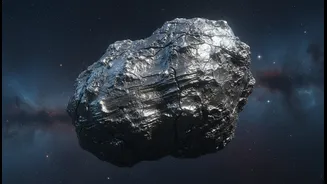
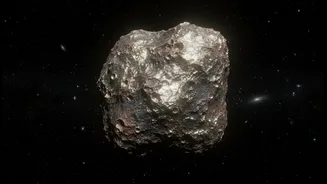
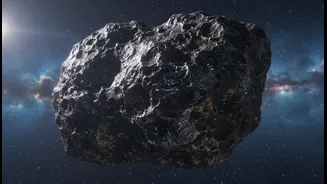
Orbiting the Sun in the main asteroid belt between Mars and Jupiter is 16 Psyche, a celestial body unlike most of its neighbors. While most asteroids are primarily rock or ice, Psyche is distinguished by its high metal content. Scientists believe it may
be the exposed iron-nickel core of a planetesimal, a building block of a planet that was destroyed in violent collisions during the early formation of our solar system. This theory suggests that as the planetesimal formed, heavy metals sank to its center, creating a core, while lighter rock formed an outer mantle and crust. Cataclysmic impacts could have stripped away these outer layers, leaving the dense, metallic heart behind. This makes Psyche a tantalizing target for study, as it represents the only known body in our solar system where we might get a direct look at a planetary core.
Mapping a Distant Object
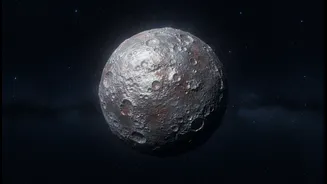
Even before NASA’s Psyche mission reaches the asteroid in 2029, scientists have been creating structural maps from afar. Using powerful ground-based instruments like the Atacama Large Millimeter/submillimeter Array (ALMA) in Chile, astronomers have analyzed the thermal emissions and radar reflections from the asteroid. These observations have allowed them to build 3D shape models and map variations across its surface. The data reveals a surprisingly diverse landscape, with vast metal-rich regions alongside areas that appear to be covered in silicate rock. Some large depressions, likely impact craters, show different textures between their sandy-looking interiors and rockier rims. These remote maps suggest Psyche is not just a solid lump of iron but a complex world with a story to tell.
A Window Into Our Own World
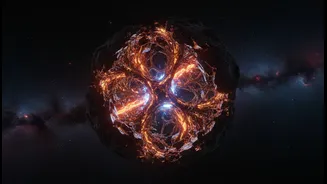
Because Earth's core is buried under more than 1,800 miles of rock and subjected to immense pressure and heat, we cannot drill to it or observe it directly. We rely on indirect methods, like studying seismic waves, to infer its properties. Psyche offers a potential shortcut. If it is indeed a stripped-bare protoplanetary core, studying its structure, composition, and magnetic field would be like having a sample of Earth's own core delivered to our cosmic doorstep. Scientists theorize that Earth’s core has a similar composition of iron and nickel, along with other elements like gold and platinum that sink to the center during planetary differentiation. By examining Psyche, we can test these theories and gain unprecedented insight into the processes that created the layered structures of terrestrial planets like Earth, Mars, and Venus.
Challenging the Core Theory
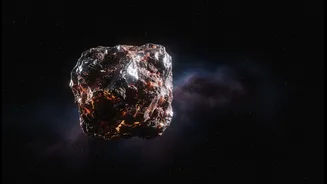
While the exposed-core hypothesis is compelling, recent observations have introduced some complexities. Data suggests Psyche's density is lower than what a solid iron-nickel core should be, indicating it might be 30-60% metal mixed with a significant amount of rock. One theory suggests it might not be a pure core but a body that was catastrophically disrupted and then re-formed into a jumbled mix of core and mantle material. Another possibility is widespread ferrovolcanism, where iron-spewing volcanoes coated a rocky mantle with metal from the core. More recent findings from the James Webb Space Telescope have even detected signs of water-bearing minerals, which could suggest Psyche is not a core at all, but a different type of primitive body that formed in the colder, outer solar system. This scientific debate makes the upcoming mission even more critical.
What NASA Hopes to Find
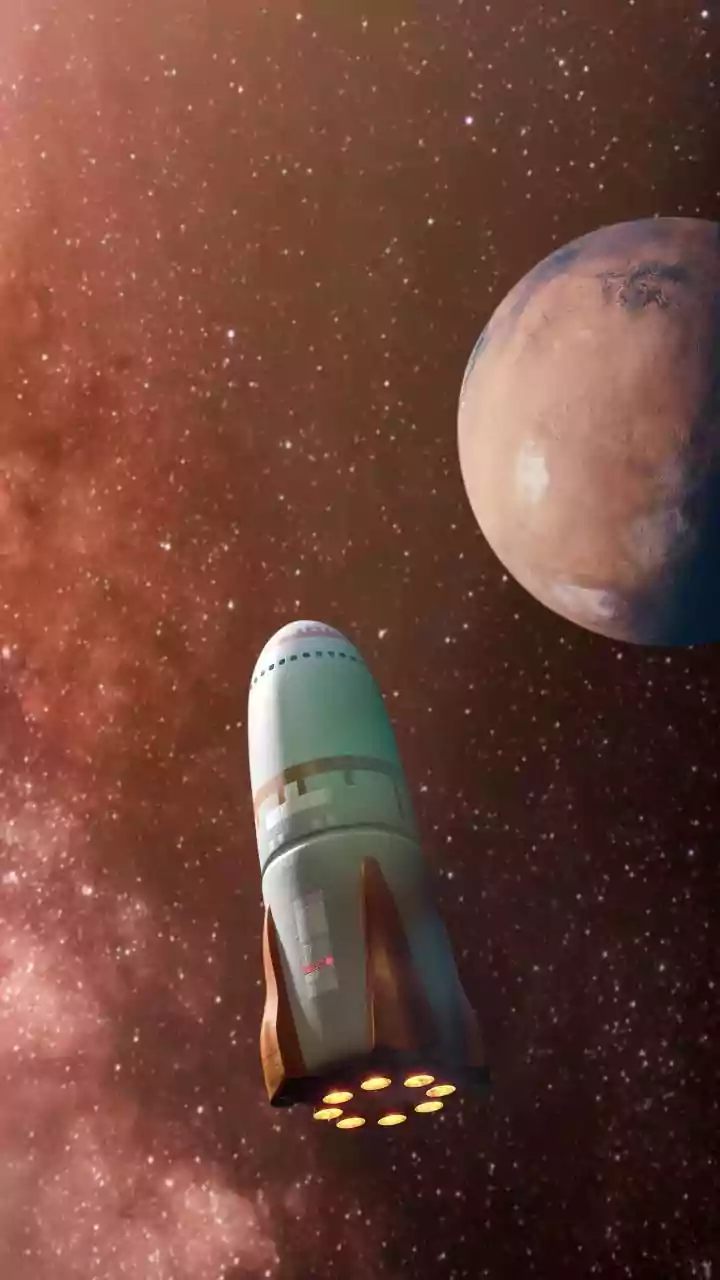
The NASA Psyche spacecraft, which launched in October 2023 and recently completed a successful Mars flyby for a gravity assist, is on a multi-billion-mile journey to settle these questions. Upon its arrival in August 2029, the orbiter will spend nearly two years mapping the asteroid in incredible detail. Its instruments, including a multispectral imager, a magnetometer, and spectrometers, will determine its exact composition, measure its gravity and magnetic fields, and analyze its topography. A key goal is to determine whether Psyche ever generated a magnetic field—a strong sign it was once a molten, rotating core like Earth’s. The mission aims to distinguish between the different origin stories: was it a pristine core, a jumbled collection of fragments, or something else entirely? Answering that will profoundly impact our models of how planets are born.