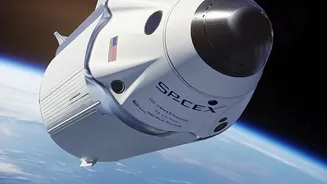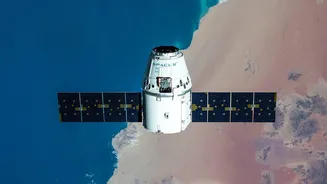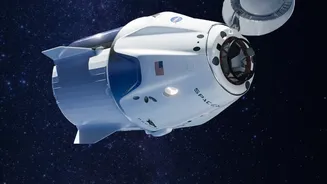



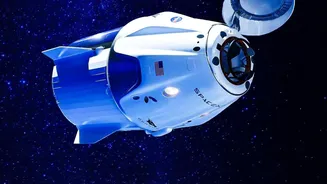

A SpaceX Dragon capsule successfully splashed down in the Pacific Ocean, concluding NASA's 35th commercial resupply mission and returning thousands of pounds of valuable scientific experiments from the International Space Station.
A Textbook Return
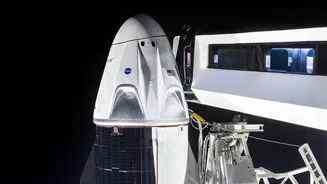
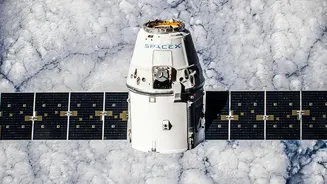
The uncrewed Dragon spacecraft
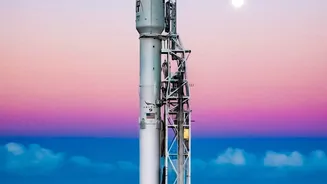
undocked from the International Space Station (ISS) on Friday, November 20, while orbiting 260 miles above Earth. After a journey of approximately 29 hours, the capsule re-entered the atmosphere and made a parachute-assisted splashdown off the coast of California on Saturday, November 21. The successful recovery by SpaceX teams marks the end of a mission that began on October 13 with a launch from Cape Canaveral Space Force Station in Florida. During its time at the orbiting laboratory, the Dragon delivered over 6,300 pounds of supplies, crew cargo, and new hardware to the station's crew.
The Crucial Role of Commercial Resupply
This mission, known as CRS-35, is a key part of the Commercial Resupply Services program, a partnership where NASA contracts with private companies like SpaceX to handle logistics for the space station. This model has become the backbone of ISS operations, ensuring a steady flow of necessary supplies for the astronauts and the station itself. Crucially, the Dragon is currently the only cargo vehicle capable of returning significant amounts of cargo to Earth intact. Other vehicles, such as Northrop Grumman's Cygnus and Russia's Progress, are designed to burn up on reentry, making Dragon's reusable design essential for bringing sensitive scientific results back to researchers on the ground.
A Cargo Hold of Scientific Breakthroughs
More than just a space courier, the returning Dragon is a treasure trove for scientists. Among its precious cargo were several groundbreaking experiments. One key return was a 3D-bioprinted blood vessel structure, which will help researchers study cardiovascular disease and the vascular aging process both in space and on Earth. Another vital payload consisted of frozen tumor organoids that were treated aboard the station. These miniature, lab-grown tumor models allow scientists to test cancer treatments in microgravity, potentially leading to improved therapies and personalized medicine back home.
Health, Sleep, and Superbugs in Space
The scientific returns extend beyond cancer and heart disease. The capsule also brought back frozen microbial samples for analysis. This research aims to understand how antibiotic-resistant bacteria survive and evolve in the unique environment of space, which could be critical for protecting astronaut health on long-duration missions and fighting infections on Earth. Additionally, a specialized lighting system was returned after operating on the station for over three years. Data from this experiment will help scientists determine how specific light cycles can support astronauts' sleep and well-being, a key factor for future missions to the Moon and Mars.