








From Metros to Main Street
The quick commerce revolution, led by platforms like Blinkit, Zepto, Swiggy Instamart, and a rapidly expanding Flipkart Minutes, is pushing beyond its traditional strongholds of Mumbai, Delhi, and Bengaluru. [4] This isn't a tentative dip but an aggressive
expansion into Tier-2 and Tier-3 cities across India. [4] Companies are racing to establish networks of 'dark stores' or micro-fulfilment centres in cities like Jaipur, Lucknow, Coimbatore, and Nagpur, as well as even smaller towns like Ambala, Bokaro, and Vijayawada. [4, 24] For instance, Flipkart Minutes, which is adding roughly 100 stores a month, now has a presence in over 130 cities, with about 90 of them being in smaller markets. [5, 24] Amazon is also doubling down, with plans to expand its Amazon Now service to over 300 cities nationwide. [14]
The Hunt for New Growth
So, why the sudden rush into smaller cities? The primary driver is the search for new growth. India's metro cities, while lucrative, are becoming crowded and fiercely competitive. [4] In contrast, the country has over 400 Tier-2 and Tier-3 cities, representing a massive, largely untapped consumer base where the consumption gap is rapidly narrowing. [4] This expansion is fuelled by several converging factors: rising disposable incomes, widespread smartphone and UPI adoption, and improved digital infrastructure. [6, 11] After years of using e-commerce, consumers in these cities are digitally savvy and have aspirations for the convenience they see in metros. [8, 11] Companies are discovering that while the model needs tweaking, the economics can be surprisingly favourable, with lower real estate costs and less competition for gig workers. [4]
Convenience vs. Local Competition
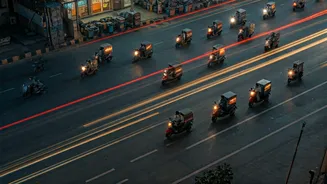
The arrival of instant delivery brings a dramatic change to the local economy. For consumers, it offers unprecedented convenience and access to a wider variety of products, from groceries to electronics. [7, 13] It also creates new gig economy jobs for delivery workers. [13] However, this wave of disruption poses a significant threat to India’s 13 million traditional kirana stores, which have long been the backbone of local communities. [15, 18] These small, family-owned shops struggle to compete with the deep discounts, speed, and technological might of venture-funded platforms. [18] Reports indicate that hundreds of thousands of kirana stores have already closed, unable to keep pace with the changing consumer expectations for speed and price. [15, 20] While some are trying to adapt by offering their own home deliveries or partnering with new platforms, the pressure is immense. [19, 22]
A Different Playbook for Bharat
Companies are learning that the metro playbook doesn't translate directly to smaller cities. [4] Consumer behaviour is different. While a metro user might make an impulse buy, shoppers in Tier-2 and Tier-3 cities often build larger baskets with higher average order values, focusing more on planned purchases and staples. [3, 5] Value is also a key driver, with data showing that while 50% of urban dwellers prioritize quick delivery, 54% of consumers in smaller cities value deals and offers more. [16] This requires a different approach to inventory, marketing, and even the delivery promise itself. Dependability might be valued more than the 10-minute guarantee. [4] The race is not just about being the fastest, but about understanding and catering to the distinct needs of these new markets. [6]