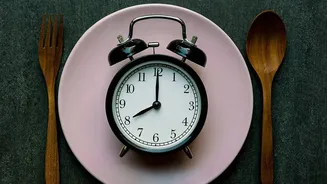









Understanding Your Body's Clock
At the heart of this concept is your circadian rhythm, a 24-hour internal clock that governs everything from your sleep-wake cycle to hormone release and digestion. This biological pacemaker is designed to align your body’s functions with the day-night
cycle. The field of study looking at this interaction is called chrononutrition. Historically, humans ate during daylight hours and fasted overnight. Modern lifestyles, however, often lead to irregular eating patterns and late-night meals, which can disrupt this natural clock and affect how our bodies process nutrients.
The Fat-Burning Advantage of an Early Dinner
Research shows that eating late can significantly alter how your body handles calories while you sleep. A study from the Endocrine Society found that when people ate dinner at 10 p.m. versus 6 p.m., their peak blood sugar levels were about 18% higher, and they burned roughly 10% less fat overnight. When you eat earlier, you give your body more time to process the food before metabolism naturally slows down for the night. Eating late means more carbohydrates are readily available for energy, so your body doesn't need to tap into its fat stores as efficiently. Over time, this could contribute to weight gain, even if your total daily calorie intake remains the same.
The Connection Between Meal Timing and Sleep
Finishing your last meal several hours before bed can also dramatically improve your sleep quality. When you eat a large meal close to bedtime, your digestive system has to work overtime when it should be winding down. This can keep your core body temperature elevated and interfere with the natural release of melatonin, the hormone that signals your body it's time to sleep. Studies have linked late eating with more nighttime awakenings and less restorative sleep. Allowing for a longer fasting window overnight—for instance, by finishing dinner by 7 p.m.—gives your body the 3-4 hours it needs to complete the heaviest phase of digestion. This helps ensure your body can focus on cellular repair and recovery processes during sleep, leading to a more refreshing night's rest.
How to Make the Shift
Shifting your dinner time doesn't require a drastic overhaul. Start by moving your evening meal earlier by just 15-30 minutes every few days to allow your body to adjust. Aim for a consistent schedule, even on weekends, to help regulate your internal clock. If a demanding job or family life makes early dinners difficult, focus on making your last meal of the day lighter and lower in carbohydrates. Another strategy is to make breakfast and lunch your more substantial meals, tapering your food intake as the day progresses. The goal is to create a longer fasting period overnight, ideally between 12 and 16 hours, which naturally happens when you close your kitchen earlier in the evening.
A Balanced and Personal Approach
While the benefits are compelling, it's important to remember that meal timing is not a one-size-fits-all solution. The effects can be more pronounced in individuals who already have a compromised metabolism, such as those with obesity or diabetes. Factors like age, activity level, and genetics also play a role. The best approach is to listen to your body. Experimenting with an earlier dinner schedule for a couple of weeks can help you determine if it improves your energy levels, sleep quality, and overall well-being. The key is to find a sustainable rhythm that works with your lifestyle rather than against it.